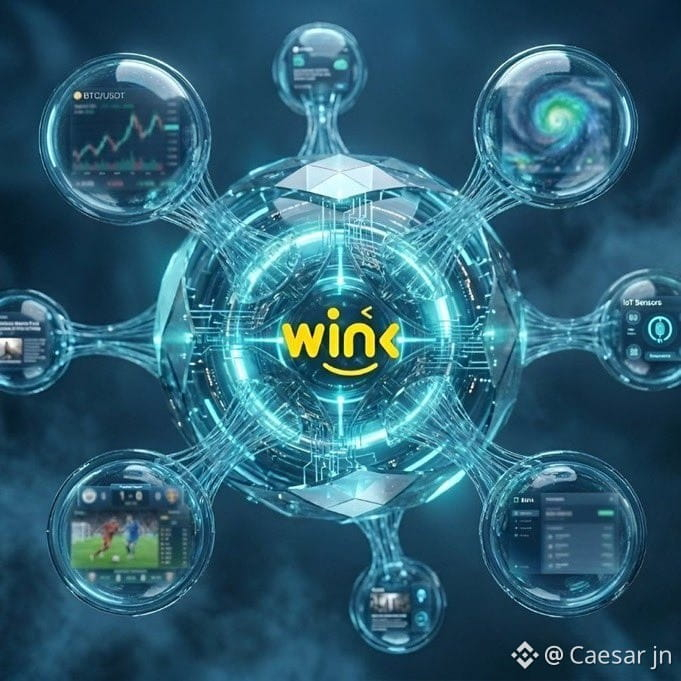
𝗪𝗜𝗡𝗸𝗟𝗶𝗻𝗸 𝗔𝗻𝗱 𝗧𝗵𝗲 𝗣𝗿𝗼𝗯𝗹𝗲𝗺 𝗢𝗳 𝗦𝗺𝗮𝗿𝘁 𝗖𝗼𝗻𝘁𝗿𝗮𝗰𝘁𝘀 𝗧𝗵𝗮𝘁 𝗖𝗮𝗻𝗻𝗼𝘁 𝗦𝗲𝗲 𝗢𝘂𝘁𝘀𝗶𝗱𝗲 𝗧𝗵𝗲 𝗕𝗹𝗼𝗰𝗸𝗰𝗵𝗮𝗶𝗻
One limitation of smart contracts is that they cannot independently access information from the outside world.
A smart contract can execute predefined conditions perfectly, but it cannot naturally visit a website, observe a market price or confirm a real-world event.
This creates an important infrastructure problem.
Imagine a lending protocol that needs to determine the current value of collateral. The contract needs reliable price information before it can calculate borrowing limits or determine whether a position should be liquidated.
This is where oracle infrastructure becomes essential.
WINkLink provides oracle services that connect external data sources with blockchain applications, allowing information from beyond the blockchain to become available for on-chain execution.
The interesting part is what this enables.
Smart contracts can move beyond operating only on information already recorded on-chain. They can respond to external conditions when the relevant data is supplied through an oracle.
That connection expands what blockchain applications can do.
The oracle is not the smart contract, and it does not replace the contract’s logic. It supplies information that allows the contract to make decisions according to its programmed rules.
@WINkLink_Official @Justin Sun孙宇晨 #TRONEcoStar