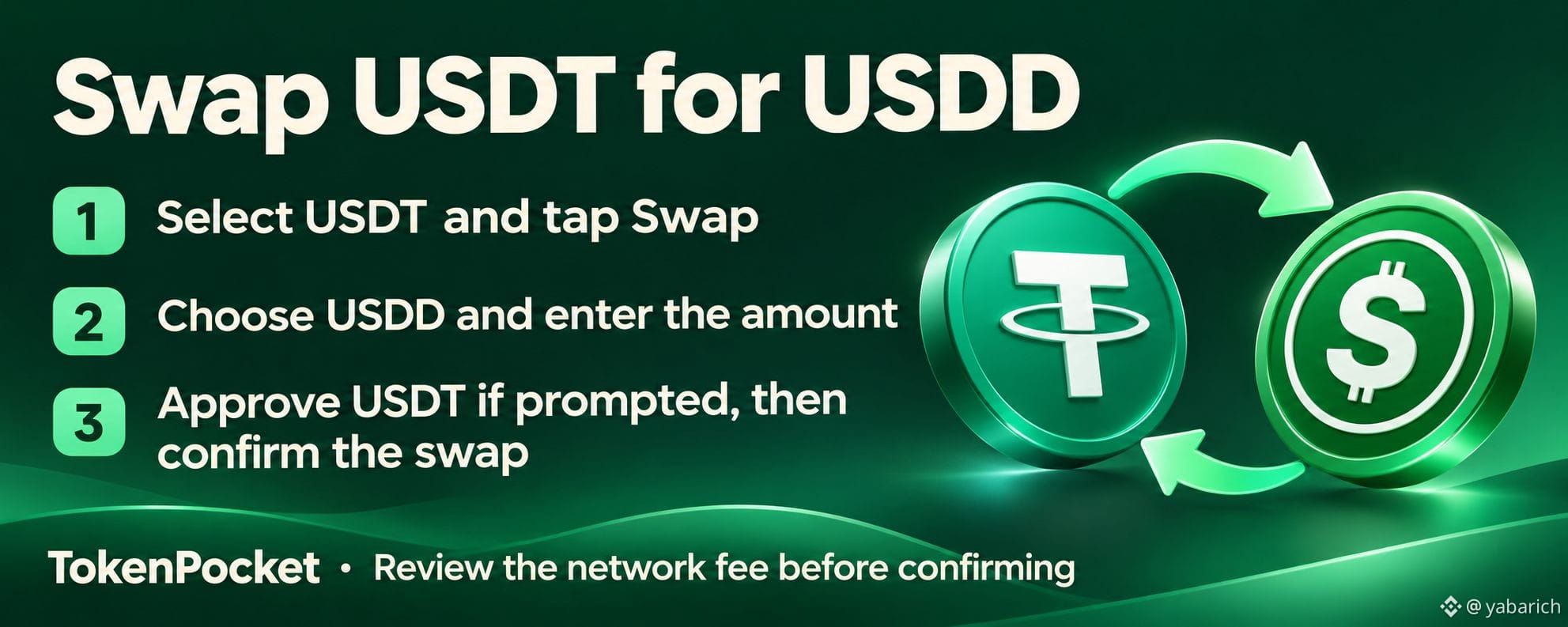
𝐒𝐖𝐀𝐏 𝐔𝐒𝐃𝐓 𝐅𝐎𝐑 𝐔𝐒𝐃𝐃: 𝐖𝐇𝐘 𝐀 𝐒𝐈𝐌𝐏𝐋𝐄 𝐒𝐖𝐀𝐏 𝐒𝐓𝐈𝐋𝐋 𝐑𝐄𝐐𝐔𝐈𝐑𝐄𝐒 𝐂𝐀𝐑𝐄𝐅𝐔𝐋 𝐑𝐄𝐕𝐈𝐄𝐖
𝐈. 𝐓𝐇𝐄 𝐏𝐑𝐎𝐁𝐋𝐄𝐌: 𝐒𝐓𝐀𝐁𝐋𝐄𝐂𝐎𝐈𝐍 𝐂𝐎𝐍𝐕𝐄𝐑𝐒𝐈𝐎𝐍 𝐈𝐒 𝐌𝐎𝐑𝐄 𝐓𝐇𝐀𝐍 𝐄𝐗𝐂𝐇𝐀𝐍𝐆𝐈𝐍𝐆 𝐓𝐖𝐎 𝐓𝐎𝐊𝐄𝐍𝐒
USDT and USDD are both designed to maintain stable values relative to the US dollar.
However, exchanging one for the other still involves an on-chain transaction with specific execution requirements.
Users may need to interact with a smart contract, authorize token spending, review transaction fees, and confirm the expected output.
These steps are important because a stablecoin swap is not automatically free of costs or technical risks.
Understanding the workflow helps users avoid unnecessary mistakes when converting USDT into USDD.
𝐈𝐈. 𝐓𝐇𝐄 𝐒𝐎𝐋𝐔𝐓𝐈𝐎𝐍: 𝐀 𝐒𝐓𝐄𝐏-𝐁𝐘-𝐒𝐓𝐄𝐏 𝐒𝐖𝐀𝐏 𝐏𝐑𝐎𝐂𝐄𝐒𝐒
For a supported swap interface, the process begins by selecting:
Swap → USDT → USDD
Next, enter the amount of USDT to exchange.
The interface should display the expected USDD output and any relevant transaction details.
If the application requests USDT approval, users must authorize the smart contract to spend the specified tokens.
This approval is distinct from the swap itself and may require a separate blockchain transaction.
After approval, review the network fee, exchange rate, expected output, and any applicable service charges.
Finally, confirm the swap.
Where the USDD Peg Stability Module supports the selected route, a 1:1 USDT–USDD conversion may be available under its applicable conditions.
However, not every swap interface necessarily uses the PSM.
Actual rates, fees, and execution requirements depend on the route and application.
𝐈𝐈𝐈. 𝐌𝐘 𝐏𝐄𝐑𝐒𝐏𝐄𝐂𝐓𝐈𝐕𝐄: 𝐓𝐎𝐊𝐄𝐍 𝐀𝐏𝐏𝐑𝐎𝐕𝐀𝐋 𝐃𝐄𝐒𝐄𝐑𝐕𝐄𝐒 𝐌𝐎𝐑𝐄 𝐀𝐓𝐓𝐄𝐍𝐓𝐈𝐎𝐍
I think token approval is one of the most important steps for users to understand.
When a wallet requests approval, the user is granting a smart contract permission to spend tokens within the authorized allowance.
That permission may remain active after the immediate swap is completed.
For this reason, users should verify the contract address and carefully examine the requested spending limit.
Where supported, limiting approval to the amount needed can reduce unnecessary exposure.
It is also important to distinguish token approval from transaction confirmation.
Approving USDT does not necessarily mean the USDD swap has already occurred.
The swap may still require a separate confirmation and network fee.
A user-friendly interface should make this distinction clear.
𝐈𝐕. 𝐋𝐎𝐍𝐆-𝐓𝐄𝐑𝐌 𝐈𝐌𝐏𝐀𝐂𝐓: 𝐁𝐄𝐓𝐓𝐄𝐑 𝐂𝐎𝐍𝐕𝐄𝐑𝐒𝐈𝐎𝐍 𝐄𝐗𝐏𝐄𝐑𝐈𝐄𝐍𝐂𝐄𝐒 𝐒𝐔𝐏𝐏𝐎𝐑𝐓 𝐒𝐓𝐀𝐁𝐋𝐄𝐂𝐎𝐈𝐍 𝐔𝐓𝐈𝐋𝐈𝐓𝐘
For USDD, accessible USDT conversion can make it easier for users to enter the ecosystem and participate in supported payment or earning applications.
But long-term adoption depends on more than making the Swap button easy to find.
Users need reliable execution, transparent conversion terms, clear approval requests, and predictable transaction costs.
I would evaluate the experience through successful swap rates, actual conversion costs, approval-related friction, and transaction completion times.
The broader principle is that stablecoin interoperability should make financial activity simpler without obscuring the permissions and risks involved.
A convenient swap is valuable.
A convenient swap that users can understand and verify is considerably more valuable.
@USDD - Decentralized USD #TRONEcoStar