$AVAX: How Avoiding Tribal Maximalism Lets You Read Every Chart Fairly
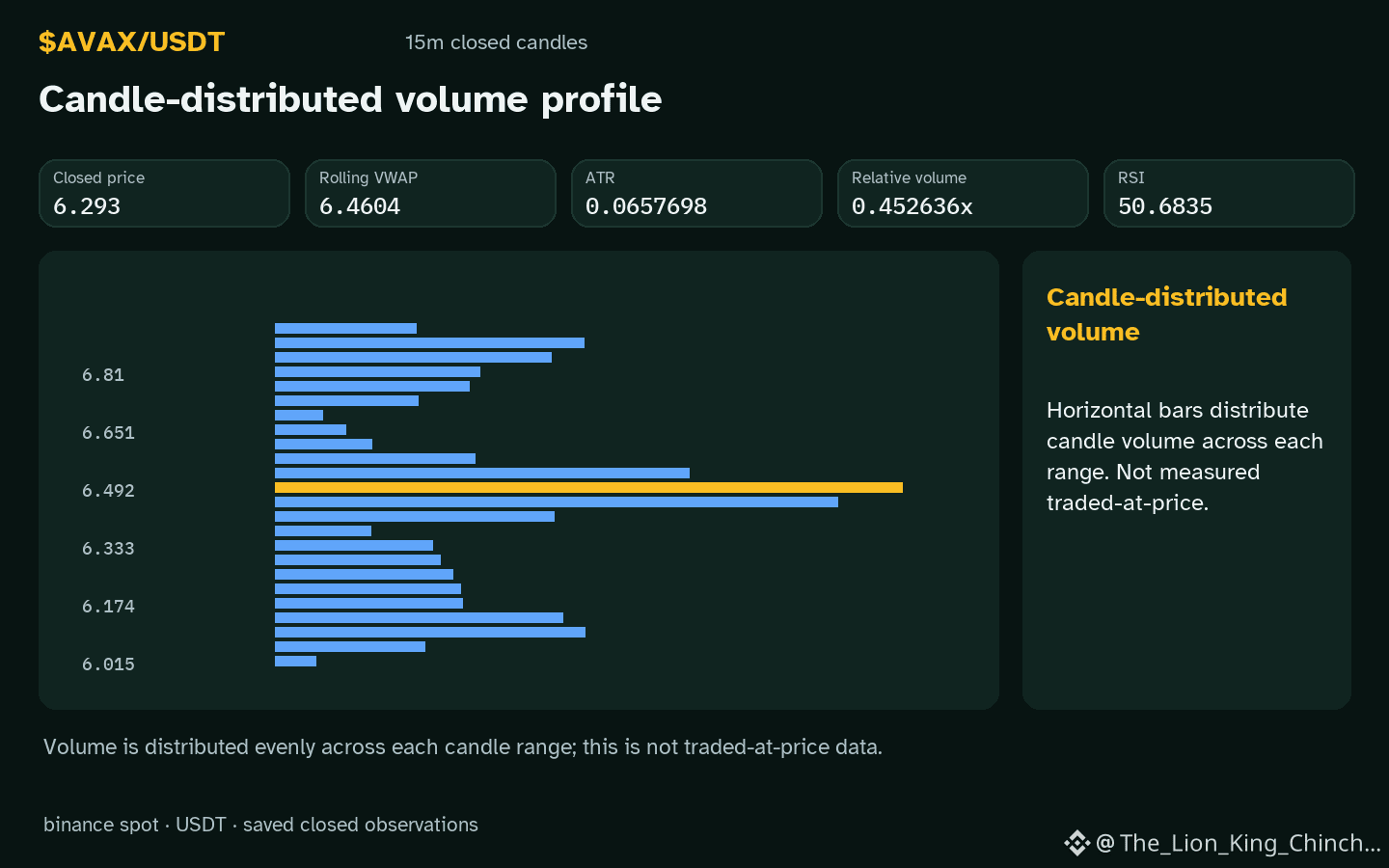
$AVAX: AVAX shows an hourly down direction while volume stays not above baseline. Does the modest price move reflect a genuine shift, or is it amplified by community focus on a single asset?\n\nThe dilemma centers on how public analysis can create a feedback loop that blurs objective assessment. When a trader sees a down move on AVAX, the instinct to label the event as a signal may be reinforced by similar commentary on peers. This social proof can discourage broader market curiosity and push readers toward a narrow, tribe‑based view.\n\nA useful mechanism to test is the Write to Earn incentive model. By rewarding content creation, the platform may unintentionally prioritize quantity over quality, prompting creators to publish quick impressions rather than measured research. The risk is that readers receive fragmented observations without clear separation of fact and persuasion.\n\nTo illustrate, consider the current observation: hourly direction down, volume not above baseline, relative volume 0.45x baseline, and RSI 50.7. A counterexample would be a future candle where hourly direction flips up while volume rises above baseline, weakening the initial interpretation of weakness.\n\nReaders can reassess by waiting for the next closed hourly candle and checking whether the direction and volume metrics diverge from today’s pattern. This simple step helps separate transient sentiment from a more durable market signal.
Probabilistic market research, not a recommendation or guaranteed return.
A useful cross-check: $ETH has hourly direction down and volume not above its baseline; $KERNEL has hourly direction up and volume above its baseline. This alone does not establish correlation.
#AVAX #ETH #KERNEL #CryptoCommunity #CryptoLearning