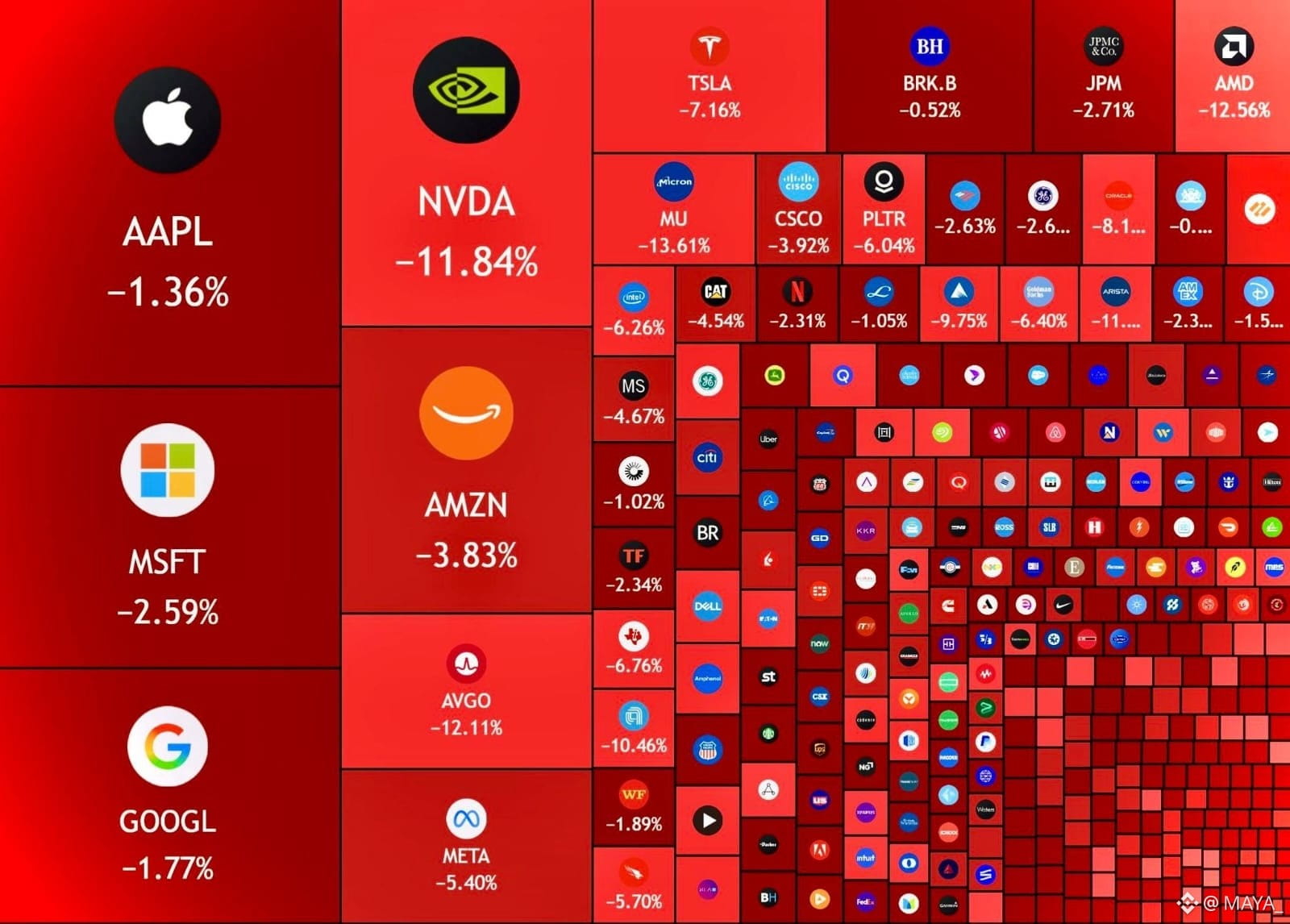

$11.4 trillion has been wiped off the US stock market - what is actually happening?
One thing is quite striking: it is reported that $8.9 trillion has been erased from the US stock market over just 45 days, with a loss of $2.5 trillion occurring today alone. The figures are so vast that it is difficult to fully grasp their scale at first glance.
But my question is: should we view this market downturn merely as a series of "red candles" or fluctuations in share prices, or does it signify something much larger?
The US stock market is not just a collection of shares from various companies; it encompasses institutional investors, retirement funds, large investment portfolios, and the savings of ordinary individuals. When such a massive amount of value evaporates, the impact is not confined to Wall Street. It can also strain investor confidence, hinder new investments, and dampen overall financial sentiment. This is the crucial point: a decline in current share prices leads to a reduction in total market capitalization.
Now, it is also worth keeping an eye on the crypto market. In traditional financial markets, such a downturn often puts pressure on assets like Bitcoin and other high-risk investments - though the reaction is not always consistent.
I would hesitate to label this as a long-term trend just yet. Instead, I am observing how institutional capital behaves in this enviroment, and whether liquidity and investor confidence will eventually return.
One thing is clear: a market movement of this magnitude cannot be ignored. However, it is essential to carefully examine the sources, the timeframe, and the broader implications behind these figures.
#CanBTCReboundAfterFallingBelow60K? #GlobalStocksFaceLongestLosingStreakSince2023 #AnthropicPlungesTowardIPOPriceonDay2 #TwentyOneCapitalAdds172.25BTC $BTC
$ETH
$USDC