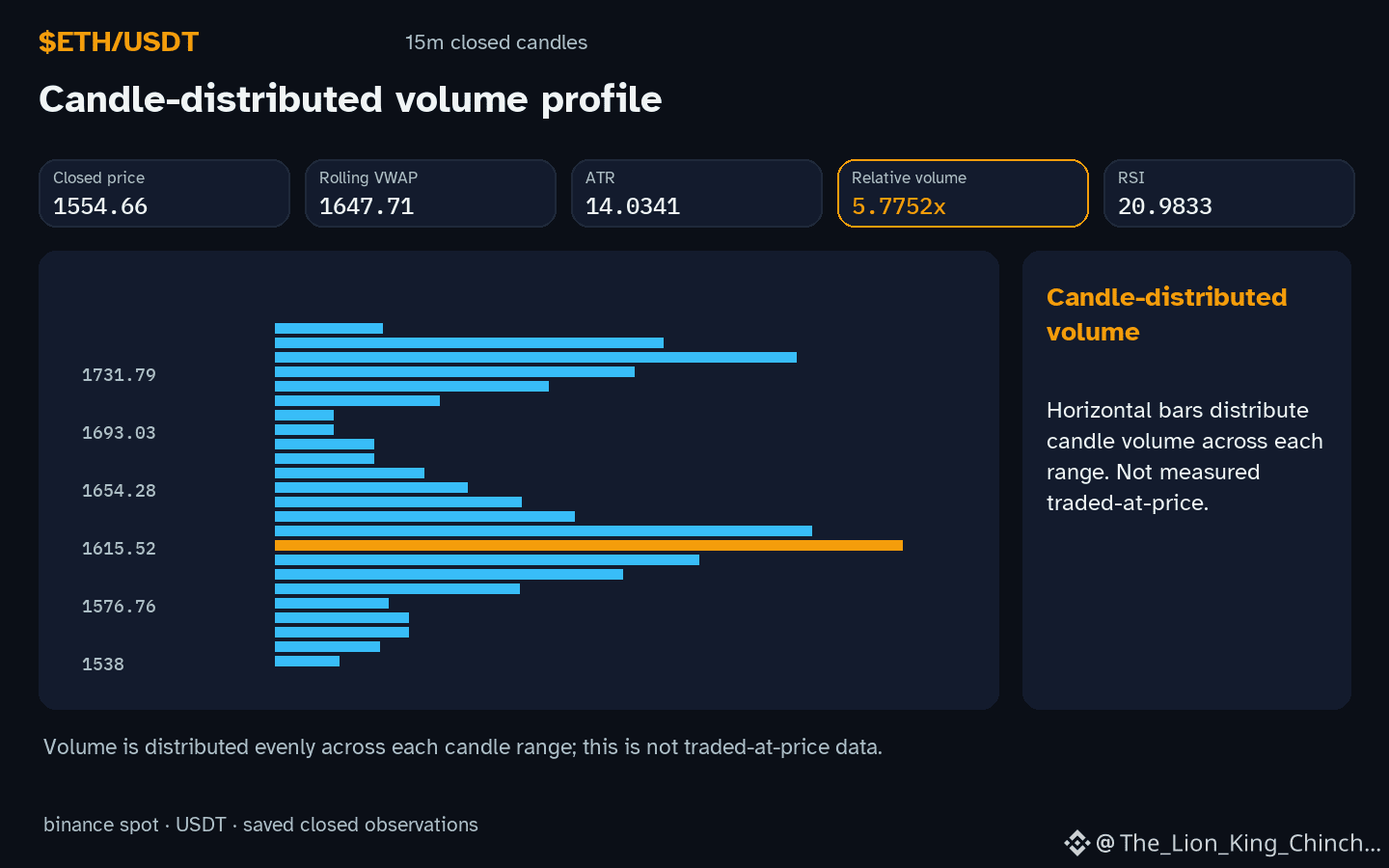
$ETH: Understanding Quiet Absorption Through a Sponge Analogy
When $ETH trades below its local support and volume sits above baseline, it raises a subtle question: how can price move without obvious buying pressure? Imagine a dry sponge placed in water. The sponge represents the market's liquidity pool, while the water symbolizes trade demand. A quick dip of the sponge’s surface shows a small splash, but most of the water is quietly absorbed inside the pores before any visible overflow appears. In crypto terms, a modest price decline can coexist with higher relative volume 5.78x because orders are being absorbed by hidden liquidity rather than pushing the price sharply. This mechanism explains why the hourly direction may stay down even as the market quietly digests supply.
An alternative view is that the volume spike reflects many small sell orders that do not change the order‑book depth, meaning the sponge analogy breaks when the market is dominated by algorithmic noise rather than genuine liquidity. A simple self‑check is to watch the RSI 21.0 and the next closed hourly candle: if RSI rises while price remains stable, it may hint that absorption is still occurring. Conversely, a sudden drop in RSI together with a larger price move would weaken the quiet‑absorption hypothesis. Both scenarios remind us that volume alone cannot confirm intent, and any interpretation must wait for subsequent candle evidence.
Probabilistic market research, not a recommendation or guaranteed return.
#ETH #CryptoEducation