
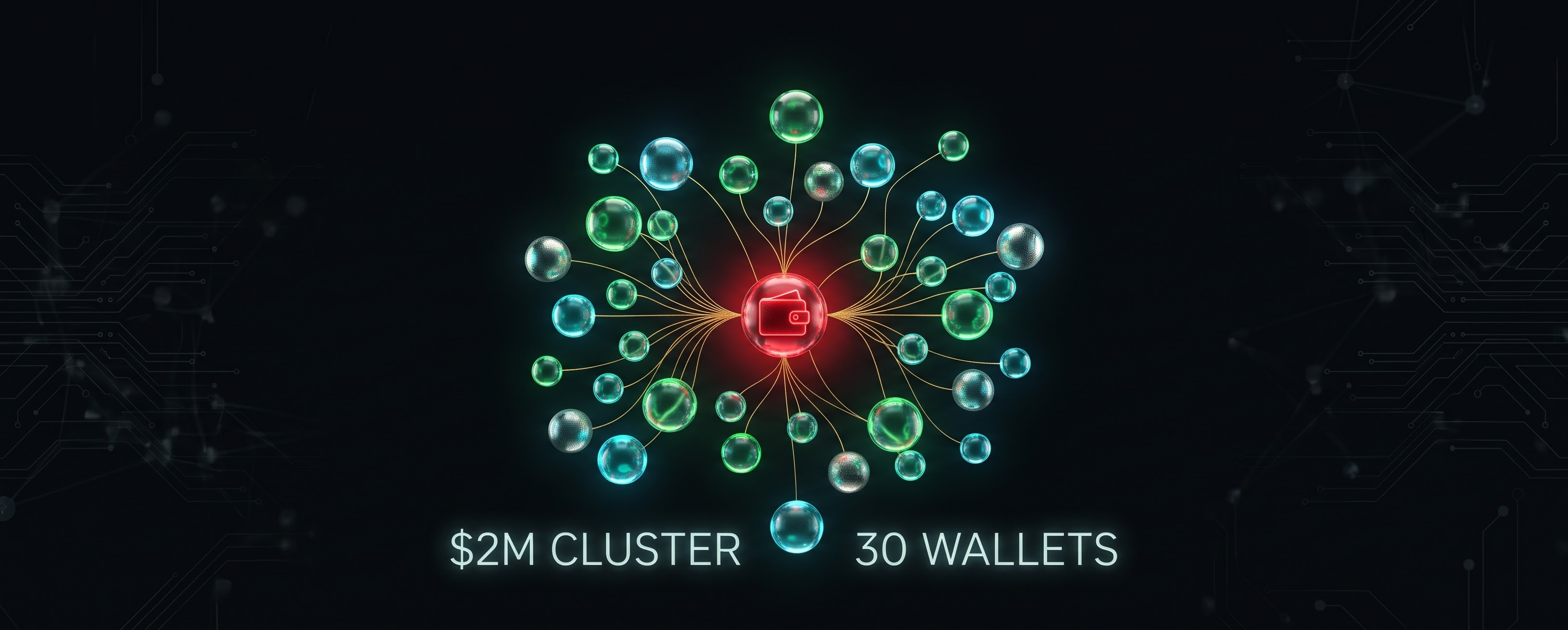

On-chain analytics platform Bubblemaps recently linked a cluster of 30 side wallets to a prominent Pump.fun caller ("Cupsey"), estimating roughly $1.7M in side-wallet gains alongside $300K in public USDC callout rewards.
Whether or not wallet clustering proves definitive common ownership, the mechanics highlight a critical structural risk for retail copy-traders on $SOL:
1️⃣ The Front-Run & Exit Liquidity Loop
Side wallets accumulate supply before the public wallet enters and broadcasts the call. Once retail copy-traders pile in on the public signal, those pre-positioned wallets distribute into the incoming liquidity.
2️⃣ Why Public PnL Tells Half the Story
A caller’s public wallet can show break-even or even net losses—building trust and relatability—while hidden clusters capture the real upside.
3️⃣ The "Follower Profit" Metric Gap
Pump.fun states that follower profitability now drives creator rewards, yet the exact methodology for measuring net follower outcomes across fragmented wallets remains undisclosed.
Retail Takeaway:
Never treat a public wallet's visible PnL or reward badge as proof of alignment. Always check holder concentration (bundling across top 10–30 wallets) before entering—and never become exit liquidity for pre-loaded clusters. $SOL $HYPE $USDC