
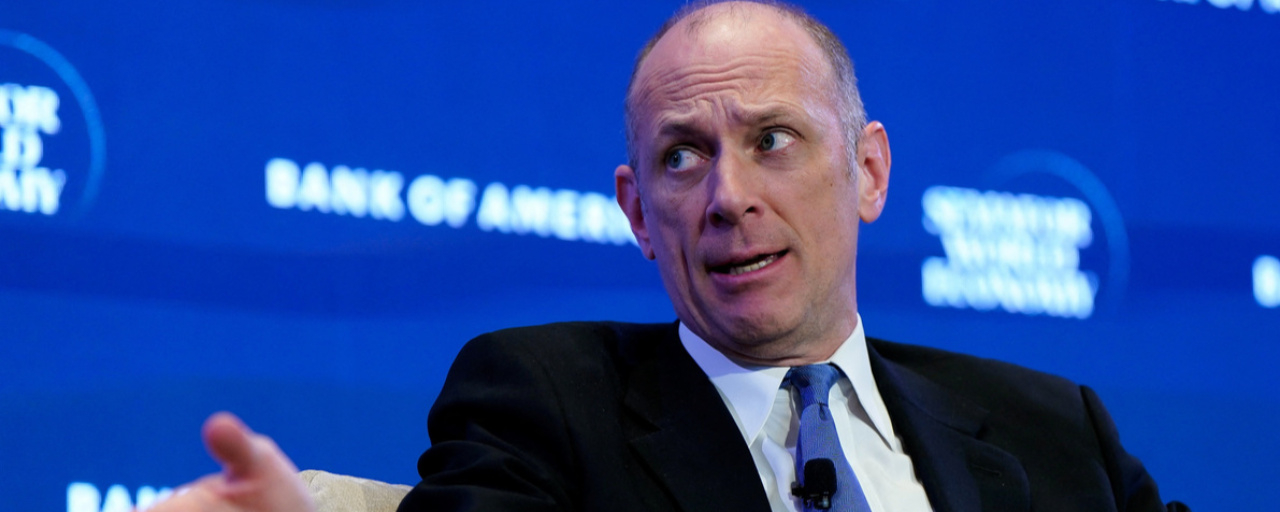

Austan Goolsbee, President of the Federal Reserve Bank of Chicago and a non-voting participant on the Federal Open Market Committee (FOMC) in 2026 after the Chicago bank rotated off the voting list, delivered a blunt read on prices: inflation runs “way higher” than the Fed’s 2% target.
He described multiple months of “borderline disturbing” inflation and conceded that the Fed’s failure has been on inflation, even as the job market holds stable. Tariffs drive much of his concern. He warned that their impact on inflation has proved more persistent than expected, and he stressed that the Fed cannot look through them if they last.
Central banks normally ignore one-off price jumps, but persistent tariffs break that logic. That leaves the data in charge of the rate outlook, with the steepness of the rate path hinging on inflation readings.
On labor, Goolsbee argued that immigration policy changes mean the Fed should put less weight on monthly job numbers as a signal about the business cycle, and he said wages do not worry him as an inflation driver at this point.
At the same time, he sees no weakness in demand: he called consumer demand very strong and solid, described spending as broad-based and financed mostly out of income growth, and said he is not seeing stagflation now.
AI adds another source of pressure. He flagged that the data centre build-out adds to inflation and looks like the start of demand overheating, though he is not sure whether midterm fallout will slow that build-out or leave a lasting mark on equity prices.
Key Quotes:
Inflation
Inflation is “way higher” than the Fed’s 2% target.
Multiple months of borderline disturbing inflation.
Inflation far more persistent than initial estimates.
Fed’s failure has been on inflation.
Tariffs
I am concerned that the impact of tariffs on inflation has been more persistent than expected.
If tariffs are persistent, the Fed can’t look through them.
Monetary Policy
Steepness of rate path hinges on inflation data.
Labor Market
Job market is stable.
Immigration policy changes mean the Fed should put less weight on monthly job numbers as a signal about the business cycle.
Not concerned about wages pressuring inflation at this point.
Growth & Economy
Consumer demand has been very strong and solid.
Consumer spending has been pretty broad-based, financed mostly out of income growth.
Not seeing stagflation now.
AI & Investment
AI data centre build-out adds to inflation; AI looks like the start of demand overheating.
Not sure if fallout from midterms will include a slowdown in data-centre buildout or have a lasting impact on equity prices.