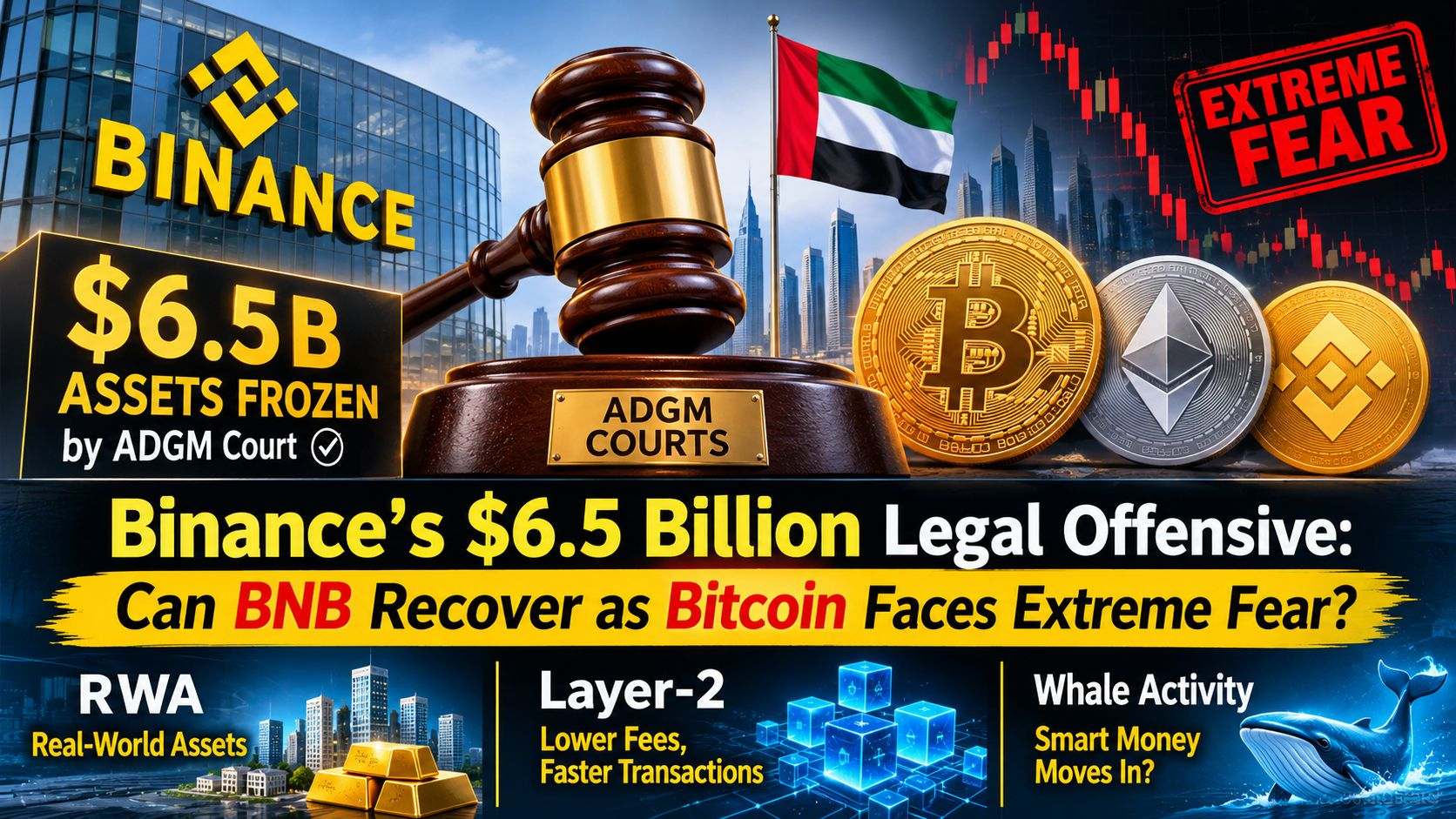

Binance may have won an important battle in court, but the crypto market isn't celebrating yet. With Bitcoin struggling near $63,000, millions of dollars in leveraged positions being liquidated and investors gripped by extreme fear, one question matters: can legal action restore confidence faster than the market loses it?
The October 29 Binance security breach was more than another crypto hack. It exposed how vulnerable even major trading platforms can be when billions of dollars move through interconnected digital infrastructure.
Approximately $6.34 billion in assets were affected. Now, Binance is fighting back through an international legal process.
The company has announced that it obtained an asset-freezing order from the Abu Dhabi Global Market (ADGM) courts covering up to $6.5 billion in assets linked to the incident.
Around $2.85 billion has reportedly already been frozen or intercepted.
This is a major development. But investors should understand why it matters and what it does not guarantee.
Binance's Legal Victory: A Turning Point, Not the End
The ADGM court order targets 18 cryptocurrency-related companies and requires them to preserve identified assets connected to the incident.
In simple terms, those assets cannot be freely transferred, exchanged, lent or mixed while the legal proceedings continue.
However, freezing stolen cryptocurrency and recovering it are two different things.
The order does not automatically give Binance unrestricted authority to seize assets from every financial institution worldwide. Recovery still depends on legal jurisdiction, asset identification and cooperation between relevant authorities and institutions.
A further court hearing is scheduled for December 1.
Binance has also said it will absorb the financial impact rather than pass the losses to customers. Its November 3 update stated that the required funds had been reserved and that 98% of affected token assets had been replenished by October 31.
That is important for customer confidence.
But the bigger test is whether Binance can demonstrate stronger security controls, transparent reserves and effective protection against future attacks.
For regulators, this case sends a clear message: financial innovation cannot come at the expense of customer protection.
Extreme Fear: Why Are Investors Still Selling?
A major legal victory should normally support confidence. Yet the wider crypto market remains under pressure.
On November 19, the Crypto Fear and Greed Index was around 11, placing the market firmly in Extreme Fear territory.
Bitcoin was trading near $63,000, while spot Bitcoin ETF outflows indicated that institutional investors were still cautious.
Reported figures showed approximately $88.5 million in net ETF outflows on November 18, following around $242.8 million on November 17.
This suggests that the market is still struggling to attract consistent institutional demand.
The futures market offers another warning.
Approximately $285 million in leveraged positions were liquidated over 24 hours on November 19, including around $214 million in long positions, according to one market tracker.
That means many traders betting on higher prices were forced out as the market moved against them.
Such liquidations can accelerate selling and create additional volatility.
However, liquidation figures vary between tracking platforms, so they should be treated as estimates rather than a complete market record.
Whale Activity: Where Is the Smart Money Moving?
When retail investors panic, large investors often look for opportunities. But not every whale movement signals accumulation.
Recent tracked on-chain activity through November 19 showed that two recently funded Ethereum wallets had accumulated approximately 17,900 ETH since August without recorded selling.
That is worth watching.
However, Bitcoin's picture was less encouraging. Some large holders were transferring more BTC to exchanges, potentially increasing available selling pressure.
Another tracked dataset showed net buying in BTC and $NEAR on November 18, while ETH and BNB recorded negative net flows on Binance spot.
These movements should not be interpreted as definitive buying or selling signals. Large transfers can serve different purposes, including custody changes, collateral management and exchange settlements.
Still, the difference between Bitcoin's selling pressure and selective accumulation in other assets deserves attention.
For investors, the important question is not simply which coin whales are buying. It is whether their activity is supported by sustained demand and improving market structure.
RWA: The Shift From Crypto Speculation to Real Financial Assets
While short-term traders focus on Bitcoin and $BNB , another investment theme is attracting institutional attention: Real-World Asset tokenization.
RWA brings traditional financial assets onto blockchain networks.
These include government bonds, private credit, gold and investment funds.
Market data around November 19 placed tokenized real-world assets at approximately $49 billion. Tokenized private credit accounted for around $27.5 billion, while tokenized US Treasuries represented approximately $7.9 billion.
This is important because RWA connects blockchain technology with existing financial markets.
Projects and products such as Ondo, Circle's USYC and BlackRock's BUIDL are helping develop this market.
But investors need to look beyond headline valuations.
A token representing a financial asset does not automatically guarantee direct ownership or unrestricted redemption. Legal rights, custody arrangements, liquidity and regulatory approval must all be examined.
The long-term opportunity lies in the infrastructure that makes traditional financial assets easier to issue, transfer and settle.
Layer-2: Why Lower Fees Could Matter More Than Short-Term Price Rallies
Another area worth watching is Ethereum Layer-2 technology.
Layer-2 networks process transactions outside Ethereum's main network and use Ethereum for settlement and security. This can make transactions faster and cheaper.
According to data cited by Ethereum Institutional, Ethereum-related Layer-2 networks averaged approximately 23.3 million transactions per day between January and October 2026.
Base, Arbitrum and Optimism remain important players in this space.
Lower fees can make blockchain applications more practical for ordinary users, businesses and financial institutions.
That creates opportunities beyond speculative trading.
However, investors should not assume that growing network activity automatically translates into higher token prices. Token economics, revenue generation, competition and actual demand still matter.
Investment Outlook: What Should Investors Watch?
The next market direction will depend on evidence, not headlines.
BNB: Continued recovery efforts, stronger security measures and transparent reserve reporting could help rebuild confidence.
BTC: Returning ETF inflows, lower exchange selling pressure and a sustained recovery above resistance would strengthen the bullish case.
$ETH : Continued whale accumulation, improving ETH/BTC performance and stronger network demand could support relative strength.
RWA: Institutional adoption, tokenized Treasury growth and clear regulatory frameworks make this sector worth monitoring.
Layer-2: Rising transaction activity, developer adoption and sustainable network economics will be more important than short-term price pumps.
The bearish scenario remains equally important. Persistent ETF outflows, additional whale deposits to exchanges and repeated long liquidations could keep the market under pressure.
My view is straightforward: Binance has made significant progress in the legal battle, but the recovery process is not finished.
The December 1 hearing, the actual return of frozen assets and measurable improvements in platform security will matter more than optimistic headlines.
For investors, extreme fear can create opportunities, but falling prices alone do not make an asset undervalued.
Avoid chasing rebounds. Keep leverage under control, watch liquidity and consider gradual entries instead of committing all your capital at once.
The real question is whether the next crypto recovery will be driven by another speculative rally or by stronger regulation, institutional RWA adoption and cheaper blockchain infrastructure.
Which opportunity looks more attractive to you right now: BNB's potential recovery, Ethereum's whale accumulation, Bitcoin's next move, or the long-term growth of RWA and Layer-2?
Share your analysis in the comments.



#Binance #Geopolitics #CryptoAnalysis #BNB_Market_Update #altcoins