
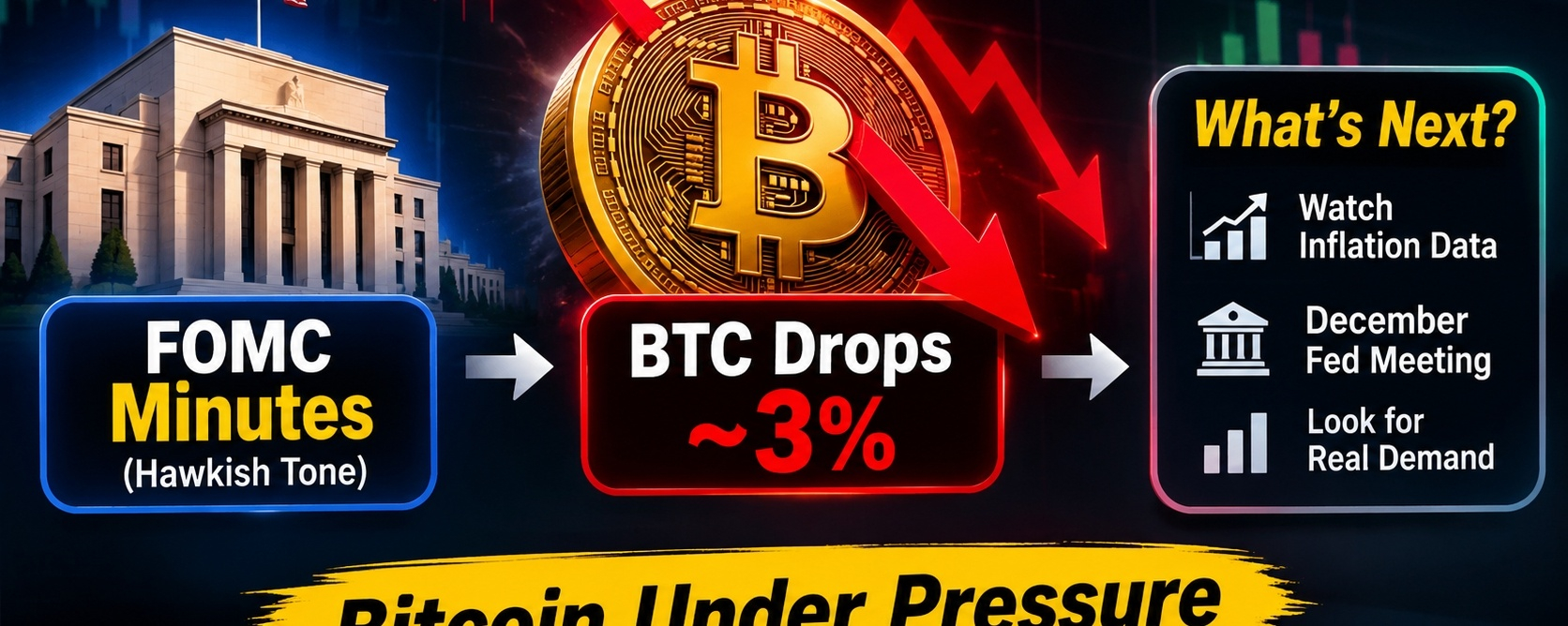


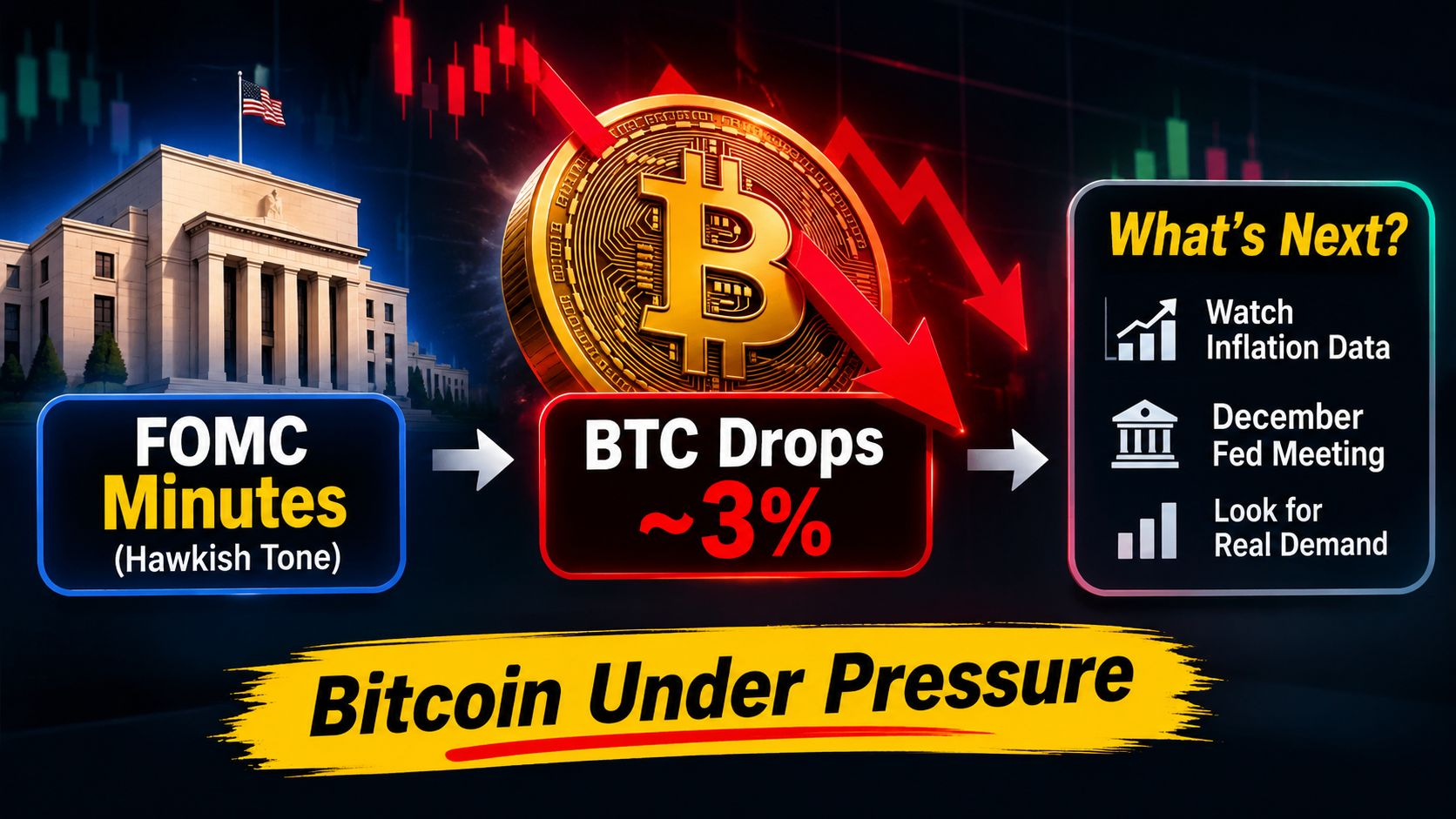
Bitcoin's having trouble getting back on its feet, and the latest FOMC minutes haven't helped. The Federal Reserve still isn't comfortable with inflation, and some policymakers believe interest rates may need to go higher if price pressures don't cool down. For anyone expecting an easy recovery in crypto, that's an uncomfortable message.
I've watched enough Fed tightening cycles to know how quickly sentiment can change. Traders spend weeks positioning for a recovery, leverage starts building, and then one macro headline sends everyone rushing for the exit. The same thing keeps happening. @Bitcoin can look strong on the chart, but when liquidity dries up, even aggressive buyers start thinking twice.
BTC dropped nearly 3% following the release, slipping below $63,000 and trading around $62,465. Ethereum weakened alongside it, while BNB, XRP and Solana also faced selling pressure. This wasn't just a Bitcoin problem. Traders were cutting exposure across the market, and the reaction showed how sensitive crypto remains to changes in monetary policy.
The bigger concern is what happens next. If inflation stays stubborn, the Fed could maintain restrictive rates or consider another increase at its December meeting. Higher borrowing costs generally make speculative investments less attractive, particularly when safer assets are offering reasonable returns. Crypto needs fresh capital to sustain a rally, and that capital doesn't always show up when financial conditions are tight (especially when traders are already sitting on losses).
There's another part of this that gets overlooked. Not every Bitcoin selloff is caused by long-term investors losing confidence. Sometimes it's simply positioning. Funding rates get stretched, open interest builds, leveraged longs become crowded, and a relatively small move can trigger forced selling across exchanges. Once those liquidations start, price can move much faster than the underlying news would suggest.
I've seen traders mistake those temporary moves for a complete change in market direction. They sell into panic, buy back after a bounce, and end up paying fees on both sides while the market goes nowhere. It's not complicated, but it's expensive.
Bitcoin also needs to prove itself technically. Reclaiming $63,000 alone won't establish a recovery. Buyers need to push price back above important resistance, defend that area on a retest and bring enough spot volume to support the move. A quick futures-driven pump isn't convincing, particularly when the broader market is still struggling with macro uncertainty.
The December Fed decision deserves attention, but traders shouldn't ignore everything happening outside central bank policy. Exchange liquidity, dollar strength, broader equity market performance and derivatives positioning can all influence short-term BTC movements. Even developments inside crypto matter. Token unlocks can create additional selling pressure in smaller assets, while poor wallet UX, expensive gas and weak user retention continue to hold back parts of the wider industry. New protocol launches don't automatically translate into sustainable demand (and reward farming isn't the same thing as genuine adoption).
I'm not calling for an immediate collapse, but I'm certainly not treating every dip as an opportunity either. The Fed remains hawkish, buyers haven't delivered a convincing recovery, and the next inflation numbers could change market expectations again.
For now, I'd keep leverage low, watch spot buying and wait for Bitcoin to reclaim resistance before treating this move as a genuine reversal. There's no need to force a trade while the market is still weak.
#BTCRemainsUnderPressureAfterHawkishFOMCMinutes
