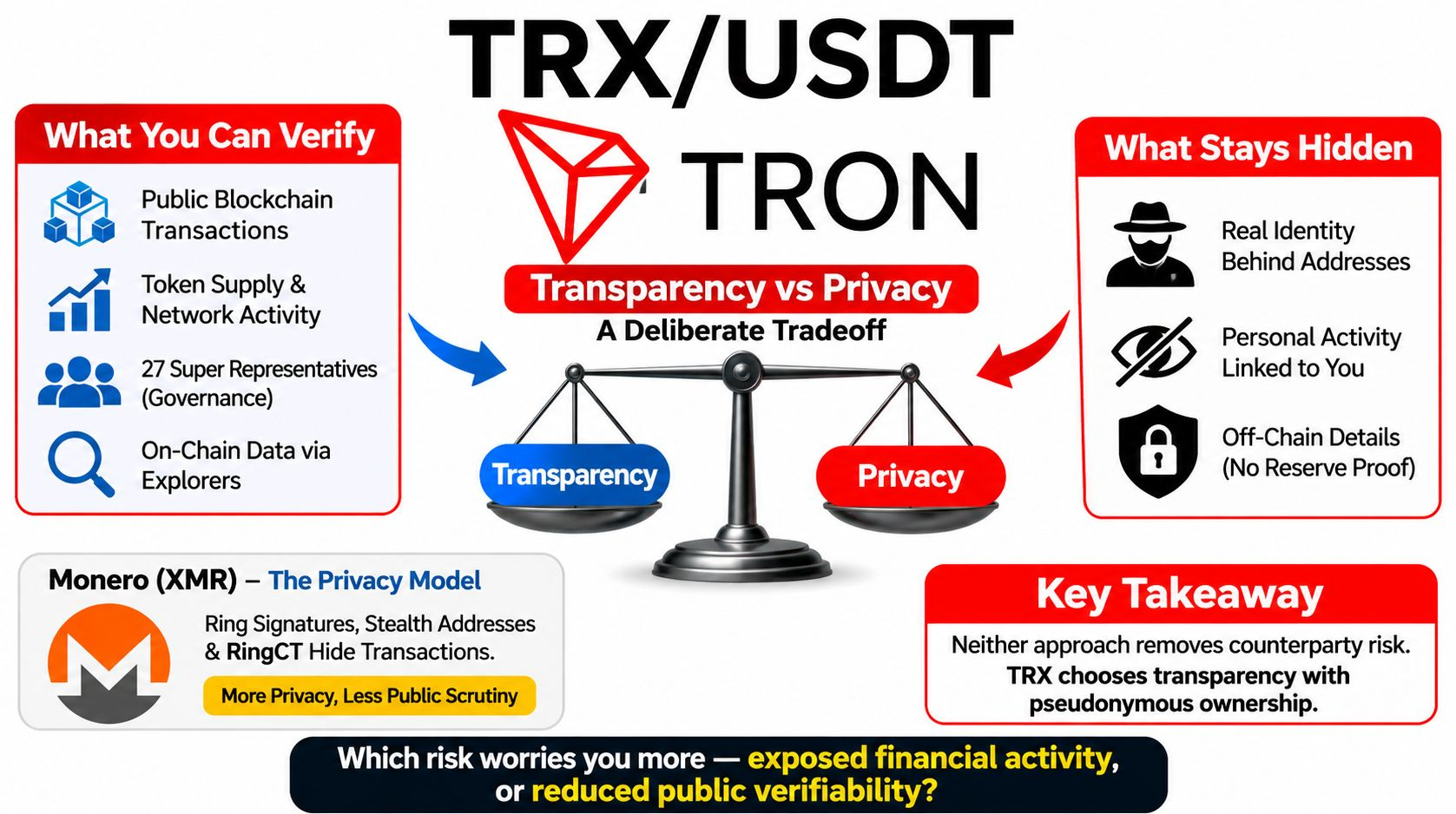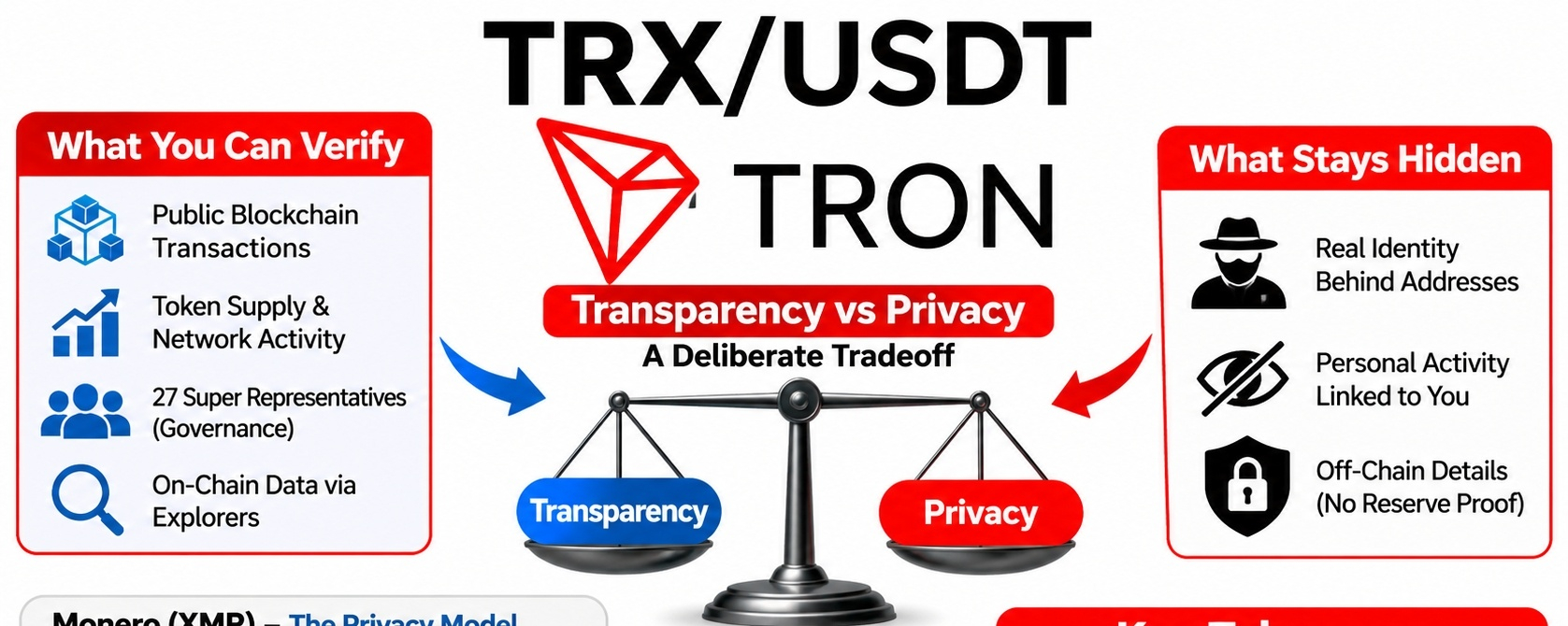

TRX operates on the TRON blockchain, where transactions, wallet balances, and transfers are publicly traceable. But one important detail remains hidden: the real-world identity behind most wallet addresses. That's not an oversight. It's a stated design choice.
TRON uses pseudonymous addresses, allowing users to transact without automatically exposing their personal identities. The tradeoff is that public observers can verify money movements but cannot always verify who controls the wallets.
Holders can independently inspect TRX balances, transaction histories, token supply, and network activity through public blockchain explorers. TRON's official documentation also identifies 27 elected Super Representatives responsible for producing blocks and participating in governance.
However, TRX is a native blockchain asset, not a reserve-backed stablecoin. Traditional reserve attestations and monthly custody audits do not apply. Public verification also does not establish wallet ownership or provide continuous oversight of off-chain activity.
Now compare Monero (XMR). Its privacy model uses ring signatures, stealth addresses, and RingCT to conceal transaction senders, recipients, and amounts. More privacy, in exchange for less public transaction-level scrutiny.
Neither approach removes counterparty risk. TRX offers publicly verifiable transactions but limited identity transparency. XMR prioritizes transaction privacy but limits independent public monitoring.
TRX chooses transaction transparency with pseudonymous ownership, relying on public records and elected validators.
Which risk worries you more — exposed financial activity, or reduced public