

SpaceX’s S-1 registration statement details a multi-segment consolidated corporate structure following its early-2026 common-control acquisitions of xAI and X Corp. The filing breaks the company into three distinct reporting segments: Connectivity (Starlink), Space (Launch Services), and AI (xAI & X Corp).
Consolidated Financial Overview (FY 2025)
Total Revenue: $18.67 Billion (+33% YoY)
Net Income / (Loss): -$4.93 Billion (swung from positive net income in 2024 due to heavy AI expansion and infrastructure costs)
Total Capital Expenditures: $20.70 Billion (heavily weighted toward AI compute cluster buildouts)
Segment-by-Segment Metrics Breakdown
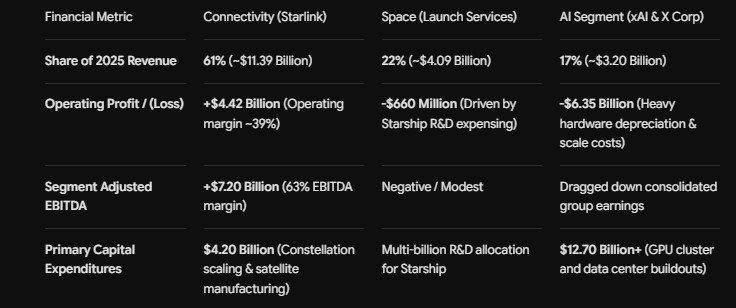
Key Operational Drivers per Segment
1. Connectivity (Starlink): The Profit Engine
Subscriber Growth: Starlink scaled past 10.3 million subscribers globally, with enterprise and government contracts representing a high-margin, zero-churn baseline.
ARPU Compression: Average Revenue Per User (ARPU) trended downward from $99/month (2023) to $81/month (2025) and ~$69/month (2026) as coverage expanded into high-volume, lower-income global consumer markets.
Cash Generation Role: Starlink’s cash flows serve as the internal financial pillar subsidizing both rocket development and AI infrastructure.
2. Space (Launch Services): The Infrastructure Platform
Launch Velocity: Increased from 98 annual launches (2023) to 170 launches (2025), with over 65% of missions dedicated internally to deploying Starlink satellite constellations rather than external paying customers.
Starship R&D Burden: Operating losses in this segment stem directly from expensing billions in uncapitalized Starship research and development costs through the P&L.
3. AI Segment (xAI & X Corp): The High-Burn Growth Bet
Massive CapEx Scale: Capital expenditures for the AI segment accounted for over 76% of total company CapEx, driving the construction of massive GPU training clusters (such as the Colossus supercomputer facilities in Memphis).
Monetization vs. Burn: While X advertising revenue contracted, external compute leasing—exemplified by large enterprise contracts—provides a rising revenue offset against heavy physical hardware depreciation.
Strategic Financial Dynamic
SpaceX operates as an internal cross-subsidization ecosystem. The high-margin cash flows generated by Starlink cover operational adjustments in launch services, while feeding multi-billion-dollar capital outlays into xAI's data center expansions.