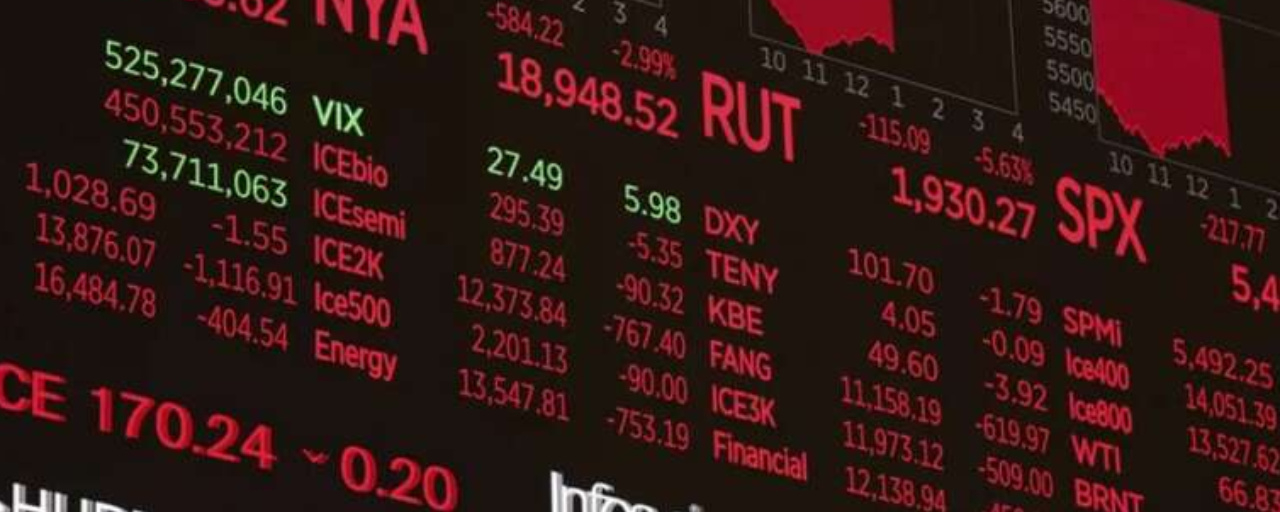

Wall Street closed sharply lower on Tuesday. Traders unloaded chip stocks ahead of Nvidia's results, and the Nasdaq Composite briefly touched its weakest level in about seven months. A report that a classified National Security Agency network had gone offline made matters worse, traders said, and fed a growing unease about how sturdy America's technology infrastructure really is.
Those sources saw no evidence of a cyberattack. The NSA responded later in the afternoon, describing "temporary degradation during scheduled routine maintenance" and insisting its mission-critical functions were still running. The scare arrived at a bad moment. On Friday the FAA halted departures nationwide after a telecommunications failure, and on Monday customers of JPMorgan Chase struggled to complete transactions.
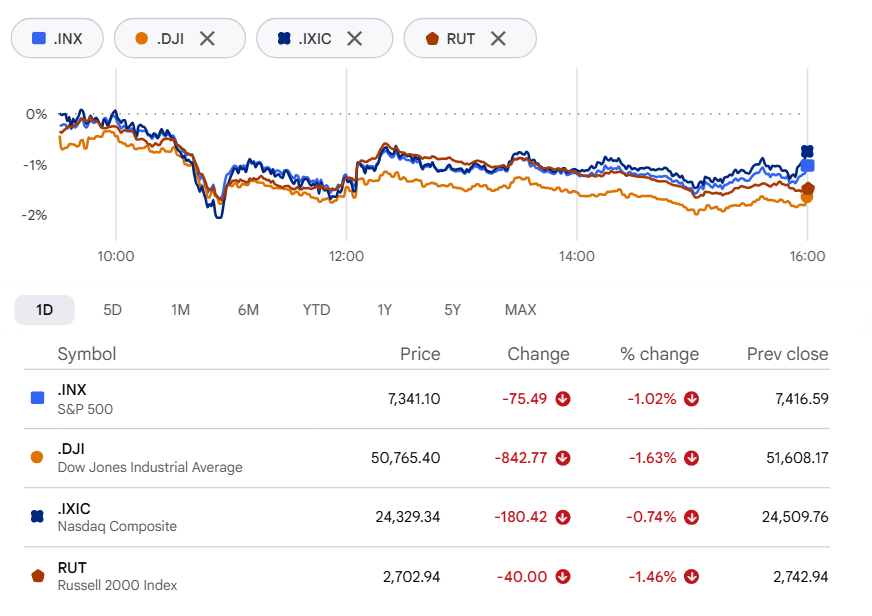
The Dow Jones Industrial Average shed 848.75 points, or 1.64%, to finish at 50,759.42, having been down more than 1,000 at its worst. The S&P 500 lost 1.03% to close at 7,340.53, its weakest finish since late July, after sliding as much as 1.7% earlier in the day. The Nasdaq Composite ended 0.74% lower at 24,328, though an intraday plunge of roughly 2.1% had pushed it to its lowest point since April. Smaller companies fared no better. The Russell 2000 closed at 2,702.94, down 1.5%.
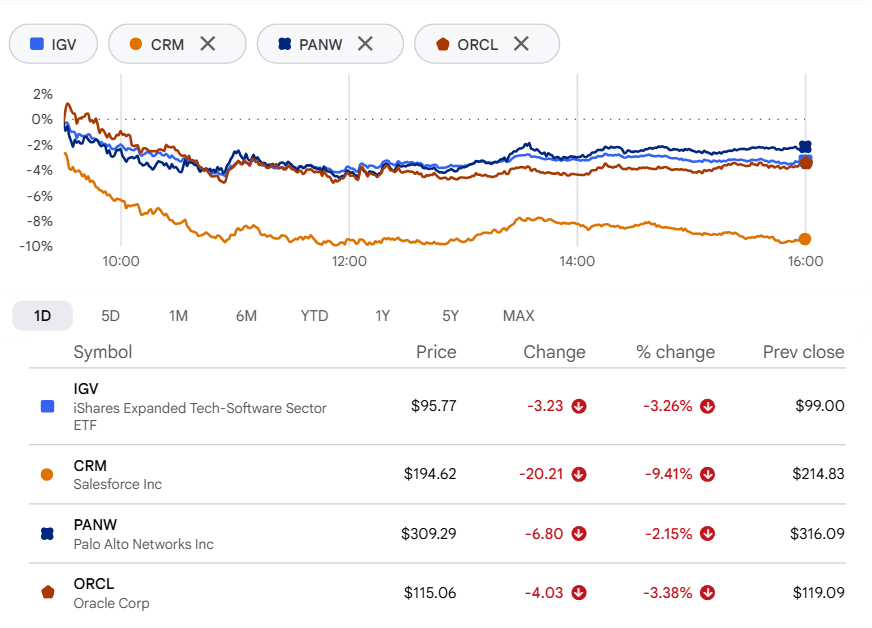
Software took the hardest knock. The iShares Expanded Tech-Software ETF (IGV) fell more than 3%. Salesforce dropped nearly 10%, its biggest one-day fall since May 2024 and the worst showing among Dow members. Palo Alto Networks and Oracle each gave up 2% and 3.4%, while Microsoft and Palantir slipped 3%.
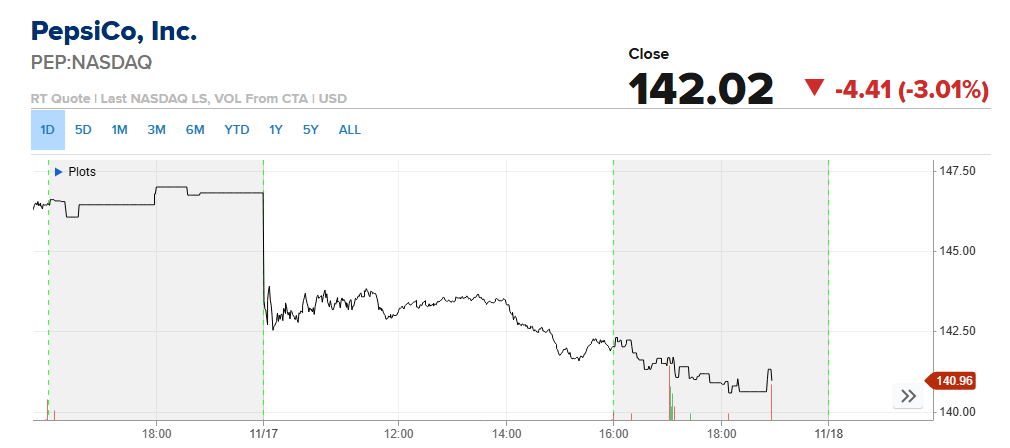
Consumer names were not spared. PepsiCo lost more than 3% after Bernstein cut the Gatorade and Frito-Lay owner to underperform from market-perform. The firm lowered its price target to $128 from $131, about 13% below Monday's close, and trimmed its 2027 adjusted earnings estimate to $8.27 a share from $8.49. Analyst Cristian Rios expects earnings to miss forecasts over the coming twelve months, with North America doing the damage.
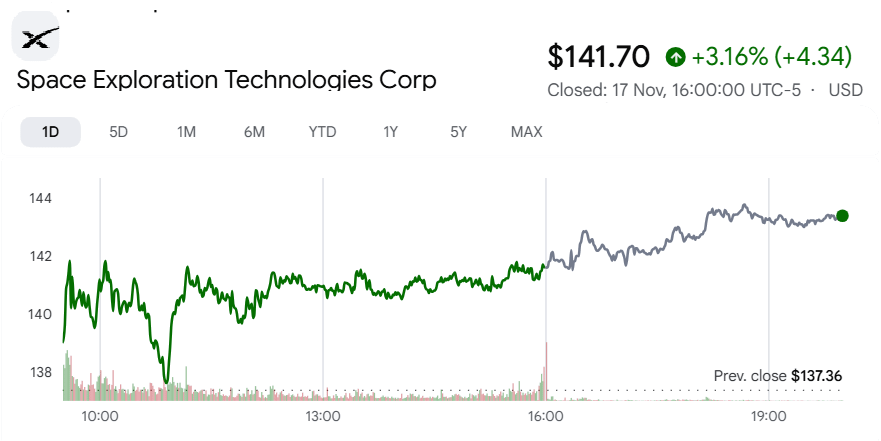
SpaceX bucked the tone of the session, rising more than 3% after Bloomberg reported that part of the company's $40 billion debt financing could be sold to investors as early as this week. People with knowledge of the plan told Bloomberg that around $4 billion of bonds might hit the market in the coming days, with Goldman Sachs and Apollo expected to handle the offering. The money would help pay for artificial intelligence chips.
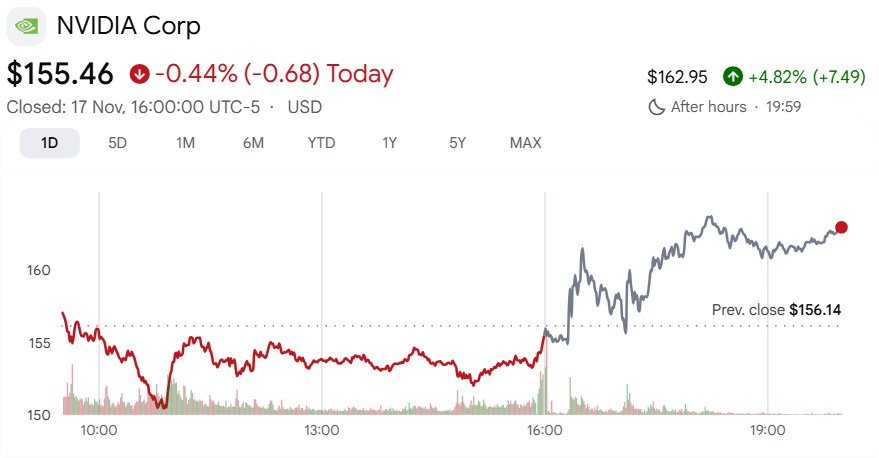
Then the main event. Nvidia had slipped about half a percent during the regular session, and investors spent the afternoon biting their nails. After the bell, the company delivered. Adjusted earnings for its fiscal third quarter came in at $2.68 a share against the LSEG consensus of $2.48, while revenue reached $115.84 billion versus the $109.10 billion analysts expected, more than double the figure a year earlier. Management also guided fourth-quarter revenue to roughly $130 billion, plus or minus 3%, above the $125 billion or so the Street had pencilled in, and that outlook assumes no data-centre compute sales to China. It was the first report since Jensen Huang resigned as chief executive last week, with finance chief Colette Kress now serving as interim CEO. Morningstar's Brian Colello called the numbers "business as usual" on a day when the market badly needed that. Nvidia shares climbed more than 4% in extended trading.
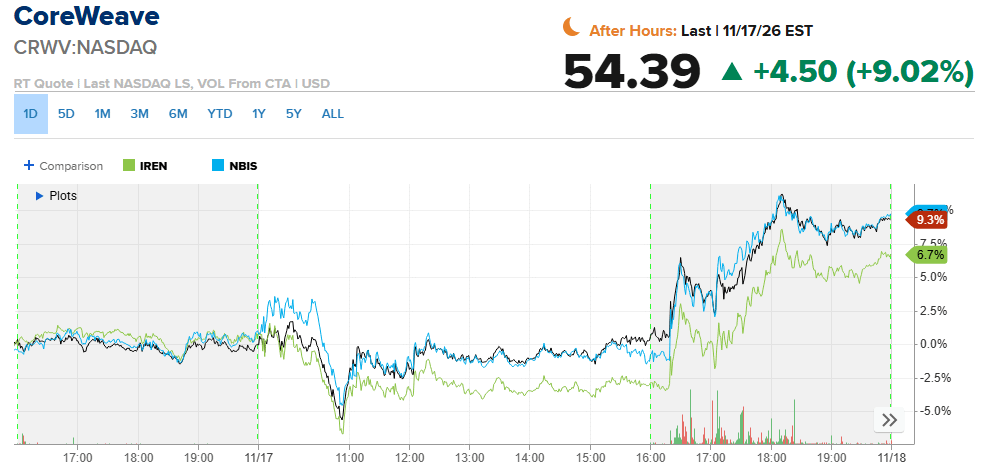
The relief spread. Neocloud stocks, which lean on Nvidia to help finance their data-centre build-outs, moved higher after hours. CoreWeave and Nebius Group each added 9%, while Iren gained around 6%.
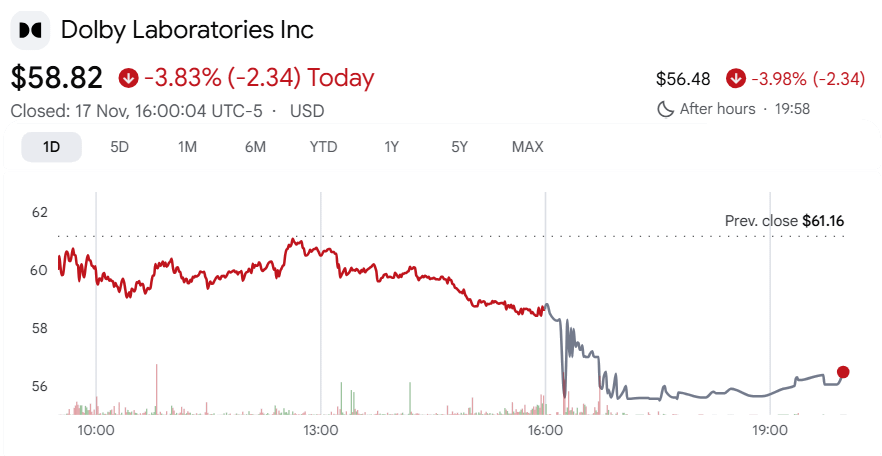
Dolby Laboratories went the other way. Its shares fell almost 4% in extended trading after the audio technology company issued guidance that undershot expectations. Dolby projects adjusted earnings of $4.27 to $4.42 a share on revenue of $1.42 billion for the fiscal year ending September 2027. FactSet analysts had looked for $4.58 and $1.47 billion. The outlook for current-quarter revenue also missed.
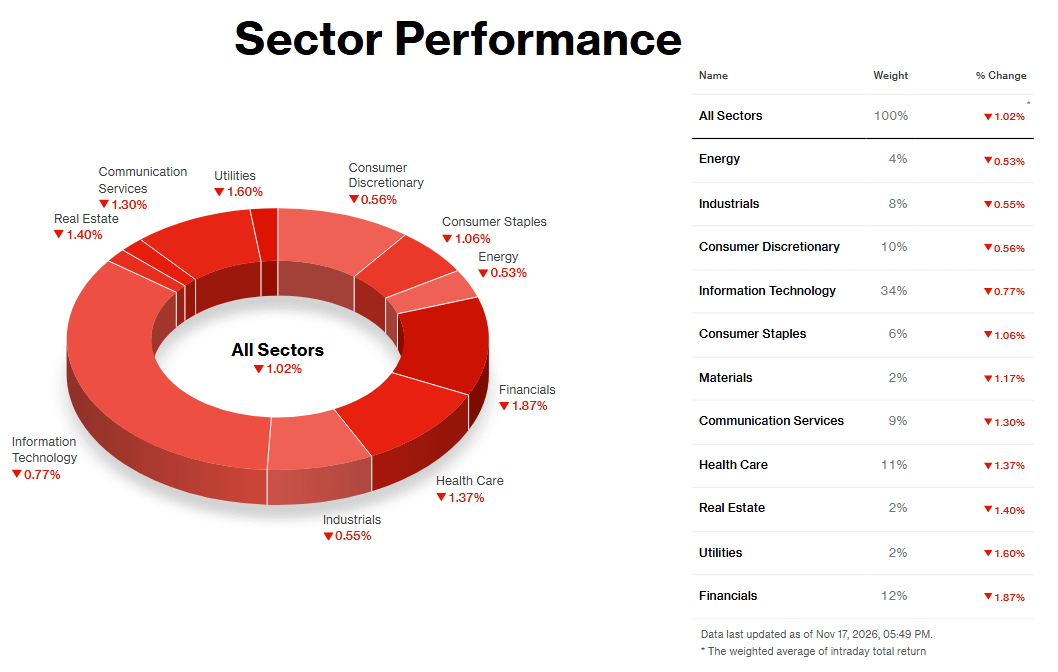
Sector Performance Summary
Nothing escaped Tuesday’s selloff, but Health Care (-1.37%) and Real Estate (-1.40%) gave up the least among the sectors in this data.
Health Care’s damage sat in managed care. UnitedHealth fell 5.42% as lawmakers renewed calls to dismantle vertically integrated health-care groups and a proposed federal rule put Medicare Advantage under tighter watch, while Humana and CVS slid alongside it. Managed care was also giving back part of Monday’s gains. With reimbursement and medical costs already drawing scrutiny, fresh political risk landed on a group with little margin for error.
Real Estate was led lower by cell-tower landlords, with SBA Communications down 6.5% and Crown Castle down 5.8%. No tower-specific headline surfaced, so rates look like the culprit: the 10-year yield sat near 5.1%, and builder confidence slid to its lowest reading since 2012.
Financials fell furthest (-1.87%), with no single trigger. Chip-led selling had already reached the big banks Monday, leaving JPMorgan, Goldman Sachs and Morgan Stanley each off more than 2%. JPMorgan kept sliding Tuesday, down 2.44% as it worked through a since-fixed tech outage and a planned CFO change. Hawkish Fed talk didn’t help: St. Louis Fed President Alberto Musalem argued the central bank could need up to four more hikes. Higher rates usually help banks; here they traded as part of a broad retreat from risk. The weakness is sector-wide, with a JPMorgan overlay.
Utilities lost 1.60% with no company-specific catalyst I could find. Capital-hungry, debt-laden models make the group vulnerable when yields rise, and it dropped more than 6% in September, its worst month since December 2024. With the 10-year around 5.1% and traders pricing a 95% chance of a December hike, the same squeeze was at work.