
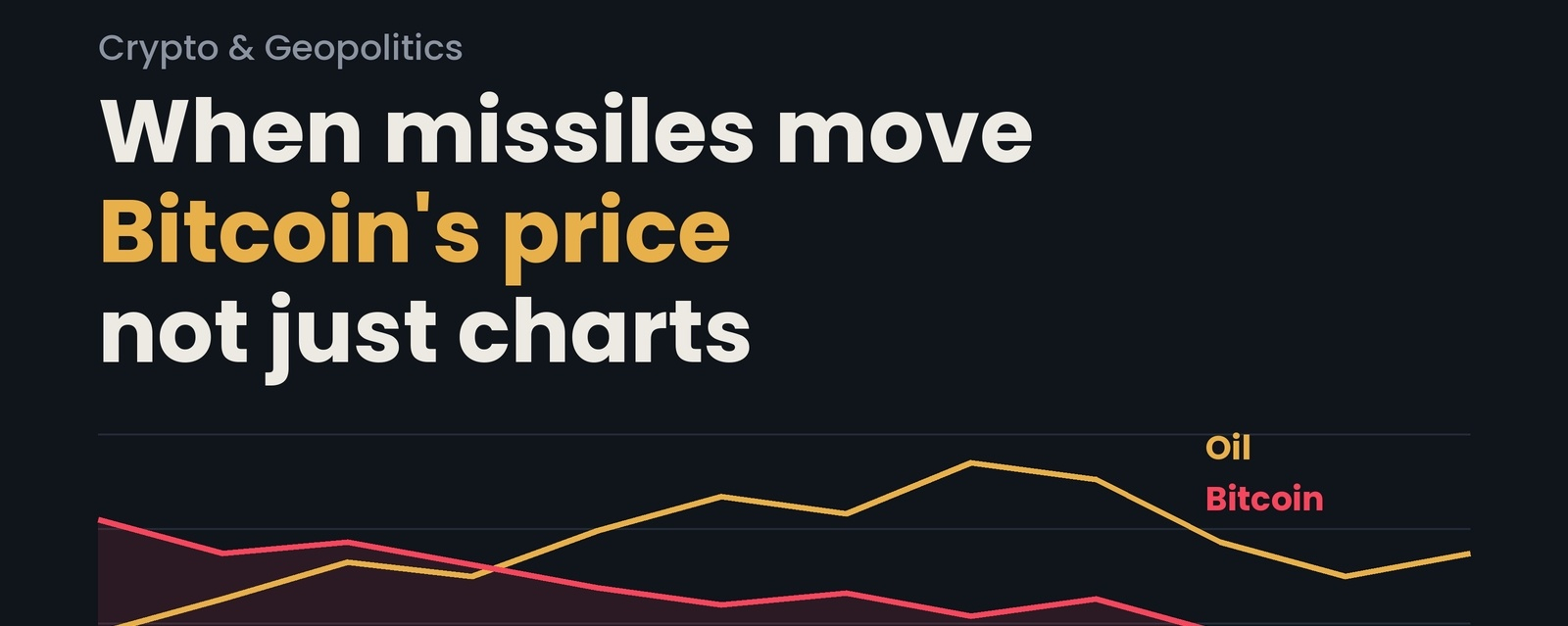

War is usually discussed in terms of armies, diplomacy and oil. But for crypto traders, it shows up in a different place: the price chart. Since the US–Iran conflict began in late February 2026, Bitcoin's moves have often followed the oil market, the inflation outlook and interest-rate expectations more than crypto news itself.
Here is how the conflict has connected to crypto, what the data shows, and what to watch now.
The chain of events
A conflict can affect crypto through a series of links:
1. Supply fears. Threats to shipping routes, especially around the Strait of Hormuz, lift oil prices.
2. Inflation. Higher energy costs push up consumer prices.
3. Rate expectations. Central banks may hold rates high, or even raise them, to fight inflation.
4. Risk appetite. Higher rates pull money away from riskier assets, and Bitcoin has often traded like one.
Crypto also has its own angles, such as safe-haven demand and sanctions, which analysts still debate.
Key phases
Start of the conflict (late February to March)
Strikes began in late February, and oil prices jumped sharply. Crypto fell along with other risk assets, but Bitcoin held up better than many expected during the early shock.
Talks and flare-ups (April to July)
Bitcoin moved in a wide range as headlines swung between talks and escalation. It rallied on hopes of a deal and dropped when negotiations stalled. Some reports say spot Bitcoin ETFs saw sustained outflows during the flare-ups, but exact figures vary by source.
Oil spikes and recovery (summer to autumn)
Bitcoin recovered over the summer, but oil rose again in the later months, which fed inflation fears. Crypto sold off as those fears grew.
The current picture (mid-November)
Oil has fallen from its recent highs as de-escalation hopes grew, though no formal deal has been confirmed. At the same time, inflation data and rate-hike bets have kept pressure on markets. Bitcoin has been trading in the mid-$60Ks after a sharp weekend drop to around $62K, its lowest since July.
Why it's not that simple
• The relationship is unstable. Bitcoin and oil have sometimes moved together and sometimes in opposite directions.
• Other forces matter as much. The recent slide was also linked to a tech-stock sell-off, Extreme Fear sentiment, and leveraged liquidations.
• Headlines cut both ways. Escalation can hit prices, but a peace signal can also be followed by a sell-the-news reaction.
What to watch
• Brent crude: a key early signal for inflation expectations
• Shipping news in the Strait of Hormuz
• US inflation data and Fed signals before the December meeting
• ETF flows and stock-market moves, which have been closely linked to Bitcoin lately
What it means for traders
1. Watch oil as well as crypto. It's often an early warning.
2. Treat war headlines with caution. Early reports often conflict, so wait for confirmation.
3. Don't assume Bitcoin is a safe haven. In this conflict it has often behaved like a risk asset.
4. Keep leverage low. Sudden headline moves can liquidate positions quickly.
Final thought
Behind every chart are real human costs. For investors, the practical lesson is to prepare for volatility, avoid chasing headlines, and protect your capital first.
Do you think geopolitical news affects crypto more than the crypto news itself? Share your view in the comments.
Not financial advice. Do your own research.

#crypto #Oil #Geopolitics #BinanceSquare

