


Oil posted its sharpest one-day drop in about a week on Monday as evidence built that physical barrels are plentiful, even though tensions in the Middle East still threaten exports from the region. Brent settled at $92.44 a barrel, down 3.6%, and WTI closed at $85.72, down 3.2%, after two straight weekly losses.
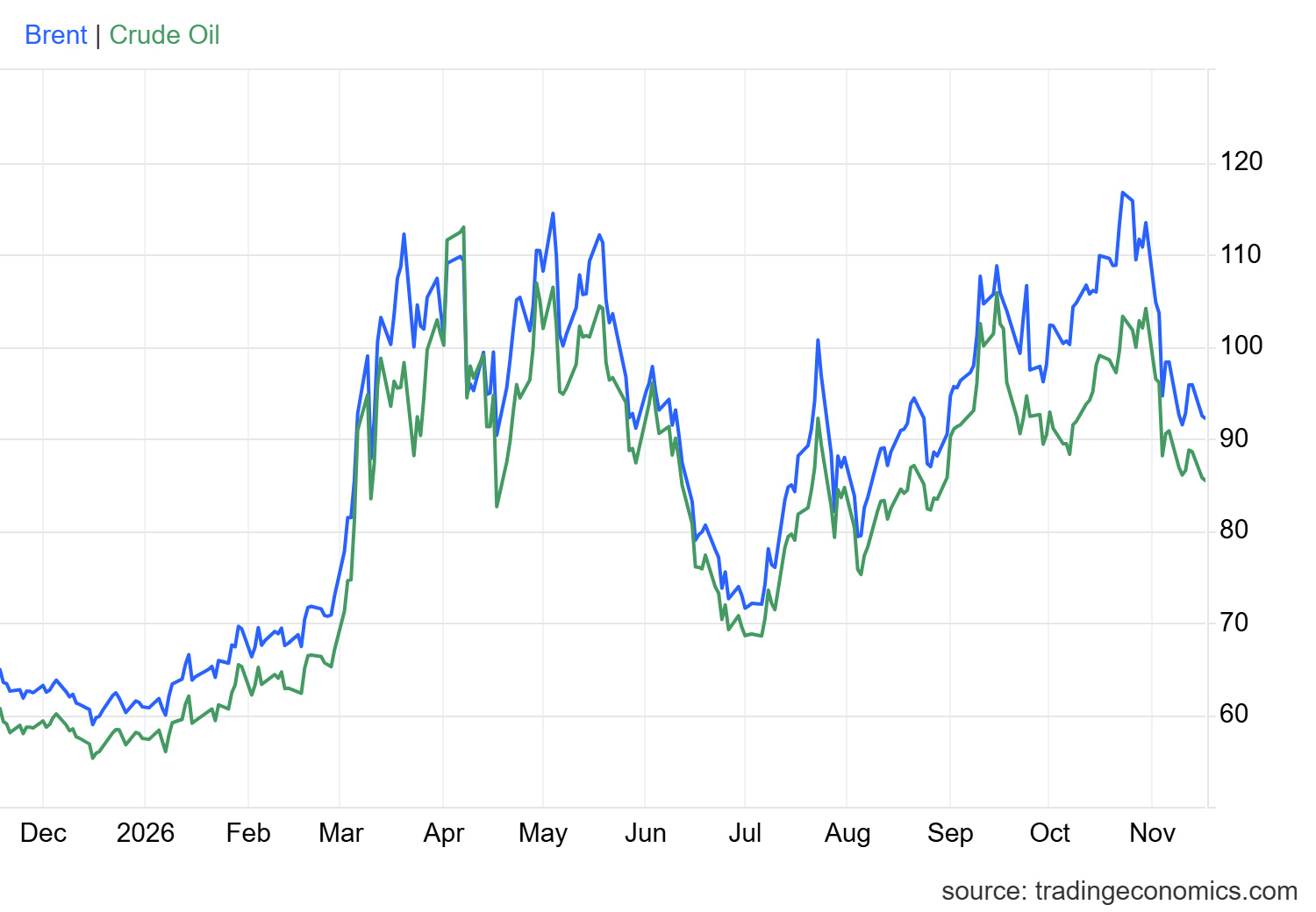
The market has reasons to lean toward supply. The International Energy Agency said on Friday that global supply has overtaken demand for the first time since the war began, and it expects supply to exceed demand by about 1.7 million barrels a day this quarter, after previously forecasting a deficit. Gulf exports have recovered faster than demand, even with the Strait of Hormuz still disrupted.
The extra supply is arriving through workarounds rather than an open strait. Kpler counted confirmed Hormuz transits at about 4 million barrels a day in early November, against roughly 17 million before the war. Gulf exports are back near pre-war rates thanks to shuttle runs through the strait and bypass pipelines.
Saudi Arabia says its October output surged to one of its highest levels in years, and Riyadh has cut its December Arab Light price for Asia by $2, to a $6.50 discount to the Oman/Dubai average, the lowest in about six years. The UAE followed with a deeper move, trimming its December Murban premium to $4 over Dubai from $11.
Goldman Sachs expects the glut to carry into next year, with a surplus building toward about 2 million barrels a day through 2027, and sees Brent averaging $88 in 2027 before sliding to $78 by December of that year. It also flags upside risks in the near term.
All this is happening as the IRGC continues its strikes on the US bases. On Tuesday, the Islamic Revolutionary Guard Corps said launched drones at a US radar system at Bahrain's Sheikh Isa Air Base with drones, and Bahrain said, according to its state television, that it intercepted them. Earlier in the day, Bahraini authorities warned of an unspecified threat and told citizens and residents to head to the nearest safe location. The kingdom is home to the US Navy's Fifth Fleet.
The IRGC framed the strike as a response to continued violations of Iranian airspace by US military drones, and said it had captured US drones of the MQ and MQM-170 series through electronic warfare.
It warned that the use of regional bases and facilities against Iran will not go unanswered, and that the US bears responsibility for the consequences. The two accounts differ: Manama says the attacks were intercepted, Tehran says the radar was hit, and none of the reports reviewed independently confirmed any damage.
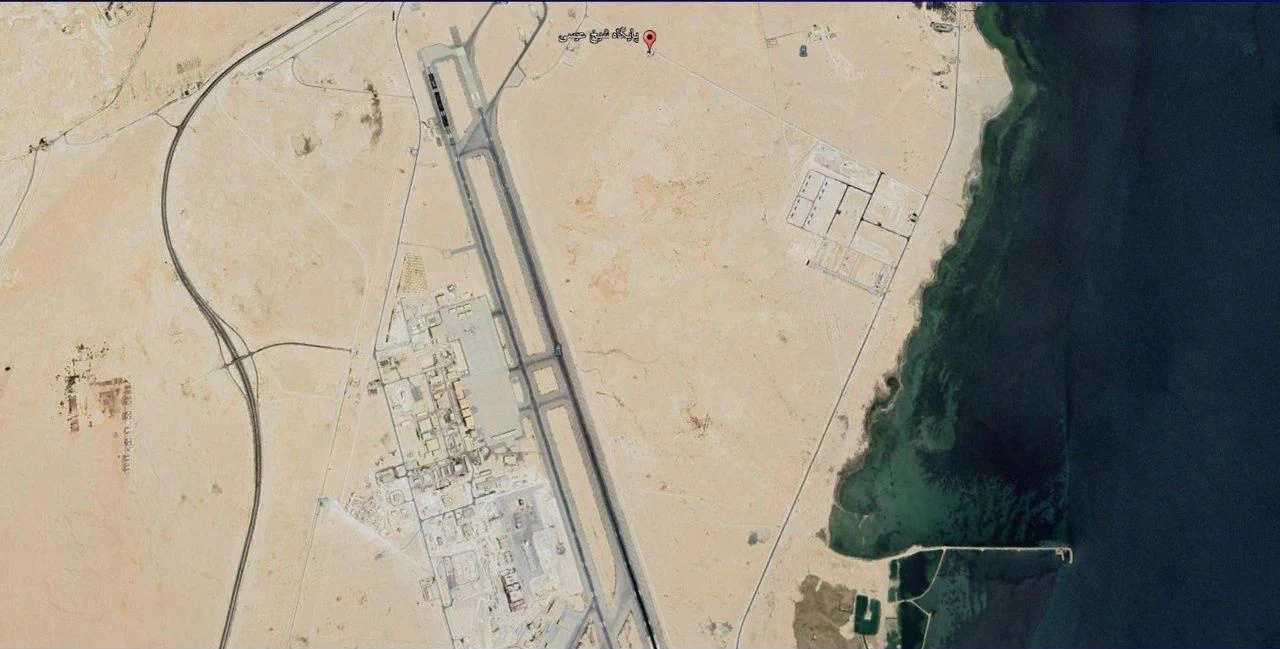
That makes it the third episode since Friday. US Central Command said then that its forces shot down two Iranian drones heading for Bahrain, with no damage reported. On Sunday, the IRGC said it launched six drones at a US air-defense radar at the Riffa helicopter base and called it the second phase of its retaliation, while Bahrain said it intercepted several attacks.
Washington has so far held back. Reuters reported on Saturday that Trump told senior advisers he may hold off on any military action against Iran if the US faces no new provocations from Tehran or the Iran-backed Houthis in Yemen. The Trump administration has yet to restart military actions, but the military posture keeps thickening. The USS Theodore Roosevelt entered the Central Command area on Sunday, according to Axios, which puts three US carrier strike groups in the region.
Tehran Says the Door Is Open, With a Warning Attached
Parliament Speaker Mohammad Bagher Ghalibaf, a senior Iranian negotiator, told an open session of parliament on Sunday that the path to ending the conflict, now in its ninth month, stays open if the US accepts Iran's seven conditions. Iran will not remain in a state of neither war nor peace, he said, and if Washington resumes strikes, Iran's armed forces will decide where the fighting takes place.
Iran's Foreign Minister Abbas Araghchi visited Oman on Tuesday, and the Omani foreign ministry said he and Foreign Minister Badr Albusaidi discussed safeguarding maritime corridors and keeping global shipping and trade flowing. They also discussed reactivating diplomatic and negotiation channels to prevent escalation, the ministry said. Oman holds the southern coast of the Strait of Hormuz and has acted as a mediator since the war began on February 28.
Where the Two Sides Still Don't Meet
Little suggests the gap is closing. The differences include Iran's nuclear program and its control over shipping in the Strait of Hormuz, which the IRGC repeated on Sunday is closed. Iranian state media report almost daily that vessels have hit naval mines in restricted channels, and the latest count was five vessels in 48 hours.
The history explains the caution on the Gulf side. When the US and Israel launched in late February, Iran answered with thousands of drones and missiles aimed at American allies across the region, including the UAE, Bahrain, Saudi Arabia, Qatar, Kuwait, Jordan, Oman and Iraq.
How is Crypto Trading This
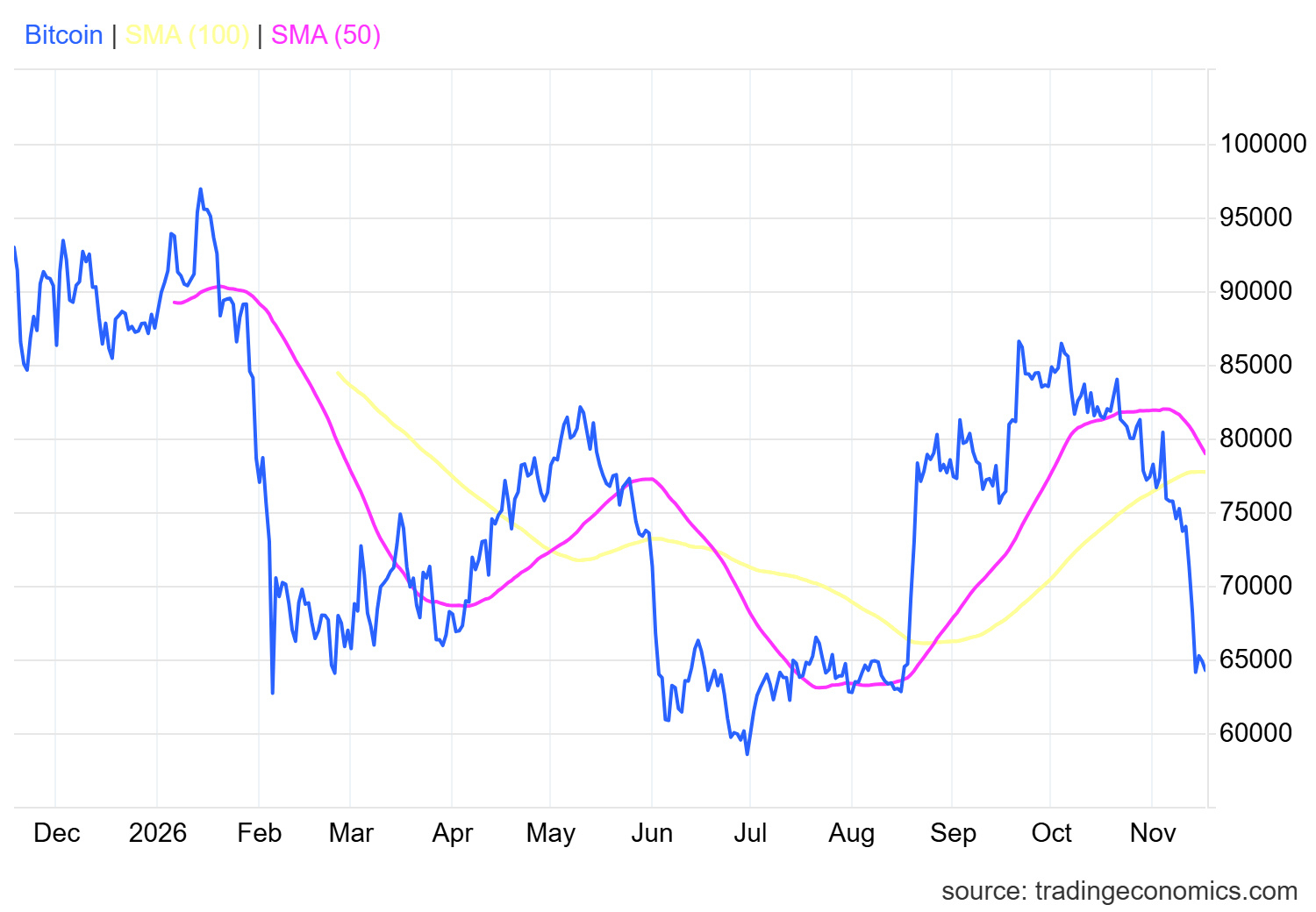
BTCUSD is trading at 64236 this Tuesday, November 17th, decreasing 0.92 percent since the previous trading session. Looking back, over the last four weeks, Bitcoin lost 21.24 percent. Over the last 12 months, its price fell by 30.52 percent.
This article is market commentary for information only and is not financial advice.