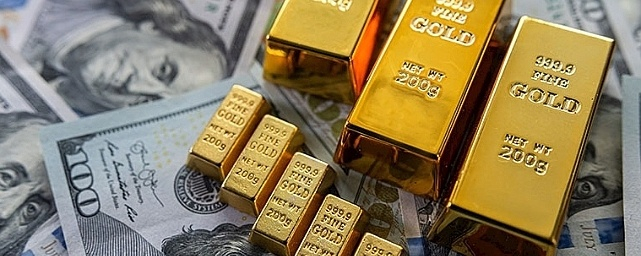

It’s paying someone else’s debt.
There’s a war, inflation, uncertainty, and people are scared.
In this situation, gold is considered a safe haven and should have risen.
Yet gold fell.
And it wasn’t alone—it fell along with stocks and Bitcoin.
There’s a simple rule behind this.
In a panic, people sell not what they want to sell, but what they can sell.
And what they could sell was gold.
The reason is someone else’s debt.
Think of it this way.
Companies issue stocks, governments issue bonds, and central banks issue money.
Behind all of them is a promise made to someone—in other words, a debt.
Behind gold, there’s no one. It owes no one anything.
That’s why it always has buyers and can easily be turned into cash at any moment.
When people need cash, that’s what they sell.
So why did they suddenly need that cash?
The biggest bet of the past 2 years has been artificial intelligence.
Investors often bought these stocks with borrowed money.
In the US, margin debt hit a record of $1.5 trillion in June.
When these stocks fall, the brokerage demands additional collateral.
Those who can’t put up the money have to sell other assets they hold.
In this situation, people sell gold that’s making a profit, not stocks that are losing money.
Because selling the stocks at a loss makes that loss permanent.
That’s what brings gold down: not its own weakness, but a debt that has to be repaid.
What’s more, this bet isn’t as solid as it looks.
AI companies are lending money to one another and using that same money to buy from one another.
If one can’t pay, the whole chain unravels.
The IMF also warned that if valuations fall, margin calls and forced sales will follow.
There’s another source of pressure on gold.
The war made oil more expensive, inflation rose, and the Fed raised interest rates for the first time in 3 years.
When interest rates rise, holding gold, which pays no return, becomes more expensive.
Another rate hike in December is also likely.
We’ve seen this before.
During the 2008 crisis, gold first fell by about 30%.
The reason wasn’t a loss of faith, but people’s need for cash.
Once the crisis passed, gold hit a record in 2011.
The same thing happened in 2020: it fell first, then reached its peak months later.
In a liquidity crisis, gold falls first, then rises.
It’s clear who’s selling today.
Funds with debt are selling gold.
At the same time, central banks continue to buy.
In other words, those selling gold haven’t given up on it—they’ve been forced to repay their debt.
Gold isn’t falling because the reasons for buying it have disappeared.
It’s falling because cash is needed today.
And that cash is going toward repaying someone else’s debt.
American banker J.P. Morgan said this in Congress in 1912.
Gold is money; everything else is just credit.
Gold is falling today because it’s paying the price of credit—in other words, debt.
I’m following developments. I’ll keep you informed.