
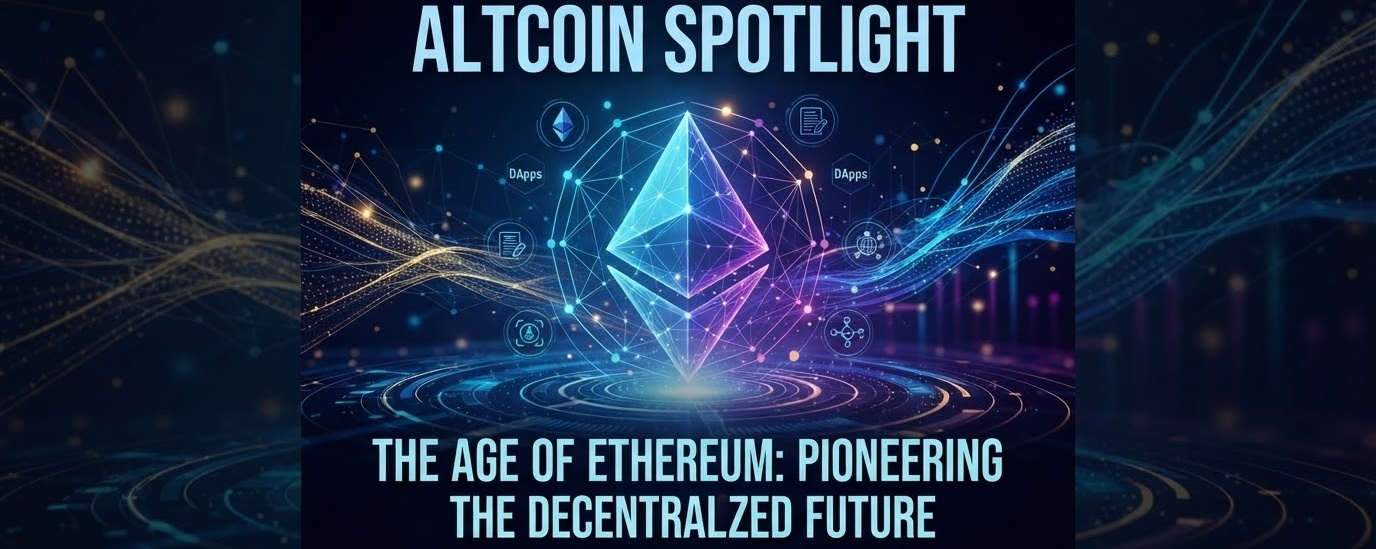

Spotlight: Ethereum (ETH) — The Pioneer of Smart Contracts
What it is: Launched in 2015 by Vitalik Buterin and a team of co-founders, Ethereum is a decentralized, open-source blockchain featuring smart contract functionality. While Bitcoin was designed primarily as digital gold and a peer-to-peer store of value, Ethereum was built as a global, programmable computer.
Native Token: $ETH (Ether) is used to pay for transaction fees (known as "gas") and computational services on the network.
Key Features & Architecture
Smart Contracts & DApps: Ethereum introduced programmable self-executing contracts. This innovation allowed developers to build decentralized applications (DApps) ranging from lending protocols and decentralized exchanges to digital art marketplaces and games.
The Transition to Proof-of-Stake (PoS): In September 2022, Ethereum completed a massive upgrade known as "The Merge," shifting its consensus mechanism from energy-intensive Proof-of-Work to Proof-of-Stake. This reduced the network's energy consumption by over 99%.
Layer 2 Ecosystem: To tackle high traffic and scaling bottlenecks, Ethereum heavily relies on Layer 2 scaling networks (such as Arbitrum, Optimism, and base layers) that roll up transactions off-chain while keeping Ethereum's mainnet as the ultimate security layer.
Other Major Categories of Altcoins
Beyond Ethereum, the altcoin market is diverse and broken down into several functional sectors:
High-Throughput Layer 1s (e.g., Solana, Cardano, Avalanche): Alternative smart-contract platforms optimized for high transaction speeds and low fees to compete with or complement Ethereum.
Stablecoins (e.g., Tether [USDT], USDC): Digital assets pegged to fiat currencies (like the US Dollar) designed to maintain a stable value of $1.00 for trading and liquidity management.
Exchange & Utility Tokens (e.g., $BNB ): Tokens tied to specific exchange ecosystems or trading platforms that offer fee discounts, governance rights, and network utility.
Artificial Intelligence (AI) & Infrastructure Tokens (e.g., Bittensor [$TAO ], Artificial Superintelligence Alliance [FET]): Tokens powering decentralized machine learning marketplaces, cloud compute sharing, and autonomous AI agent economies.
Meme Coins (e.g., Dogecoin [DOGE], PEPE): Community-driven digital assets that often start as internet jokes but achieve multi-billion-dollar valuations through viral culture.#A Packed Week of Earnings and Data Tests Markets #AnthropicIPOTestsInvestorAppetiteForAI #NvidiaBoardNotConsideringHuang’sReturnasCEO