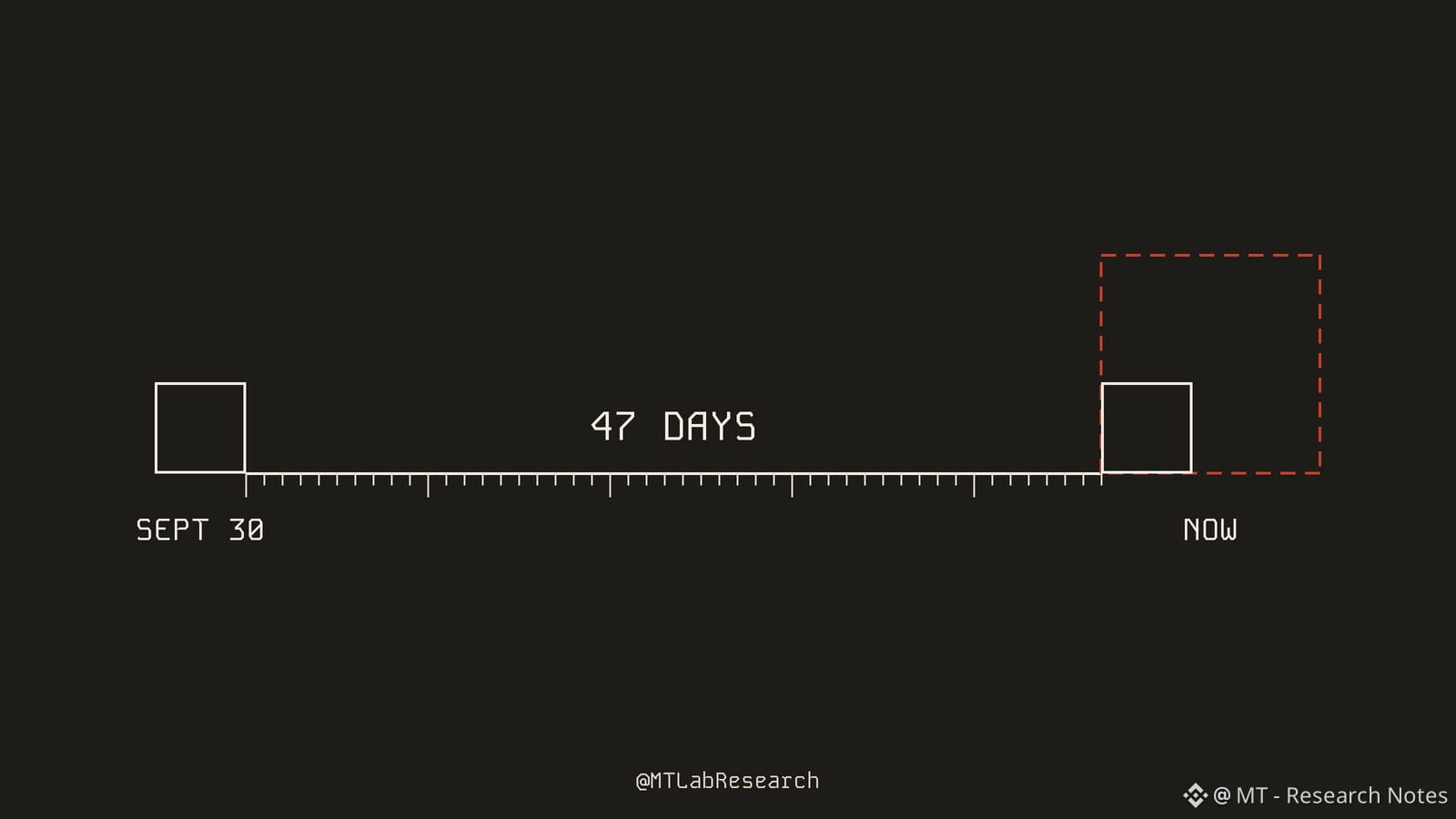
Berkshire bought $689M of one stock. Should you copy? Check one date first.
The date is Sept 30. Berkshire's latest 13F, filed Nov 16, shows one new buy: Bending Spoons, about $689M as of Sept 30. That snapshot is 47 days old. Then Berkshire bought about $330M more in October. The filing cannot show that. The picture had already moved.
A 13F is a report that big money managers (over $100M in US-listed holdings) must file with the SEC about 45 days after each quarter ends. It lists what they held on the last day of the quarter. Nothing more.
So it is a great place to get curious and a risky place to copy from. Here is what it can and cannot tell you:
- It shows longs only. The SEC says shorts are not reported and are not subtracted from longs. A big "buy" can be fully hedged and you would never know.
- Look at share counts, not dollars. IBIT rose about 41% in Q3, so a bigger dollar stake can just mean a higher price (Cointelegraph).
- A trim is not always doubt. Berkshire cut Bank of America by 5.7%, about 483M shares to 456M (24/7 Wall St). The filing never says why, and a trim can be plain risk control.
Where 13Fs get useful is the crypto trend. Among 1,389 early filers, banks held $258M of spot Bitcoin ETFs, 4.9% of the total, up from 3.2% in Q2 (Bitwise, preliminary). Barclays lifted its IBIT stake 48%. Citi opened a $119M FBTC position. That is a slow shift across many names, a better signal than one stock. Still, it covers Sept 30, before Bitcoin's later drop and about $2.1B of Q4 ETF outflows (SoSoValue).
If you use a 13F, here are some valuable lessons:
- If many unrelated funds add the same name over several quarters, study why.
- If one fund shows a new stake, that is one view, and you do not know its entry price.
- If the price has moved a lot since Sept 30, the filing no longer says what they would do today.
Smart money leaves footprints. Footprints are not directions.
Experience, not financial advice.
#whatinvestmentsignalsdo13ffilingsreveal?