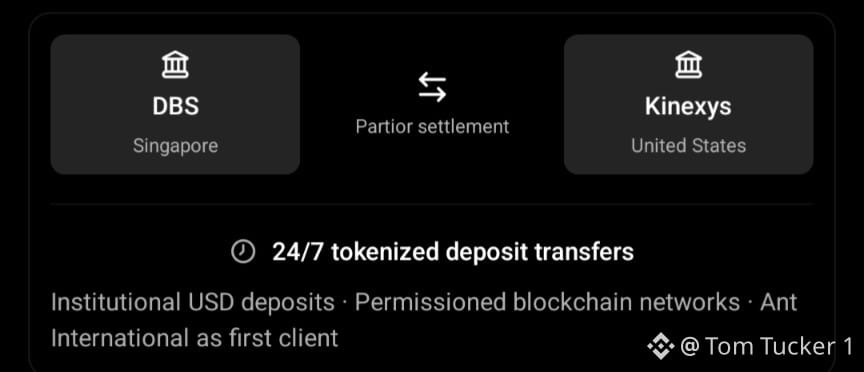
Two major banks just showed what real blockchain adoption looks like.
JPMorgan and DBS have launched a live service allowing institutions to move tokenized US dollar deposits between Singapore and the United States around the clock.
Ant International is the first client, using it for cross-border treasury management.
Why is this important?
Traditional banking systems have operating-hour limitations. Tokenized deposits allow approved institutions to move bank money across connected blockchain networks, including weekends.
But these are not public stablecoins. The service uses permissioned networks, and access is limited to institutional clients.
For $ETH and the broader RWA sector, the lesson is important: blockchain adoption can grow without every transaction using a public-chain token.
There is also no automatic price benefit for ETH or any RWA coin.
Are tokenized bank deposits becoming a serious alternative to stablecoins for institutional payments?
#RWA #RWAfi #Macro Insights# #ETH #Ethereum