


$HUMA Finance | November 17, 2026
The next major opportunity in crypto may not come from another meme coin or speculative trend. It could come from something much closer to traditional finance: global payments.
That is the market Huma Finance is targeting.
With its PayFi infrastructure, Huma aims to connect blockchain technology, stablecoins and real-world payment financing. But while the project's vision is attracting attention, its token is facing an important supply-related event.
Let's look beyond the hype.
1. What Exactly Is Huma Finance?
Huma Finance is a decentralized Payment Finance (PayFi) network designed to make global payments and financing more efficient.
Its infrastructure focuses on connecting payment institutions, liquidity providers and real-world financial activity through blockchain technology.
Some of its targeted use cases include:
- Cross-border payment settlements
- Stablecoin-based payment infrastructure
- Trade finance
- Credit card settlement financing
- Real-world asset financing
The central idea is straightforward: instead of allowing capital to remain locked in slow traditional settlement processes, Huma aims to make liquidity available through on-chain financial infrastructure.
This is what makes the PayFi narrative interesting.
2. Why HUMA Deserves Attention
Huma is operating in a sector that connects two major areas of financial technology: stablecoins and real-world finance.
If blockchain-based payment infrastructure gains wider adoption, projects building the underlying financial rails could become increasingly relevant.
Huma's ecosystem also has connections with established blockchain infrastructure providers and payment-related organizations.
However, adoption of the protocol and demand for the HUMA token are two different things. Investors should monitor whether ecosystem growth creates sustainable demand for the token itself.
3. November 26: The Token Unlock Investors Should Watch
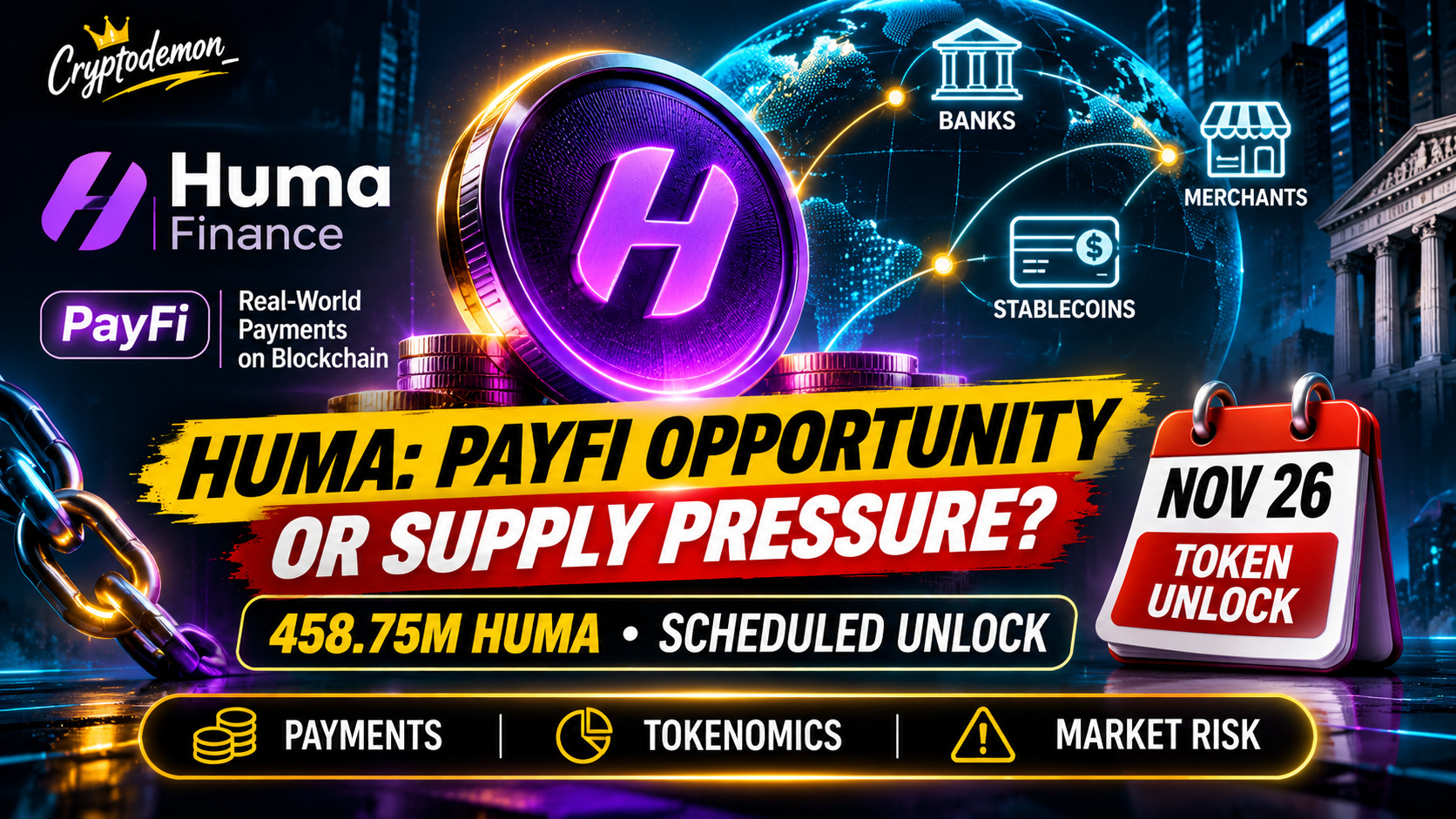
One of the most important near-term developments is HUMA's scheduled November 26 token unlock.
According to CoinGecko's unlock data:
- Approximately 458.75 million HUMA tokens are scheduled for release.
- This represents around 4.6% of the maximum token supply.
- The allocation includes investors, the protocol treasury, and team and advisors.
A token unlock does not automatically mean that all released tokens will be sold.
However, it increases the amount of supply available to eligible recipients and can create additional market uncertainty.
This is particularly important when a token is already experiencing elevated volatility.
4. A Recent Wallet Security Incident Adds Another Layer
On November 12, TokenPost reported comments from Huma Finance co-founder Richard Liu regarding a compromised early liquidity-provider wallet.
According to the report, approximately 12 million HUMA tokens were sold from the compromised wallet.
The report also highlighted unusually elevated derivatives activity between November 2 and November 7, when HUMA futures open interest increased from approximately 620 million to 1.1 billion tokens.
Perpetual futures volume reportedly reached seven to ten times spot volume during that period.
These figures suggest that leveraged trading and market positioning deserve close attention.
The reported wallet incident should not be confused with evidence that the entire Huma protocol was compromised.
5. The Bullish Case vs. The Risks
What could support HUMA?
- Greater adoption of stablecoin payment infrastructure.
- Growth in real-world payment financing.
- More institutional participation in PayFi.
- Stronger utility and demand connected to the Huma ecosystem.
What could create pressure?
- The November 26 token unlock.
- Additional selling from existing holders.
- High derivatives activity and leverage.
- Weakness across the broader cryptocurrency market.
- Uncertainty around how protocol growth translates into token value.
Both sides deserve attention. A promising narrative alone is not enough to establish a bullish investment case.
6. What Should HUMA Holders Watch?
Three indicators deserve particular attention:
1. Token unlock: Monitor how the market absorbs the November 26 supply release.
2. Spot market activity: Watch whether genuine spot demand supports the token rather than relying entirely on leveraged futures trading.
3. Project adoption: Look for measurable payment activity, integrations and developments that strengthen Huma's actual utility.
These indicators can help distinguish sustainable ecosystem growth from short-term speculative excitement.
Final Thoughts: Is HUMA Bigger Than Just Another Crypto Narrative?
Huma Finance is targeting a meaningful part of the blockchain economy: the connection between digital assets and real-world payments.
That gives the project an interesting long-term direction.
But the upcoming token unlock, recent wallet incident and elevated derivatives activity mean investors should approach the current market situation carefully.
The real test for HUMA will be whether its PayFi infrastructure can translate adoption into lasting ecosystem value.
My question to the community:
Do you believe HUMA could become an important player in the future of global blockchain payments, or will token supply pressure remain its biggest challenge?
Share your thoughts below.
— Cryptodemon_
#A Packed Week of Earnings and Data Tests Markets
#BitcoinExtendsLosingStreakToSixWeeks #XRPFallsTo$0.89LowestSinceNovember2024
#HuangReportedlyConsidersReturnToNvidia