$BTC: Late Entry Risks and the FOMO Mechanism
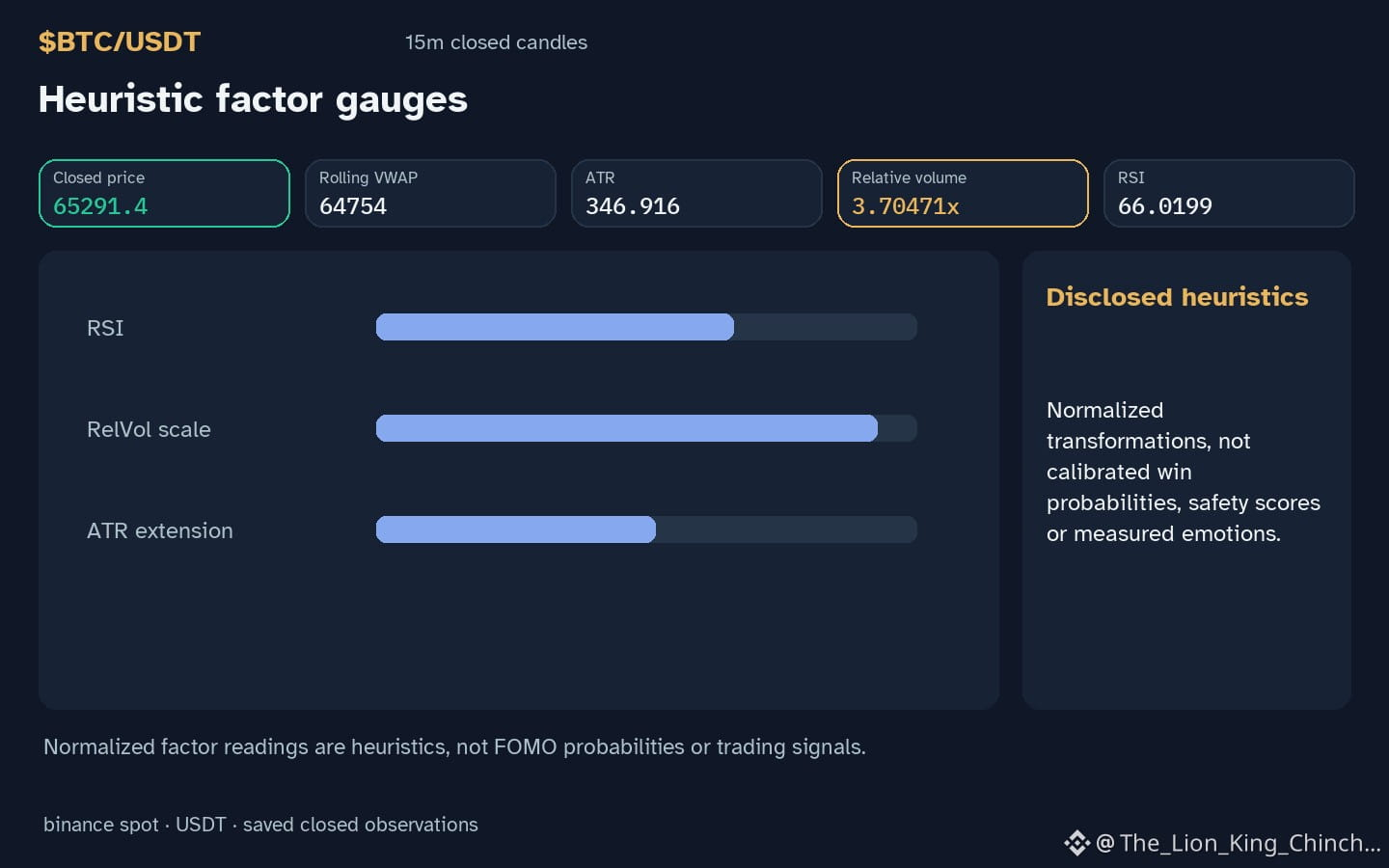
$BTC: Can a delayed reaction to an upward move create a structural disadvantage? The current hourly observation for $BTC shows the price trading above resistance with an upward direction and volume at 3.70x the baseline.
Fear of missing out, or FOMO, often appears as a hypothetical mechanism where a participant ignores their original plan after a move has already started. When the initial signal is missed, there is a tendency to lower entry standards to catch the remaining trend. For example, if an entry was planned at a lower support but the price is now extending above resistance, the reward-to-risk ratio has likely degraded. The distance to a logical stop-loss level increases while the immediate upside might be exhausted.
This behavior is often a reaction to the regret of not acting sooner. A trader might convince themselves that the strength shown in the current candle justifies a more expensive entry. However, the RSI at 66.0 and the daily change of 1.01688% provide only a snapshot of current momentum, not a guarantee of continuation. A self-check to use is asking: if I were looking at this chart for the first time without knowing the previous price, would I still buy at this exact level?
This interpretation weakens if the price closes back below the local resistance, suggesting the move lacked sustained participation. A pause or a move toward the mean would offer a different perspective on the trend strength.
Probabilistic market research, not a recommendation or guaranteed return.
#BTC #TradingPsychology #CryptoLearning