

Navigating the New Frontier: The Advantages and Disadvantages of Crypto Marketing in 2026
Marketing has always been about finding your audience where they live, but in 2026, many of those audiences live on the blockchain. The explosive growth of decentralized finance (DeFi), non-fungible tokens (NFTs), and tokenized real-world assets has birthed a specialized, high-stakes discipline: Crypto Marketing. For traditional brands and web3 natives alike, it represents a frontier brimming with unprecedented potential—and notorious pitfalls. This article analyzes the two sides of this volatile coin.
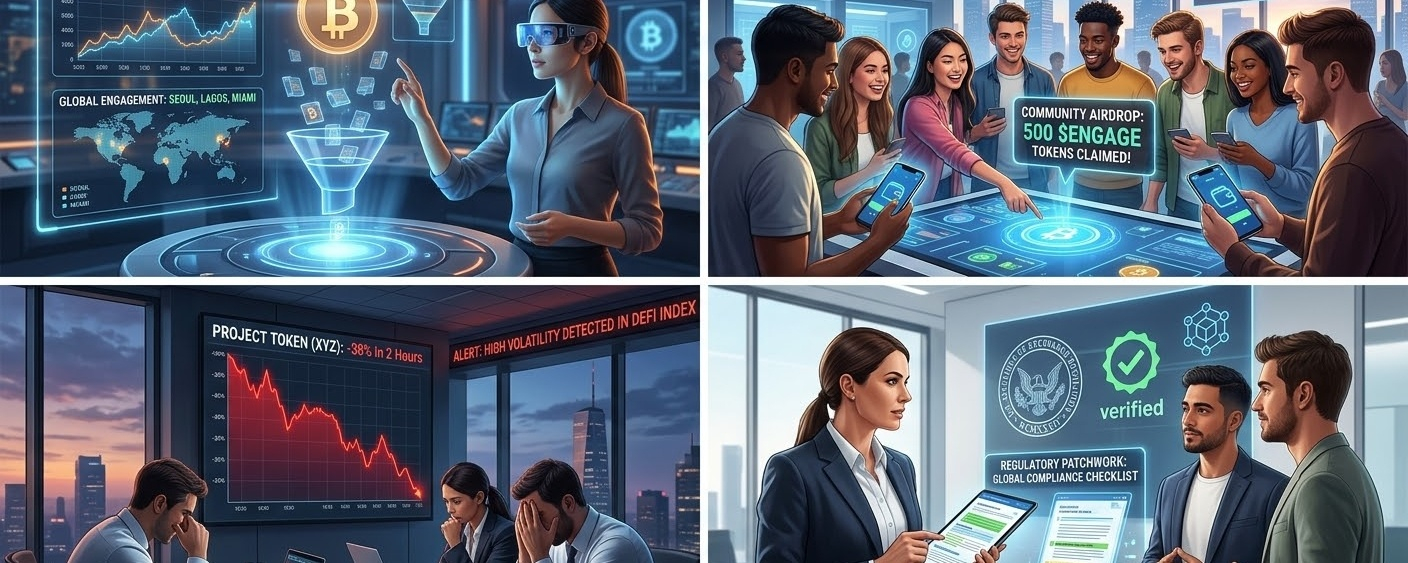
Advantages: Unlocking Global, Engaged, and Verifiable Audiences
1. Direct Access to a Niche, High-Value Demographic
Crypto marketing doesn’t try to reach everyone; it reaches the right people. The audience here is predominantly digital-native, tech-savvy, early-adopting, and often possesses significant disposable income (or at least, highly mobile digital assets). A single successful campaign within a popular Discord server or an influential decentralized autonomous organization (DAO) can generate more value and brand loyalty than a broad, traditional television ad campaign.
2. Radical Transparency and Attributability
Traditional marketing relies on complex attribution models and third-party data to guess at campaign success. Crypto marketing, however, leverages the public blockchain ledger. Marketers can, in real-time, trace precisely how many users clicked a link, connected their digital wallets, performed a transaction, or now hold a specific utility token. This provides irrefutable proof of Return on Investment (ROI) and allows for instantaneous campaign optimization.
3. Incentivized Engagement: "Engage-to-Earn"
The most disruptive element of crypto marketing is its ability to directly incentivize behavior. Through "Airdrops" (giving away free tokens), "Play-to-Earn" (P2E) mechanisms, or "Engage-to-Earn" models, users are not just passive recipients of a message; they are active participants. They are rewarded with valuable digital assets for watching a video, sharing content, providing feedback, or forming a community. This turns standard customer acquisition into a mutually beneficial relationship.
Disadvantages: Volatility, Regulations, and the Trust Gap
 1. Extreme Market Volatility
The defining characteristic of the crypto world is also its greatest marketing challenge. A marketing campaign budget pegged to a specific cryptocurrency can lose 20% of its purchasing power overnight due to a sudden market crash. Similarly, user interest is highly cyclical. During a "Bull Market," engagement is frenetic; during a "Bear Market," communities can become ghost towns, making even the most creative campaigns feel flat.
2. Evolving and Uncertain Regulatory Landscape
By 2026, global regulators have made significant strides, but the landscape remains a complex patchwork. Marketing a token can be classified as promoting a security, a utility, or a commodity, with entirely different rules in the US, EU, and Asia. Navigating these compliance hurdles requires specialist legal knowledge, and a single misstep can result in massive fines, platform bans, or even the forced shutdown of a project.
 3. The Trust Gap: Scams, Frauds, and Noise
The "Wild West" reputation of crypto still lingers. The space is still prone to high-profile collapses, "rug pulls" (creators abandoning a project after taking user funds), and sophisticated phishing scams. This creates a powerful undercurrent of skepticism. Valid, innovative projects must work twice as hard to build legitimacy. Marketers must overcome a user’s initial, defensive thought: "Is this a scam?"
 Conclusion: The Skill of the Future
In 2026, crypto marketing is no longer a fringe curiosity. It is a critical skillset for any organization looking to operate within the trillion-dollar digital asset economy. It offers a powerful, transparent, and direct connection to a global audience, but it demands an acute understanding of technological architecture, community psychology, regulatory compliance, and market dynamics. For those who can navigate its extremes, it is the new frontier of value creation.