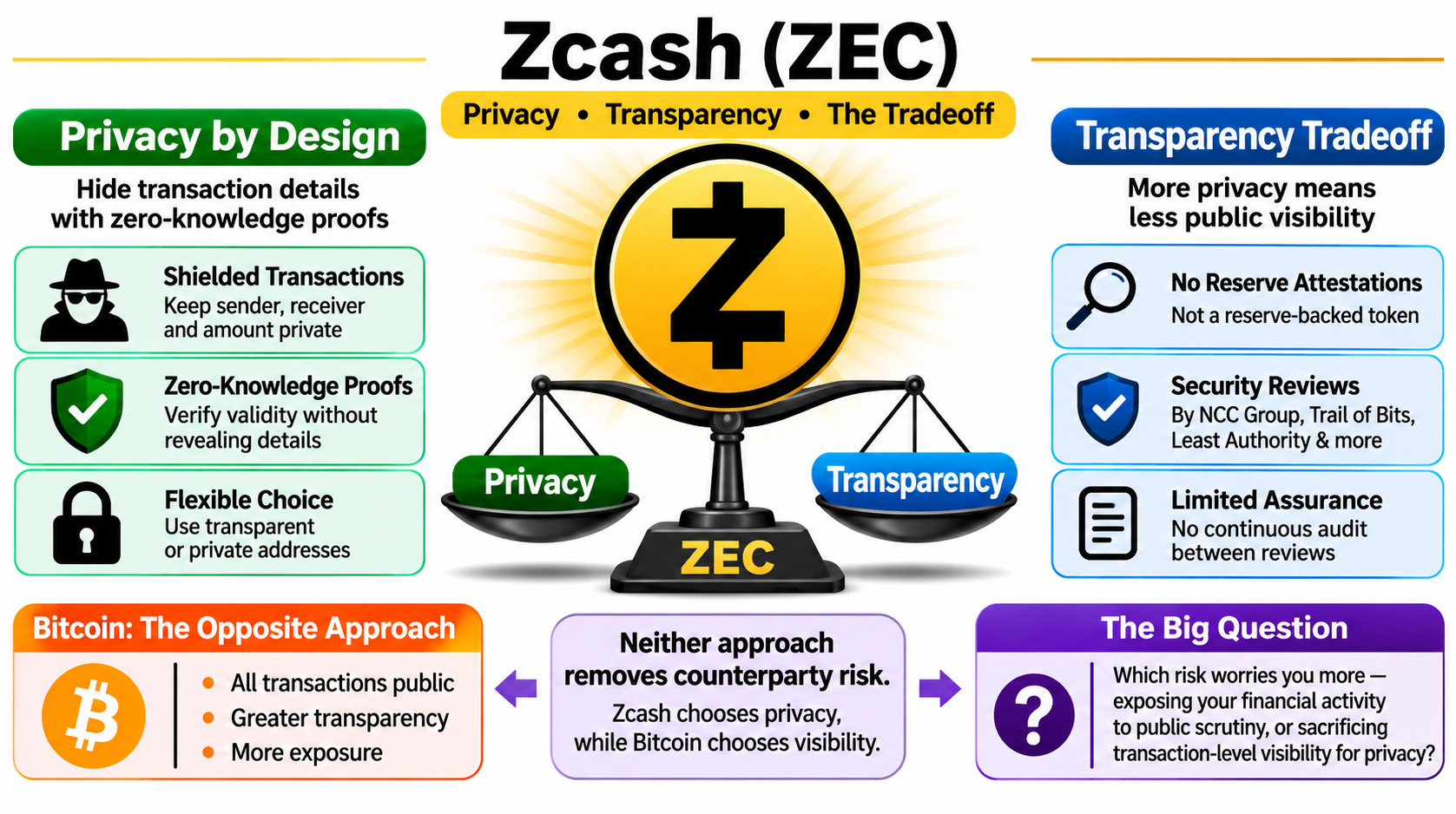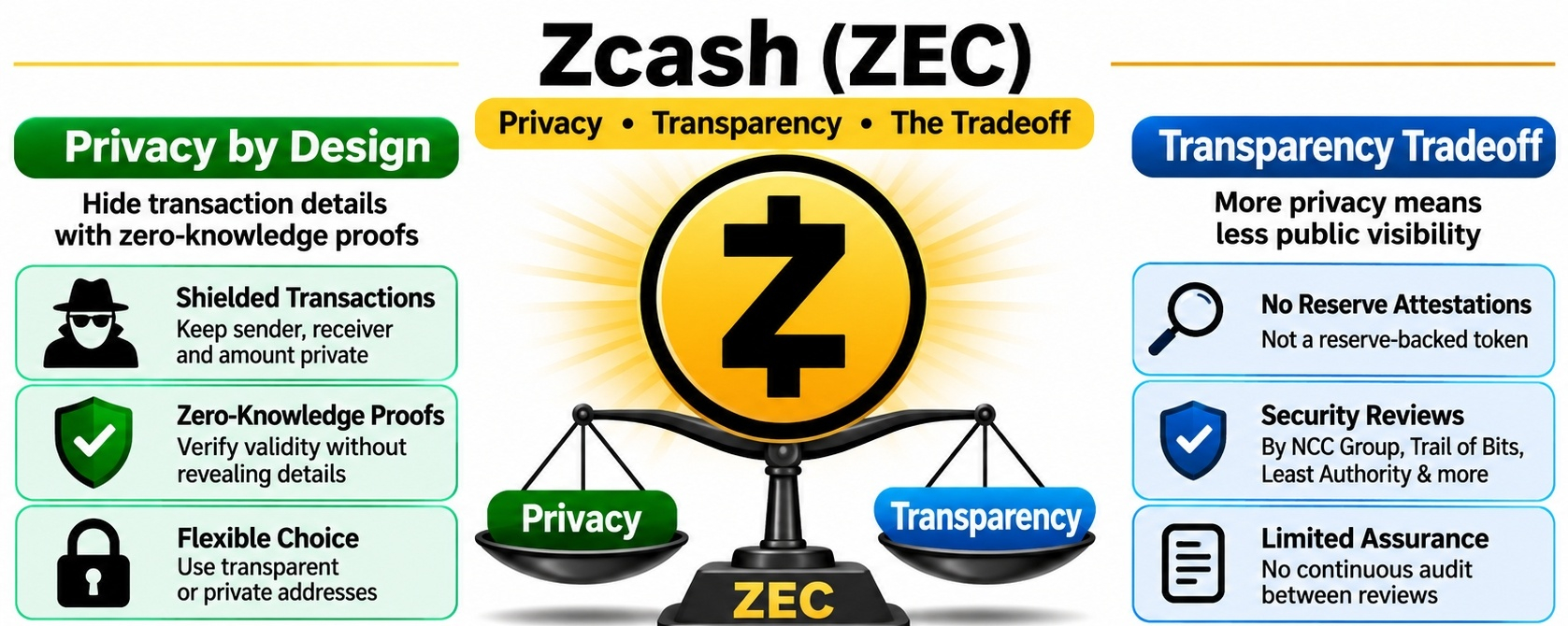

zec’s defining feature is financial privacy through shielded transactions. Unlike Bitcoin, Zcash allows users to hide transaction details, including sender, receiver, and amount. That’s not an oversight. It’s a stated choice.
Privacy reduces public exposure, but it also changes what outsiders can independently verify. A shielded transaction protects sensitive financial information, while making individual transaction details unavailable to ordinary blockchain observers.
Zcash uses zero-knowledge proofs (cryptography that verifies a transaction without revealing its private details). Network participants can verify that shielded transactions are valid without seeing the sender, receiver, or amount. Holders can also use transparent addresses, where transaction details remain publicly visible. Zcash Documentation 6.12.2 documentation +1
Zcash does not publish reserve attestations because ZEC is a mined cryptocurrency, not a reserve-backed token. Its security model relies on protocol verification and independent software reviews. Zcash identifies third-party security reviewers including NCC Group, Trail of Bits, Least Authority, and Coinspect. These are security reviews, not recurring financial attestations. There is no monthly reserve audit or continuous independent audit of every holder's balance. Z.Cash +1
Bitcoin chooses the opposite approach: every transaction is publicly recorded and traceable. That creates more exposure, in exchange for greater public scrutiny of transaction flows. Bitcoin
Neither approach removes counterparty risk. Zcash prioritises transaction confidentiality, while Bitcoin prioritises public transaction visibility.
ZEC's trust model leans on cryptographic proofs, protocol rules, and selective disclosure rather than making every payment publicly observable.
Which risk worries you more — exposing your financial activity to public scrutiny, or sacrificing transaction-level visibilit