$WBTC: Verifying the Primary Source
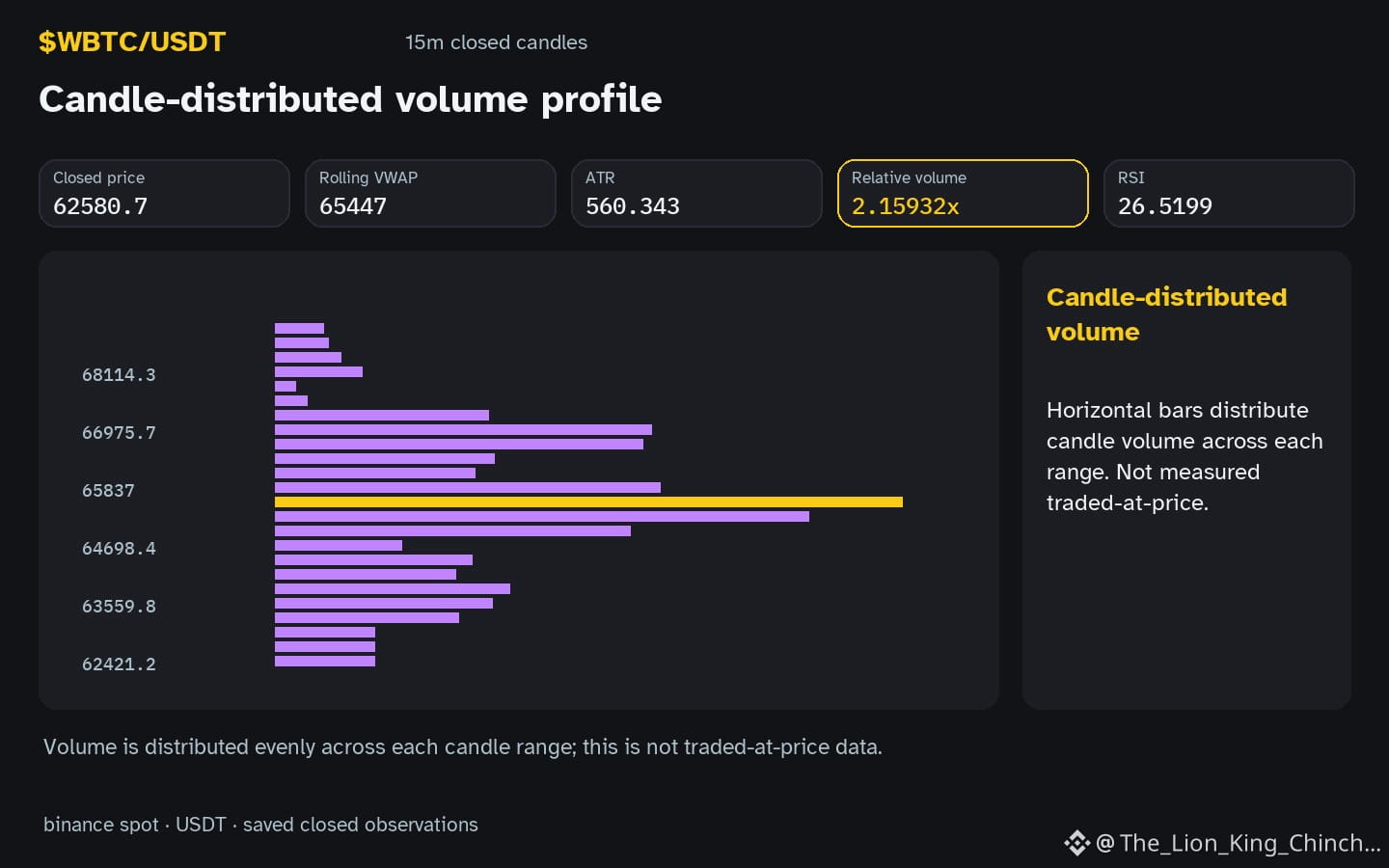
Does the immediate market reaction to $WBTC suggest a reliable trend, or is it an artifact of shared assumptions? The asset currently shows an hourly down direction with relative volume 2.16x baseline.
When information moves quickly, a tempting shortcut is to accept a collective interpretation without checking the underlying data. In this hypothetical scenario, public analysis often treats a volume spike as proof of a specific motive. However, relative volume is simply a mathematical ratio of current activity against a previous window. It does not reveal the intent of participants or the quality of the news driving the movement. If a researcher relies on social proof. the idea that because many people are talking about a move, their conclusion must be accurate. they risk inherited bias.
A more careful interpretation involves information hygiene. This means separating a primary observation, like RSI 26.5, from the persuasive stories built around it. Consider the general dilemma of incentive-based content: when platforms offer rewards for publishing, the pressure to produce a certain narrative may outweigh the discipline of verification. This is a structural incentive issue rather than a comment on any specific individual. To practice self-verification, look for evidence that contradicts the popular view. For example, if the price later stabilizes despite the hourly change -1.845%, it may weaken the initial assumption of a sustained trend. Use the next closed candle to reassess whether the data supports your own observation or just a shared rumor. 💡
Probabilistic market research, not a recommendation or guaranteed return.
#WBTC