I’ve watched enough crypto cycles to be cautious when a project promises to make data trustworthy. We’ve heard similar ideas before: put information on-chain, add verification, and the hard parts of the internet become transparent. Usually, those parts don’t disappear. They move somewhere less visible.
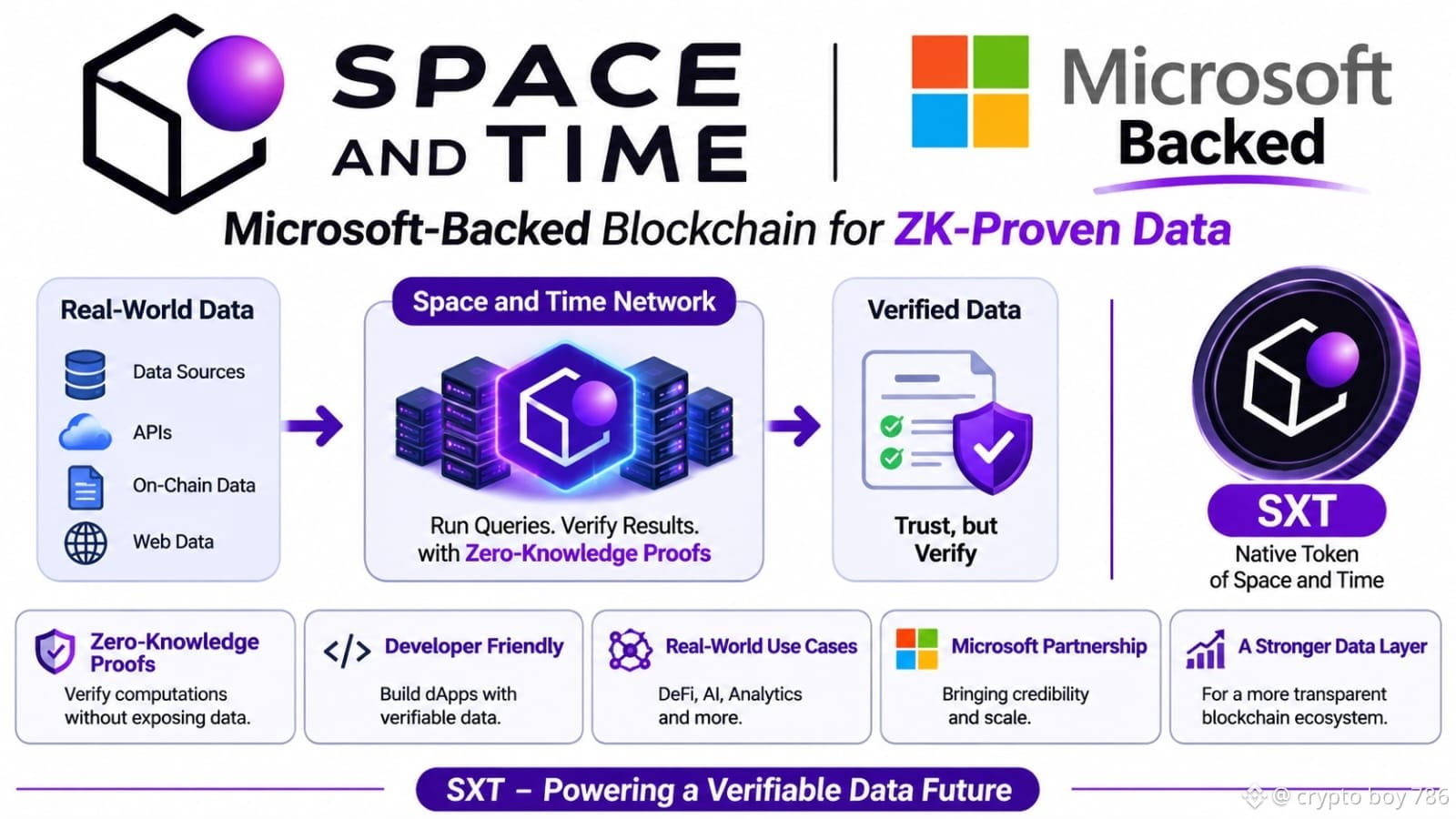
That’s why Space and Time has my attention, but not my blind confidence. Using zero-knowledge proofs to verify data queries addresses a real need. Apps and smart contracts depend on information, and it matters whether a result can be checked instead of simply trusted. Microsoft’s backing may bring credibility, but it doesn’t prove developers will build around the network or that demand will arrive.
I keep coming back to the friction. How costly is verification in practice? How easy is the system for developers? Who controls the data before a query is run? A proof can show that a computation was done correctly; it cannot automatically make the source data honest or complete. That distinction often gets lost.
SXT gives the network a token for its economy, but a token doesn’t create demand by itself. That has to come from useful workloads, not attention around another narrative.
I’m not dismissing Space and Time, but I’m not ready to call it a breakthrough either. After enough cycles, I’ve learned to watch what people use once the conversation gets quiet. That will tell me more than the promise.
#sxt $SXT @SpaceandTime