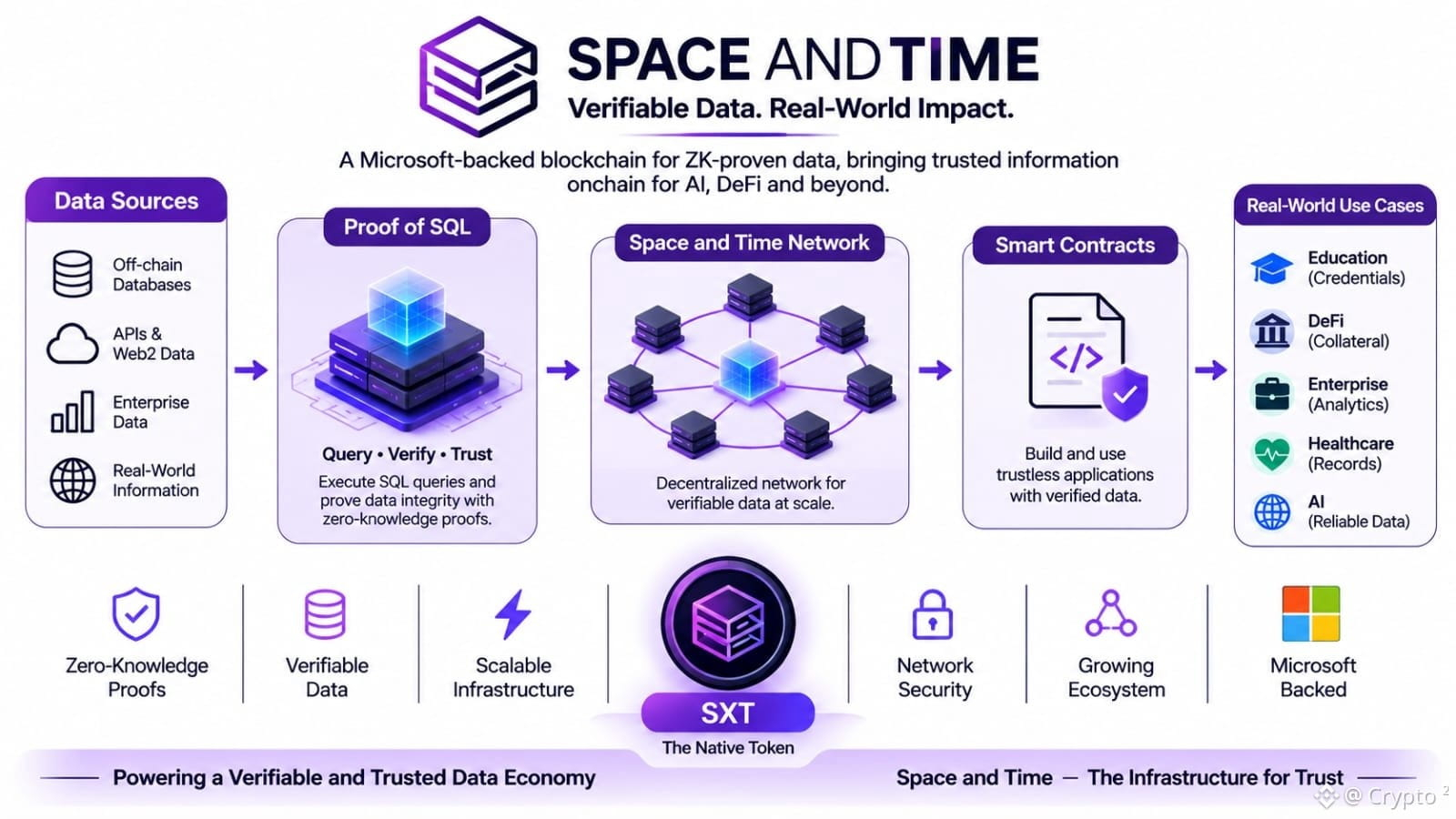
The thing that makes me look twice at Space and Time isn't another technical announcement. It's what happens when blockchain infrastructure starts touching everyday systems.
Look at its education initiative with Indomobil in Indonesia. The project is designed to bring 50,000 students onchain, with Gadjah Mada University also joining the wider initiative.
I find this use case interesting for a reason people often overlook.
An educational certificate is only valuable if someone can verify it years later. Universities, employers and students shouldn't have to depend entirely on a database controlled by one institution to establish whether a credential is genuine.
Putting credentials onchain could make verification easier, but the real challenge is adoption. Universities need reliable systems, students need simple access, and institutions must be comfortable maintaining these records over time.
Space and Time is trying to build infrastructure around verifiable records, while SXT has a role in the network's payment and security model.
I'm not calling this mass adoption yet. A partnership announcement is one thing; millions of people actually using a system is another.
But I like this direction because it addresses a problem outside crypto itself.
Maybe the more interesting blockchain applications won't look like crypto at all. They'll simply make existing systems easier to verify.
That's the kind of progress I want to see from
#sxt $SXT @SpaceandTime