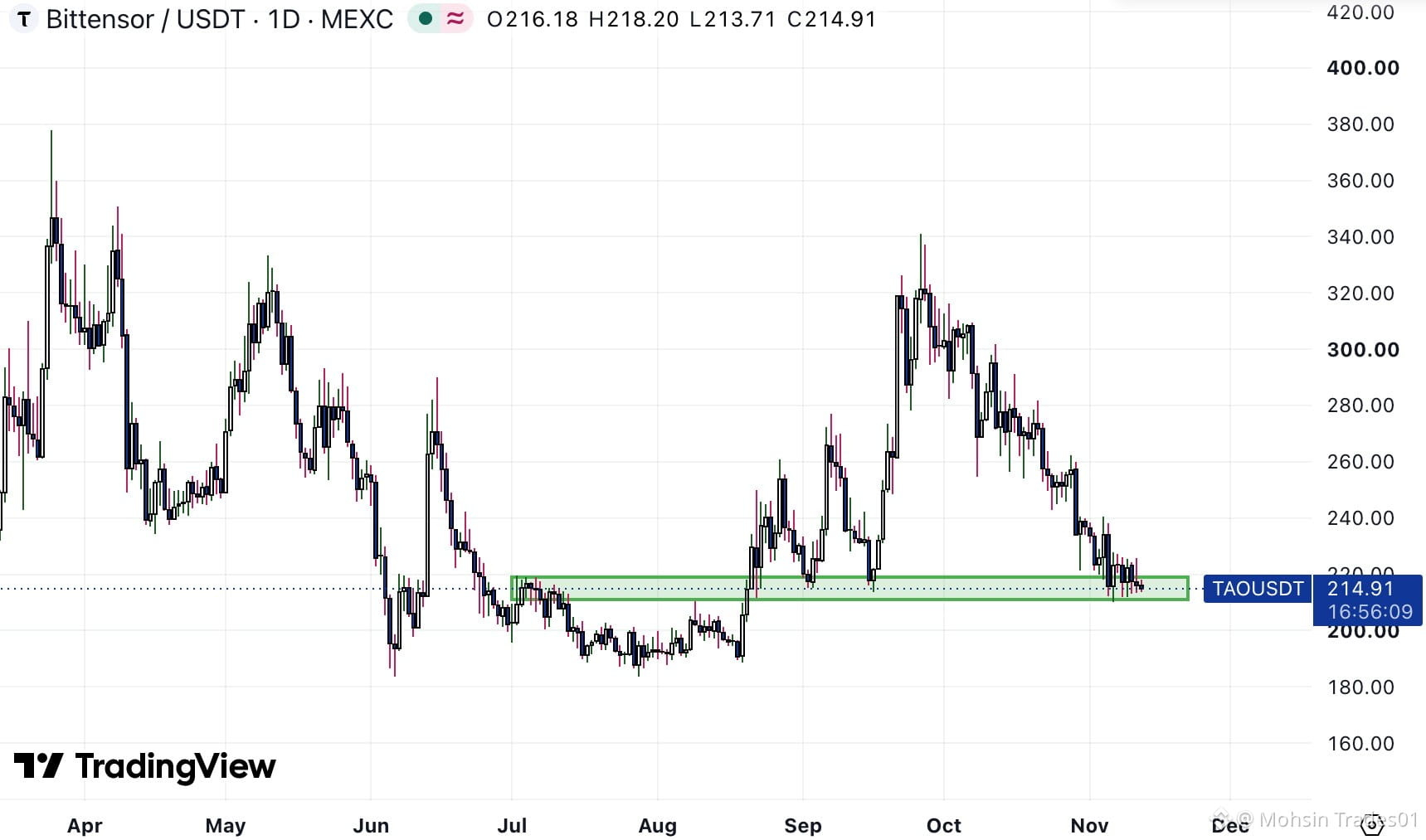
Bittensor (TAO) is a decentralized, open-source protocol that powers a peer-to-peer marketplace for machine intelligence. Often referred to as the "Bitcoin of AI," Bittensor incentivizes developers and researchers globally to train, share, and monetize machine learning models on a unified blockchain network.
Core Architecture & How It Works
Unlike traditional AI development controlled by centralized tech giants (like OpenAI or Google), Bittensor creates a collaborative, permissionless neural network:
Subnets (Specialized AI Markets): The network is divided into dozens of independent sub-networks, each dedicated to a specific AI task—such as text generation, image synthesis, financial prediction, or data scraping.
Miners & Validators:
Miners host and run AI models, competing to provide the most accurate and valuable outputs for a given subnet.
Validators evaluate the quality of the miners' responses and rank them using Bittensor's consensus mechanism (Yuma Consensus).
Incentive Mechanism: $TAO rewards are distributed continuously based on performance. Better AI models earn more $TAO creating a Darwinian ecosystem where intelligence naturally evolves.
Tokenomics & Scarcity Model
TAO's economic design closely mirrors Bitcoin, making it one of the most scarce and structured assets in the AI crypto sector
Key Strengths (Bullish Factors)
Narrative Leadership: As decentralized AI (DeAI) gains traction, $TAO consistently stands out as the flagship infrastructure layer rather than a superficial AI-wrapper token.
Strong Scarcity & Staking Dynamics: A high percentage of the circulating supply is typically staked to validators, reducing liquid sell pressure on exchanges.
Dynamic TAO (dTAO) Upgrade: The shift toward market-driven subnet valuation allows token holders to directly stake into specific subnets, aligning capital with the most productive AI models.
Open-Source Innovation: Anyone can build a subnet or plug in a model without gatekeepers, accelerating real-world utility.
Risks & Challenges (Bearish Factors)
High Volatility: As a high-beta AI asset, TAO experiences sharp price swings driven by broader crypto market cycles and AI sector sentiment.
Technical Complexity: Setting up mining nodes, managing validators, and understanding subnet dynamics create a steep learning curve for average retail users.
Intense Competition: Bittensor competes with both centralized AI labs (which have massive compute budgets) and rival decentralized compute/AI protocols (such as Render, Akash, and Fetch.ai/ASI).
Emissions & Sell Pressure: Miners and validators sell a portion of their daily TAO rewards to cover high GPU and compute costs.
Market Outlook
Bittensor sits at the intersection of the two fastest-growing technological trends: blockchain decentralization and artificial intelligence. While short-term price action remains heavily tied to macro crypto liquidity and AI hype cycles, its Bitcoin-like tokenomics, fair-launch ethos, and rapidly expanding subnet ecosystem give it strong fundamental staying power in the decentralized AI landscape.
(Disclaimer: This analysis is for informational purposes only and does not constitute financial advice. Always do your own research before investing in volatile digital assets
#TAO #MarketAnalysis #Fundamental_Analysis #btc