$QNT: Why Rumors Should Never Be Published as Market Facts
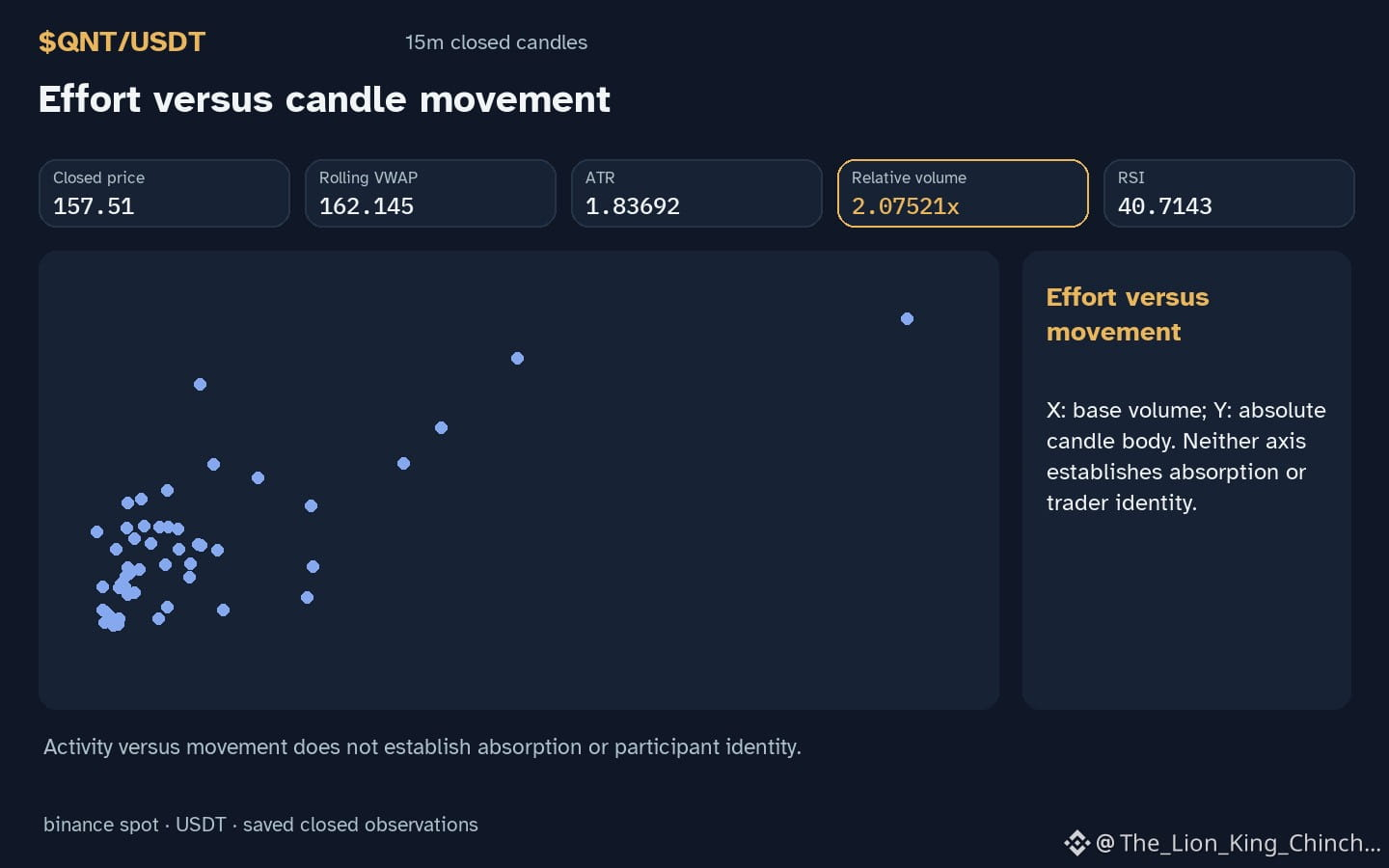
$QNT’s latest hourly direction is down while volume sits above baseline. The observation raises a simple question: should we trust the numbers or the narrative? A clear observation is that relative volume is 2.08x baseline, which confirms a surge in activity, yet the RSI reads 40.7, offering no clear bullish signal. This juxtaposition illustrates the tension between data and interpretation.
In a hypothetical scenario, a trader might see the volume spike and assume an upcoming reversal. Without checking the RSI, they risk acting on noise. Conversely, ignoring volume could blind them to a genuine shift. The key lesson is that each metric provides a partial view; relying on a single source can mislead.
Write to Earn programs often offer badges or small payouts for posting analysis. While they can encourage engagement, they also risk turning opinion into perceived fact. The program does not guarantee any market outcome, and participants may inadvertently amplify misinformation.
A counterexample occurs when both volume and RSI align, strengthening confidence. Yet, even then, the next closed candle could show a reversal, weakening the prior interpretation. The best practice is to record the raw numbers, state the limits, and invite others to test the same logic.
Ultimately, clear limits outweigh blind confidence. By acknowledging uncertainty and presenting evidence transparently, analysts can foster healthier discourse and reduce the spread of unverified claims.
Probabilistic market research, not a recommendation or guaranteed return.
#QNT #CryptoCommunity #CryptoLearning