
I used to think that if data was publicly available on a blockchain, its accuracy could automatically be trusted. But then I started wondering: does public availability really mean the data is reliable?
While researching SXT, I realised that data integrity and SQL query correctness are two different things.
What if a database modifies data or returns an incorrect query result? How would an application detect it?
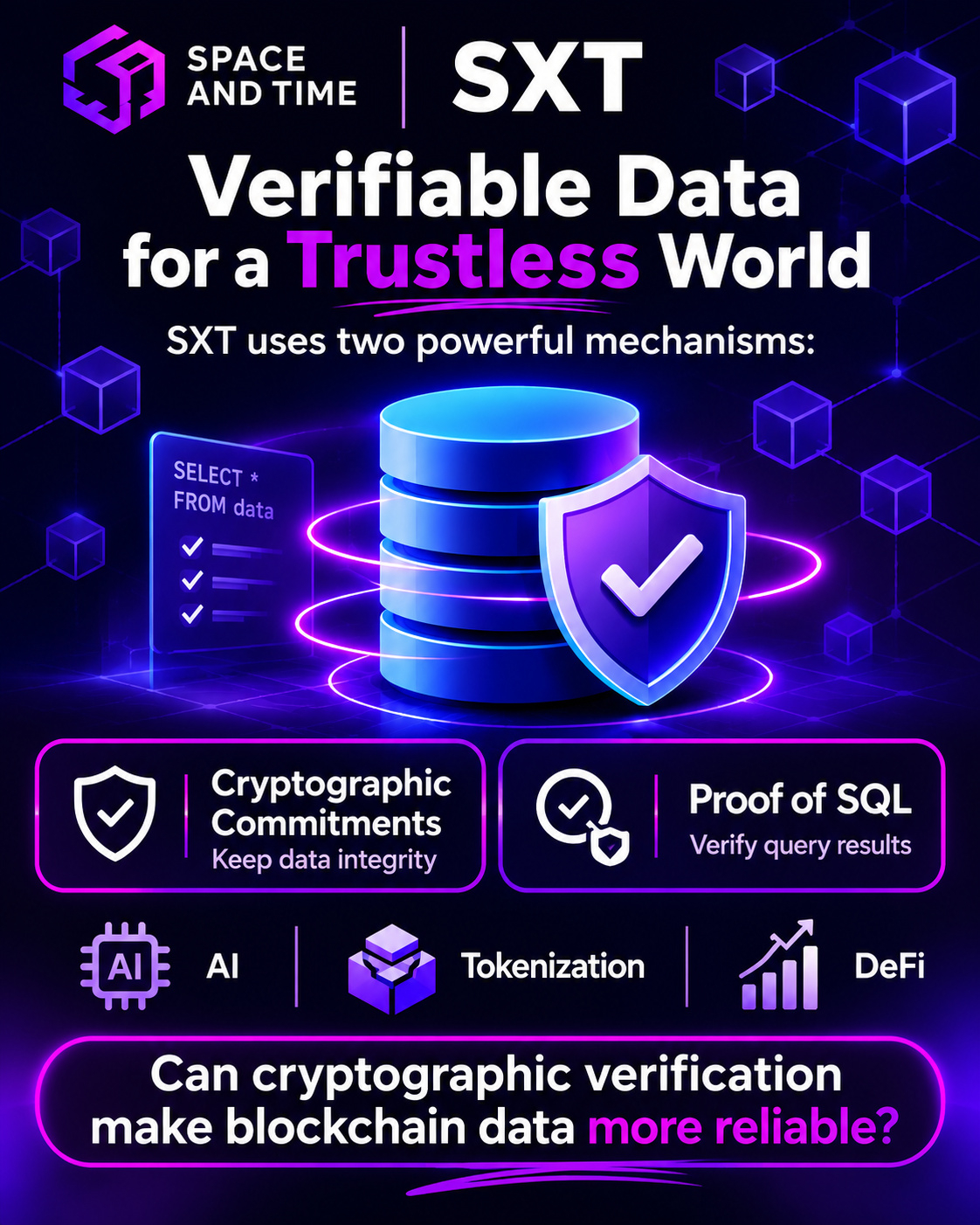
This is where @SpaceandTime caught my attention. It uses two cryptographic mechanisms:
Cryptographic Commitments maintain digital fingerprints of data tables to help detect unauthorised changes.
Proof of SQL uses ZK proofs to verify whether a SQL query has been executed correctly.
Validators update and threshold-sign commitments, while the verifier checks the proof.
This also matters for AI agents. Before making financial decisions, they need reliable data about balances, protocol activity and past transactions. SXT helps applications verify the query results these agents use instead of simply trusting a database.
For me, SXT's real value is making data integrity and query results cryptographically verifiable.
Could this make blockchain data more reliable for AI, tokenization, and DeFi?
#sxt $SXT