$PEPE: PEPE: Ego‑Protective Attribution in Trade Reviews
$PEPE: PEPE shows an hourly direction down while volume is not above baseline, a combination that can trigger ego‑protective attribution. Traders may recall the recent drop and credit a skillful exit, yet blame the market when the price resumes decline. This tension illustrates the bias where success is internalised and loss is externalised.
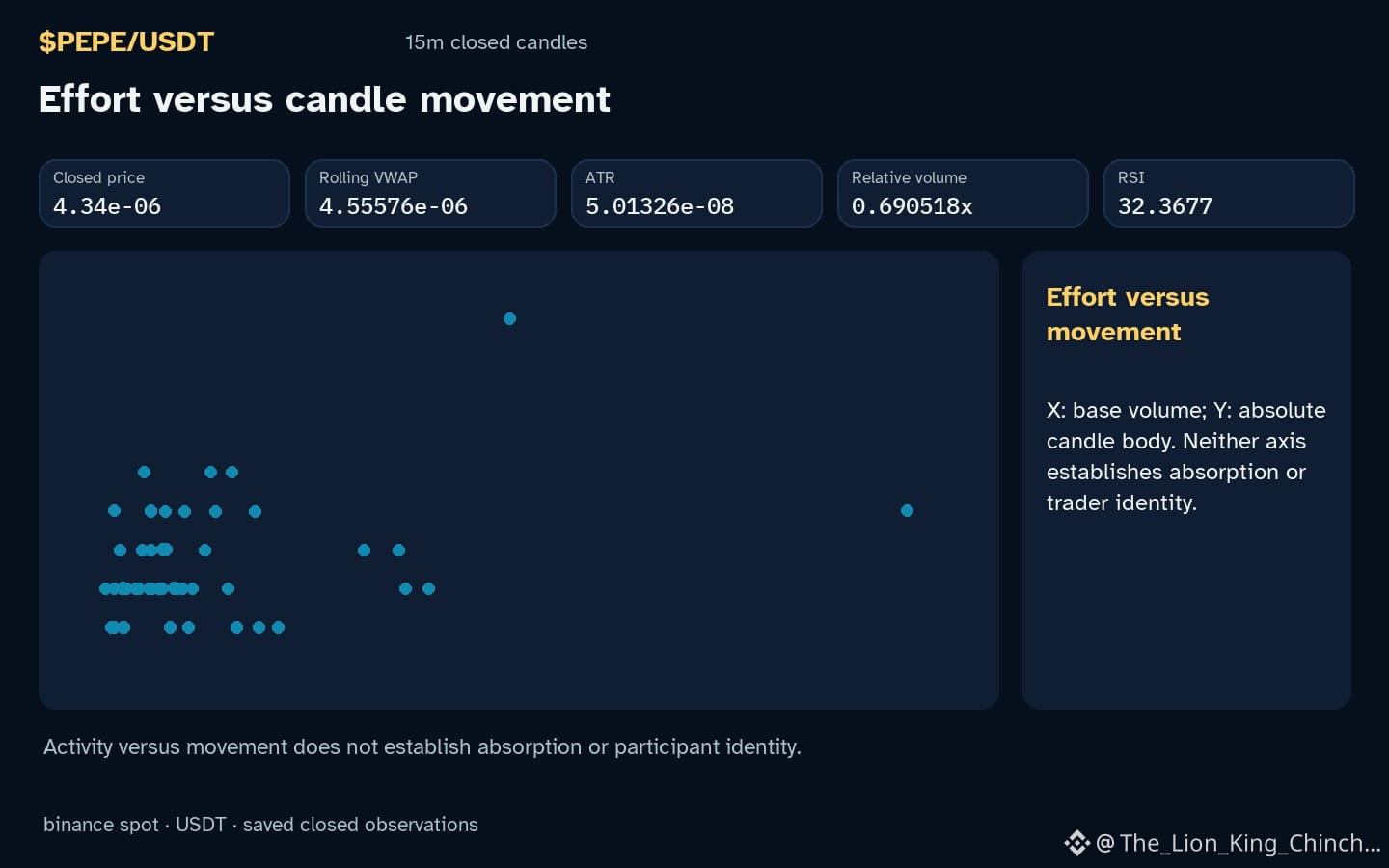
The observation is simple: the asset trades inside its recorded range, the price remains within local support and resistance, and the relative volume reads 0.69x baseline. Because volume does not spike, the market signal is muted, leaving room for narrative shaping.
One possible explanation is an anchoring effect. The down move anchors the trader’s expectation of further weakness, so any subsequent rally is dismissed as a temporary blip. The trader then attributes the rally to external factors rather than revising the original analysis. This scenario competes with a neutral reading that the price is simply oscillating within range without any psychological driver.
The evidence does not prove the bias; it only provides a context where the bias could emerge. Future closed‑candle data showing a sustained reversal despite low volume would weaken the attribution hypothesis. A practical self‑check: after each trade, write a brief note asking whether the outcome is described as "my skill" or "the market" and compare the language over several days. This habit helps surface ego‑protective framing before it solidifies into habit.
Probabilistic market research, not a recommendation or guaranteed return.
New evidence or a familiar bias?
#PEPE #TradingPsychology