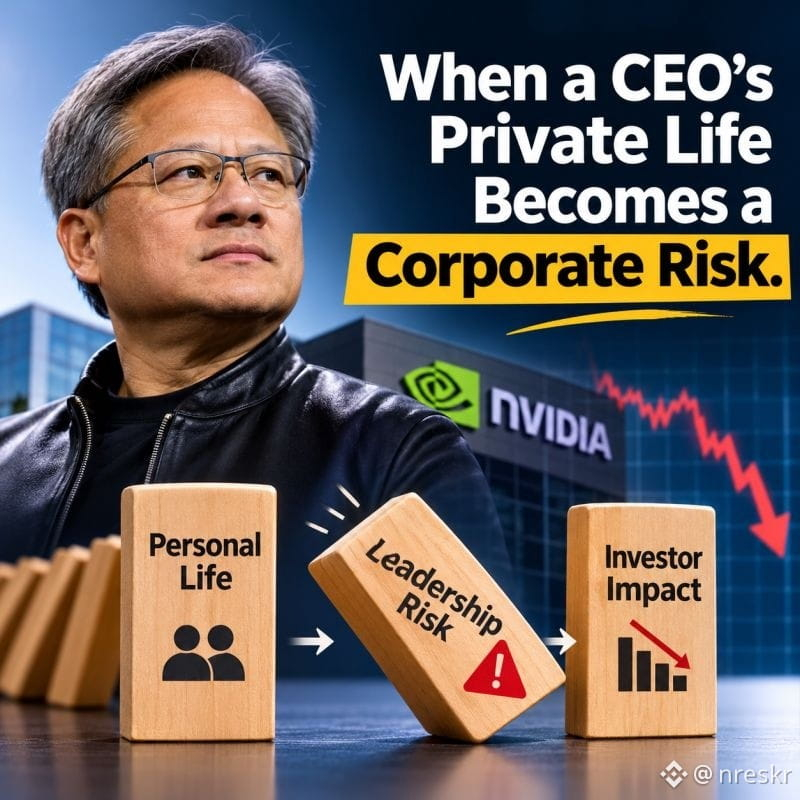
When a CEO's Private Life Becomes a Corporate Risk
In my recent LinkedIn post, I discussed how leadership roles, particularly that of a CFO, extend far beyond financial performance, strategy and business decisions.
The recent #JensenHuang episode at #NVIDIA brings another dimension to this conversation.
Following reports about his personal relationships and concerns surrounding a possible foreign intelligence connection, NVIDIA board initiated an independent investigation. The situation has since escalated, with reports that the board is considering his future as CEO.
The market reaction was significant.
#NVIDIA shares fell from approximately $186.64 on November 6 to $160.53 in overnight trading on November 12 - a decline of nearly 14% in just four days.
That translates into an estimated $630 billion erosion in market capitalisation, within 4 days!
Investors who had nothing to do with these events saw the value of their investments decline. Employees, shareholders and other stakeholders suddenly found themselves exposed to risks arising from the conduct of one individual.
We saw a different version of this debate when the Coldplay concert episode involving a corporate CEO went viral.
Perhaps leadership accountability is entering into a new dimension.
Are a leader's personal choices entirely private when they potentially affect the organisation's reputation, security, stakeholder confidence and shareholder value?
Is there a boundary that organisations must respect between personal privacy and professional accountability?
Perhaps the biggest leadership test today is not just how leaders run businesses, but how their personal conduct can impact the institutions they lead.