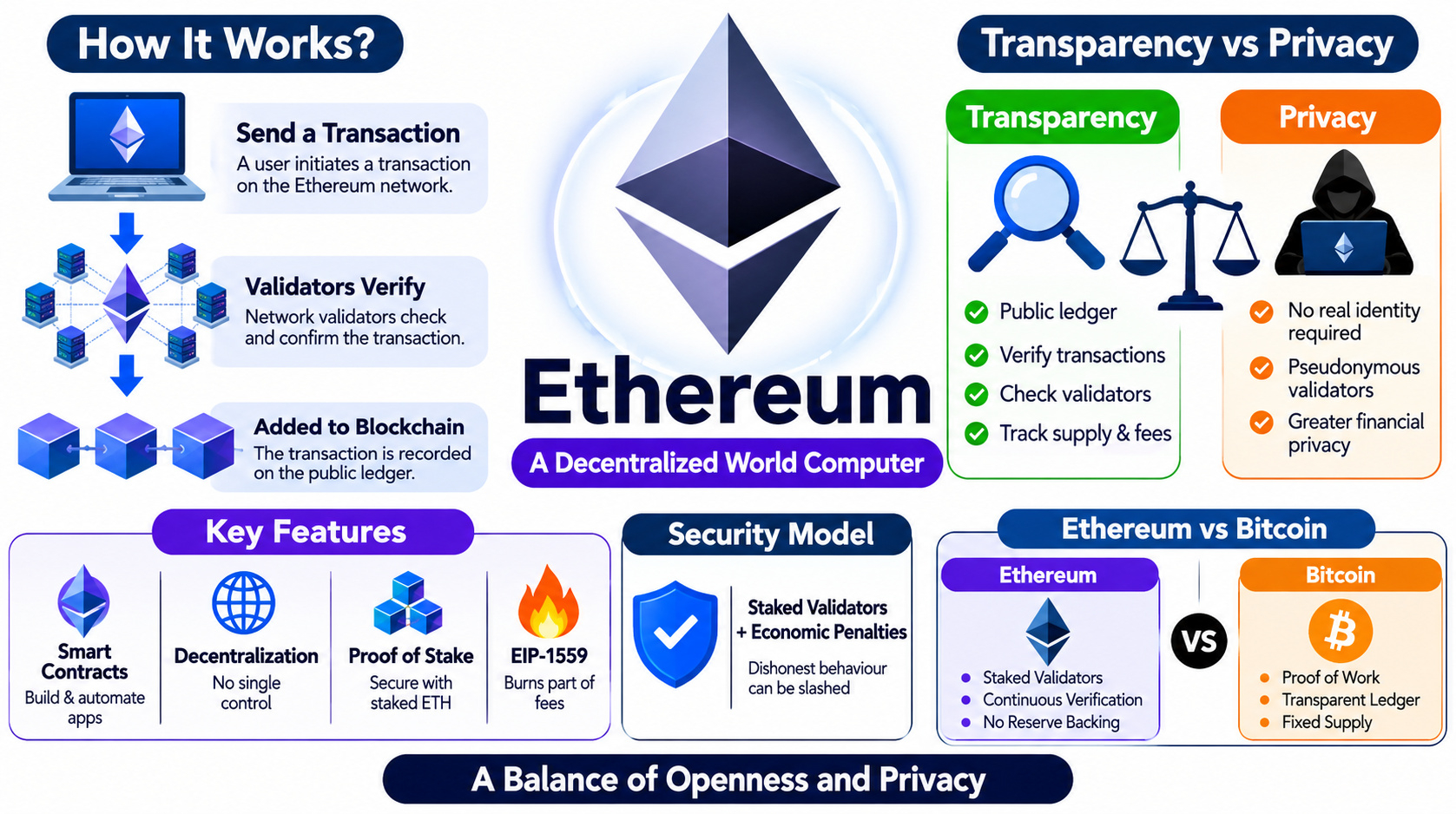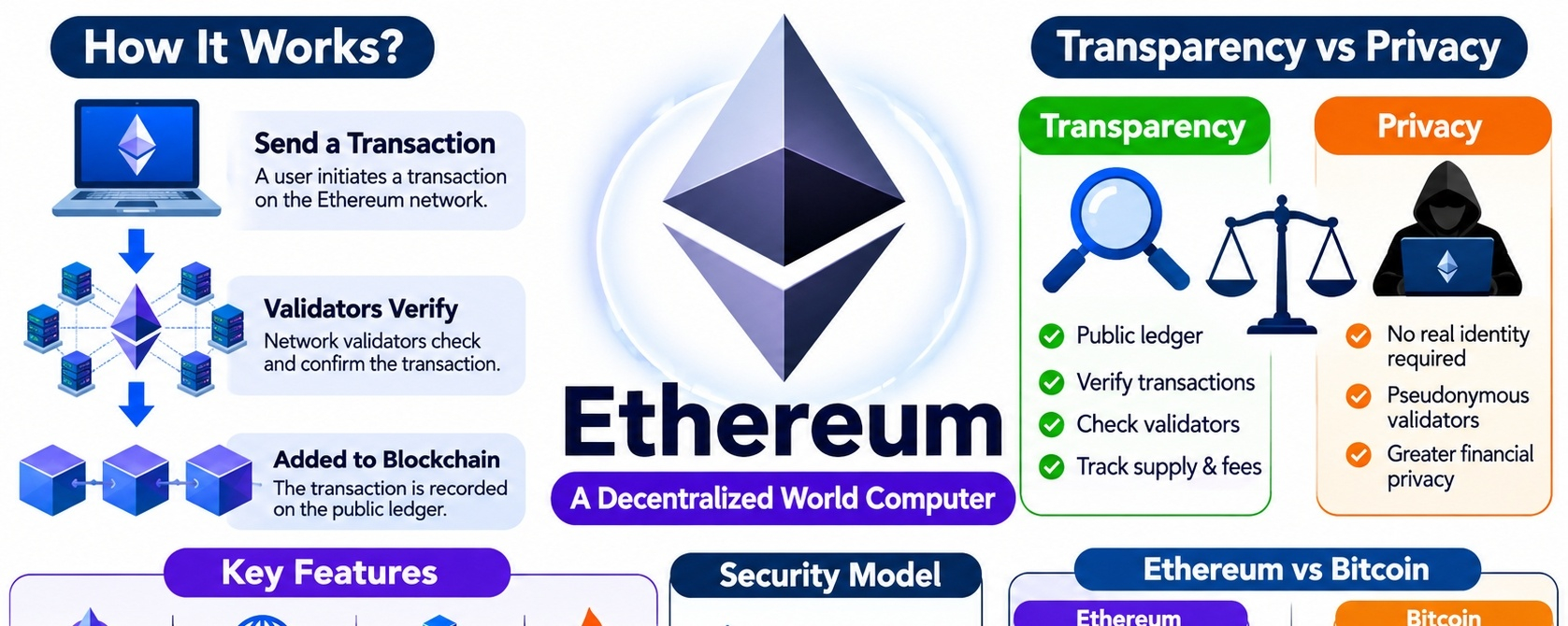

Ethereum’s trust model is fundamentally different from a reserve-backed stablecoin: ETH is not backed by a central custodian or a declared pool of assets. Its security relies on a public blockchain, distributed validators and economic penalties for dishonest behaviour.
Ethereum makes every transaction, wallet movement and validator deposit publicly inspectable. But the real-world identity behind many validator operations is not automatically public. That's not an oversight. It's a stated feature of a permissionless network.
This design protects participants from requiring institutional identity disclosure, while allowing anyone to inspect network activity. However, seeing a validator's on-chain activity does not necessarily reveal who operates it, how its infrastructure is managed or what operational risks exist.
ETH holders can independently verify transactions, staking deposits, validator activity, issuance and fee burning through Ethereum's public ledger and explorers. Validators must stake 32 ETH to participate, and dishonest behaviour can trigger slashing, meaning a portion of their stake is destroyed.
Ethereum does not publish reserve attestations from a named accounting firm because ETH is not a centrally backed reserve asset. Its verification happens continuously through network consensus, not periodic reserve audits. ethereum.org +2
Bitcoin offers a different model. Its public ledger allows independent verification of transactions and supply, while its proof-of-work system replaces Ethereum's staked-validator security model. More exposure to transparent transaction data, in exchange for a different security mechanism.
Neither approach removes counterparty risk. Ethereum relies on validator incentives, decentralisation and protocol security. Bitcoin relies on mining economics and consensus.
Which risk worries you more — validator concentration and staking dependencies, or mining concentration and proof-of-