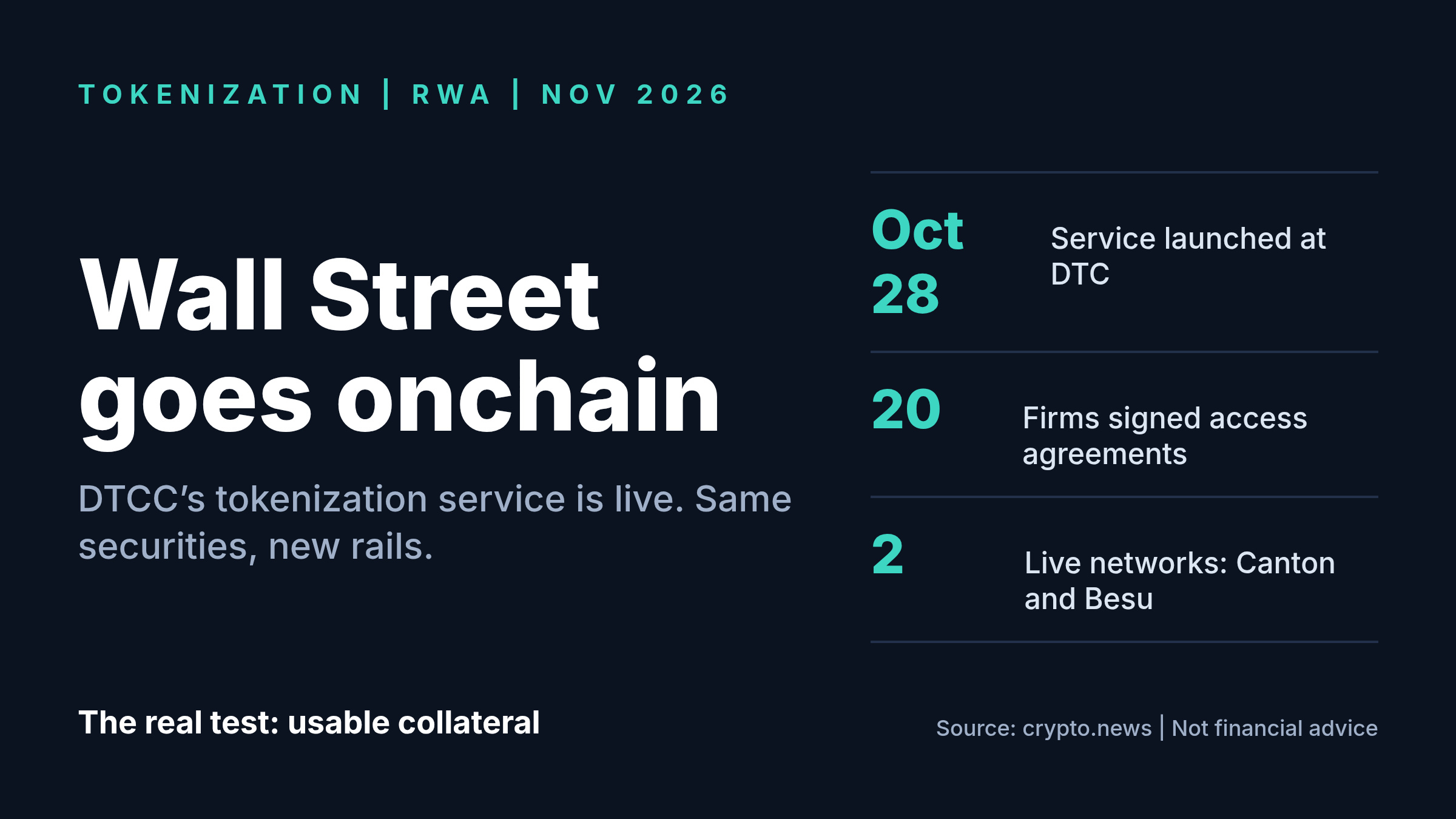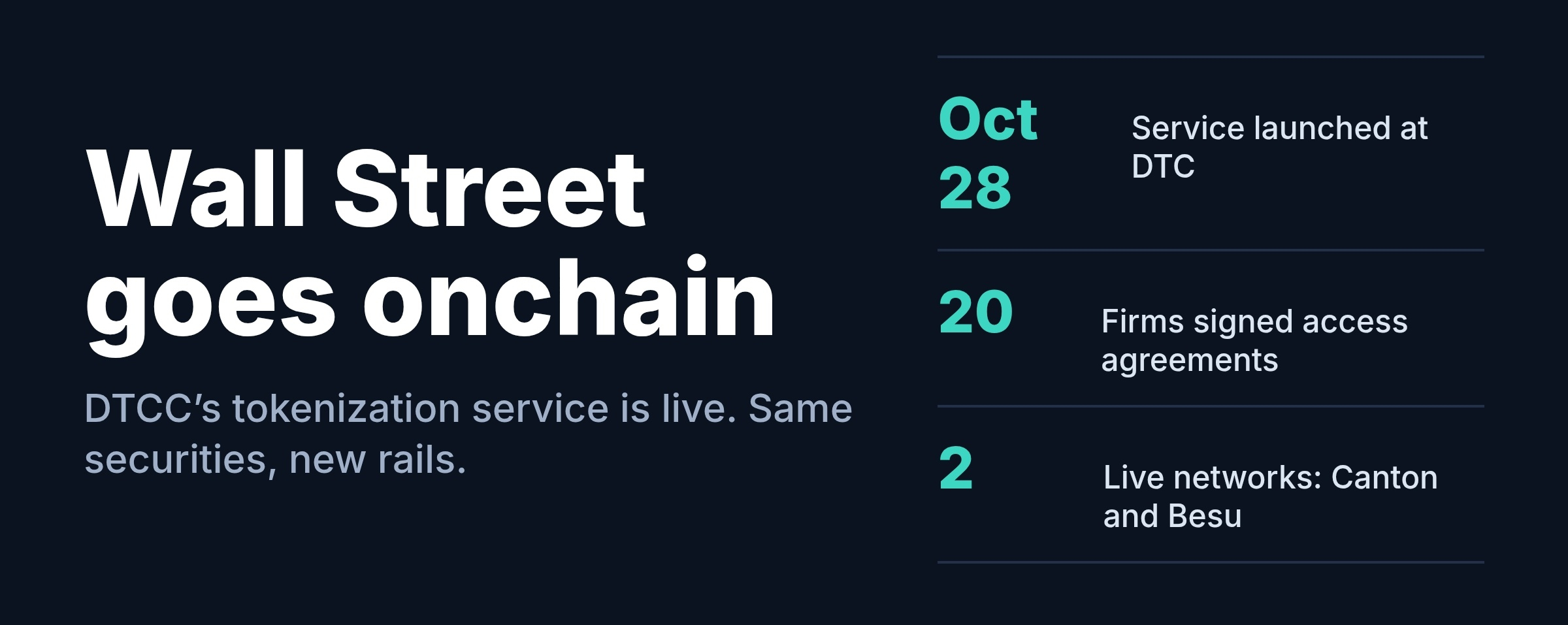

Tokenized stocks are no longer just a crypto idea. DTC, part of DTCC, launched its Tokenization Service on October 28 after limited production transactions in July, and twenty participants had already signed access agreements. (crypto)
What is it?
Eligible institutions can convert securities held at DTC into tokens that move between registered wallets. DTCC says the tokens keep the same ownership rights, investor protections and economic entitlements as the original securities. It is not a new coin. It is the same asset in a new form. (crypto)
Where does it run?
The first networks are Canton and DTCC's private Besu infrastructure, with more planned. So a live service does not mean every blockchain is included. (crypto)
The real story: collateral
Faster transfers are useful, but the bigger question is whether a token can be used as collateral. That still depends on whether the receiver accepts the asset, how it is valued, what haircut applies and the terms agreed between the parties. Blockchain speed helps, but legal and market agreements decide how useful the token really is. (crypto)
What to watch next
✅ How much value is actually tokenized, not just how many firms signed up
✅ Real examples of tokens accepted as collateral
✅ New network integrations
✅ Cash and payment options for settlement
Bottom line: Traditional finance is building its own onchain rails, and this is the infrastructure layer behind tokenized real-world assets (RWA). It is early and permissioned, but it is a major step. Retail users should not expect to move these tokens between random wallets.
What do you think, will tokenization change collateral markets? Share your view below 👇