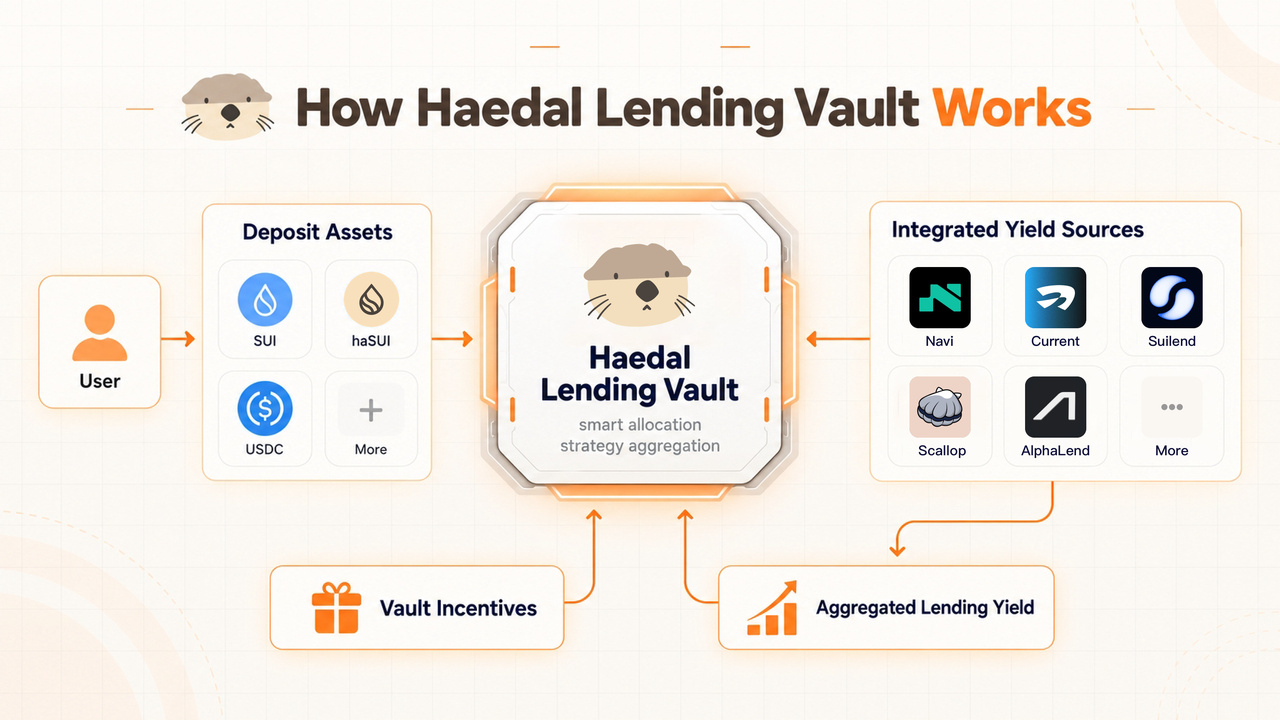
A new deposit should grow a vault without changing what each existing share represents.
Consider a simplified Haedal Lending Vault example. If a vault holds 10,000 USDC against 8,000 shares, each share represents 1.25 USDC. A new deposit of 1,250 USDC at that ratio would mint 1,000 shares. Total assets rise to 11,250 USDC and shares rise to 9,000, while value per share stays at 1.25 USDC. This example excludes fees and rounding and does not describe a live vault.
That is why share count alone tells you little. Two users depositing the same amount at different times can receive different numbers of shares. To compare positions, start with the assets represented by those shares.
For traders following $HAEDAL and managed lending on $SUI, the distinction is useful: new deposits can make a vault bigger without generating a return for existing holders. NFA.
#HAEDAL #Haedal @HaedalProtocol