$STRK: Managing the Noise of Constant Notifications
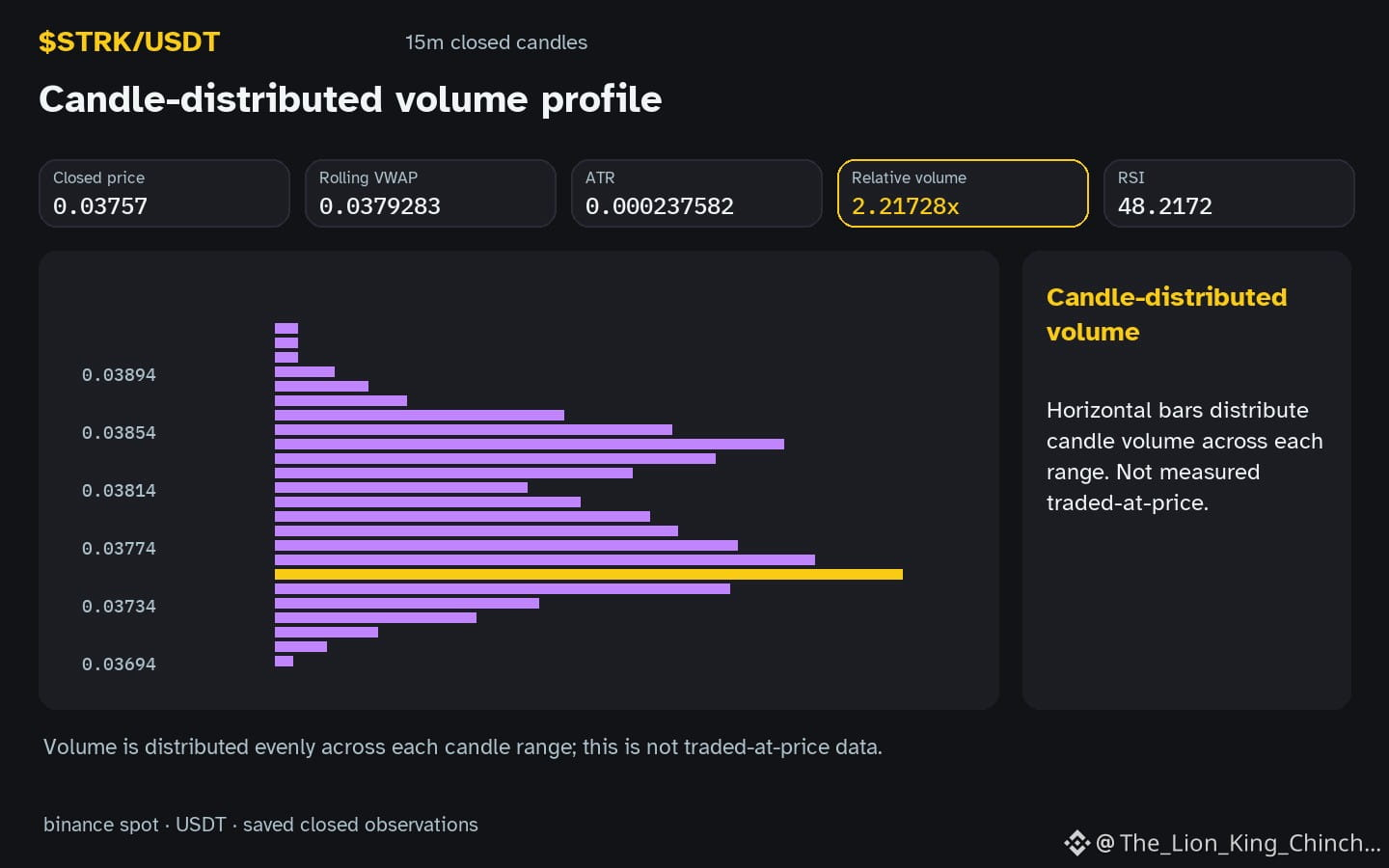
Does the frequency of market alerts for $STRK impact the quality of a trader's response? Current observations show the price is inside the recorded range with a daily change of -3.543.
When volume is 2.21728 above baseline, automated alerts often trigger more frequently. This relates to a hypothetical mechanism where notification overload might lead to cortisol spikes. High stress levels can shift focus away from long-term strategy toward immediate, reactive decisions. In this scenario, an individual might perceive a routine fluctuation as a high-stakes emergency simply because their phone is buzzing repeatedly.
Anchoring bias can worsen this effect. A person might anchor their expectations to a price level from a few minutes ago, like 0.03757, and feel intense regret if they do not act on the next alert. This pressure makes it harder to distinguish between a significant trend change and noise. For instance, if the RSI is 48.2172, a stressed observer might ignore the technical context and react only to the alarm.
To reassess your interpretation, try a practical self-check: if all your notifications were delayed by one hour, would your planned action still make sense? Separating the physical stress of an alert from the data helps ensure you are judging your process rather than reacting to a temporary spike in cortisol.
Probabilistic market research, not a recommendation or guaranteed return.
Process or outcome: which are you judging?
#STRK #TradingPsychology #CryptoLearning