

Nvidia has become one of the most important companies in the artificial intelligence industry. Its chips power data centres, support AI development and sit at the centre of a global technology race.
But recently, the company found itself facing an unusual challenge.
Its founder and CEO, Jensen Huang, acknowledged having an affair in a message to employees dated November 8, 2026. He apologised to his family and colleagues and accepted responsibility for his actions.
Around the same time, Nvidia's board announced an independent investigation following reports that Huang had been targeted by a foreign intelligence effort. The board said it had no reason to believe that national security or Nvidia's confidential information had been compromised, but confirmed that it would examine the available information.
These developments have put Nvidia under a different kind of spotlight, and investors are asking an important question:
Does this controversy change the investment case for Nvidia, or is the market reacting to uncertainty surrounding its leadership?
What Happened and Why Does It Matter?
There are two separate issues investors need to understand.
First, Huang publicly acknowledged his personal conduct and apologised. This is a confirmed statement from the CEO himself.
Second, reports raised concerns about whether he had been targeted by a foreign intelligence operation. Nvidia's board responded by establishing an independent investigation led by independent directors with assistance from outside legal counsel.
The underlying intelligence allegations remain subject to investigation. They should not be presented as established facts.
Why does this matter to investors?
Nvidia is a company with significant exposure to the global semiconductor industry, where business relationships, technology security and international trade policies carry considerable importance.
Any development that raises questions about leadership, corporate governance or national security can influence how investors assess the company's risks.
However, the existence of an investigation does not automatically mean that Nvidia's business operations have been compromised.
Is Nvidia's Business Actually Changing?
This is where I think investors need to look beyond the headlines.
Nvidia's investment case has largely been built around demand for AI computing infrastructure.
Companies are investing heavily in data centres, advanced processors and the computing resources needed to develop and operate AI systems.
Nvidia has positioned itself as a major supplier in this market through its GPUs, networking technology and software ecosystem.
The important question is whether the recent controversy changes these business fundamentals.
For now, the public information does not establish that Nvidia's AI-chip demand has weakened because of Huang's personal controversy.
Investors should continue monitoring the factors that directly influence the company's financial performance:
AI infrastructure demand: Are cloud providers and other major customers continuing to invest in Nvidia's computing products?
Revenue and earnings: Is Nvidia maintaining its growth trajectory, and are its margins holding up?
Export restrictions: Could additional restrictions affect the company's ability to sell advanced chips into important international markets?
Customer confidence: Are major business partners maintaining their relationships and purchasing commitments?
These factors provide a more useful picture of Nvidia's long-term prospects than headlines alone.
Why NVDA Investors Are Watching Leadership Risk
Although business fundamentals remain important, leadership cannot be ignored.
Jensen Huang has been closely associated with Nvidia's growth and strategic direction. His public presence and leadership have played a major role in shaping the company's identity.
That creates a question about leadership continuity.
If the investigation produces findings that affect Huang's position, investors may have to consider how a leadership transition would influence the company.
There are several possible developments worth watching:
- The findings and recommendations of the independent investigation.
- Whether Huang continues leading the company without changes to his responsibilities.
- Whether Nvidia's board strengthens its governance and oversight arrangements.
- Whether the situation creates additional regulatory or national security scrutiny.
At this stage, there is no confirmed announcement that Huang is stepping down.
Investors should avoid pricing in a leadership departure as though it has already happened.
What Does the Market Reaction Tell Us?
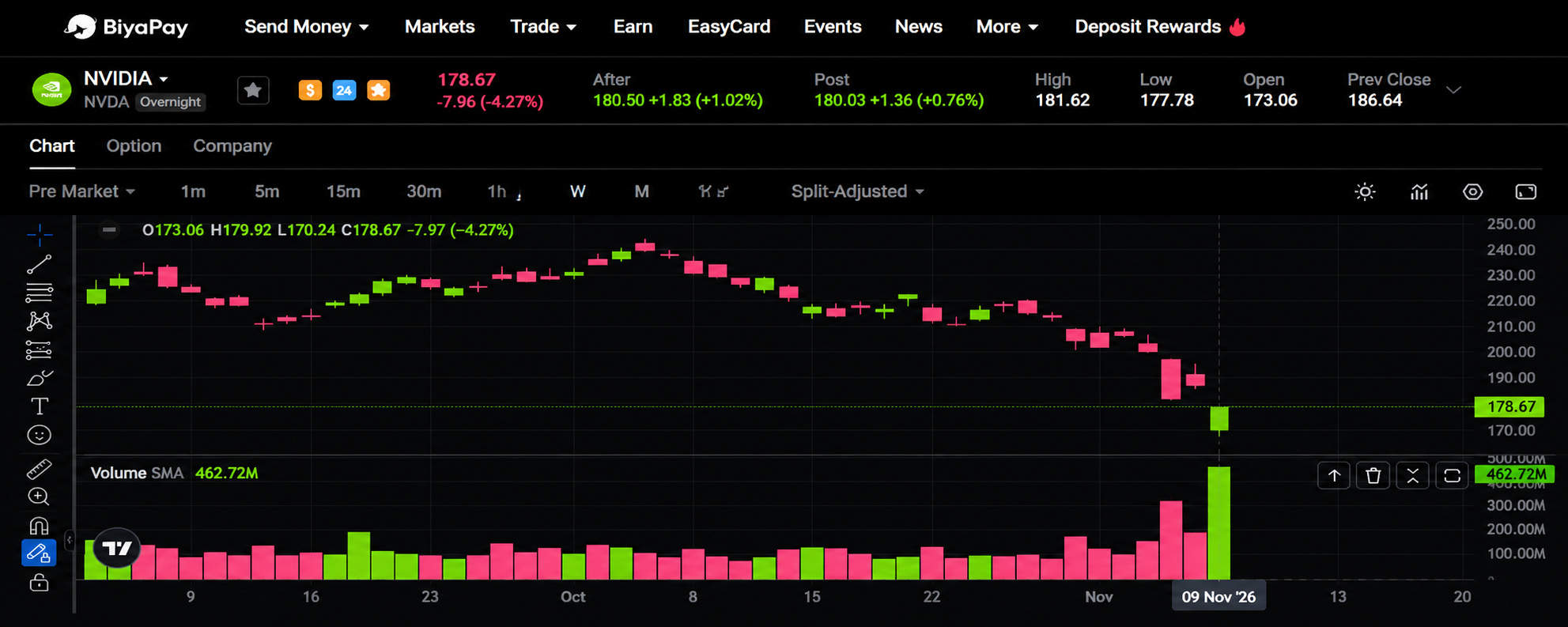
The market's initial response showed that investors were paying attention.
At 5:15 a.m. ET on November 9, 2026, NVDA was reported down 4.4% in premarket trading.
That figure represents a specific premarket observation, not Nvidia's closing performance for the day.
The decline suggests that uncertainty surrounding the CEO and the investigation had become an immediate concern for market participants.
However, a short-term stock decline does not establish that the company's long-term earnings outlook has deteriorated.
There is an important difference between a change in a company's financial prospects and a change in the price investors are willing to pay for those prospects.
For example, if Nvidia continues reporting strong revenue growth but investors become less comfortable with its leadership risk, its valuation could come under pressure even without an immediate deterioration in earnings.
That distinction is worth remembering when evaluating NVDA.
How Can Investors Access Nvidia Exposure Through BiyaPay?
For investors following Nvidia, monitoring its stock performance is only one part of the equation. Having access to different ways of getting market exposure is another consideration.
This is where BiyaPay becomes relevant.
BiyaPay provides access to US and Hong Kong stocks, including Nvidia (NVDA). Its official platform advertises real stock ownership, dividends and zero stock-trading commission.
This gives eligible users another way to access Nvidia shares through its stock-trading service.
BiyaPay also lists NVDAUSDT perpetual futures.
These are different financial products, and investors should understand the distinction before choosing between them.
Buying NVDA shares: This provides exposure to the actual stock, with the associated ownership rights applicable to the shares purchased.
Trading NVDAUSDT perpetuals: This provides derivative exposure to Nvidia's price movements using USDT as the settlement asset. It does not give the trader ownership of Nvidia shares or shareholder voting rights.
BiyaPay's NVDAUSDT product page displays up to 10x leverage and a zero-fee trading offer. Users should check the live contract specifications, funding arrangements, margin requirements and applicable promotional conditions before opening a position.
Zero trading commission also does not mean that every possible trading cost is eliminated.
For someone following Nvidia's developments, these products offer different ways to approach the stock depending on their investment objectives and understanding of the risks.
So, Should You Hold, Reduce or Wait?
I wouldn't make that decision based on the controversy alone.
An existing NVDA shareholder may reasonably choose to hold while monitoring the investigation and the company's financial performance.
Another investor may decide to reduce exposure because the additional governance and geopolitical uncertainty no longer fits their risk tolerance.
Someone considering an initial investment may prefer to wait for more information before committing capital.
All three approaches can be reasonable depending on individual circumstances.
Personally, I would pay closer attention to Nvidia's next earnings results, customer demand, export-related developments and the findings of the independent investigation.
Those developments will provide a clearer basis for evaluating whether the controversy has lasting consequences for the company.
Final Thoughts
Nvidia's current situation is a reminder that investing in a company involves looking beyond its products and market position.
Leadership, corporate governance and geopolitical exposure can all influence how investors value a business.
But separating confirmed information from speculation is equally important.
Jensen Huang has acknowledged his personal conduct. Nvidia's board has confirmed an independent investigation into reported foreign intelligence concerns. What the investigation will ultimately establish remains to be seen.
For now, Nvidia's AI business and financial performance deserve the same attention as the headlines surrounding its CEO.
If you hold NVDA today, would you maintain your position, reduce your exposure or wait until the investigation produces clearer answers?
Disclaimer: 𝗧𝗵𝗶𝘀 𝗮𝗿𝘁𝗶𝗰𝗹𝗲 𝗶𝘀 𝗳𝗼𝗿 𝗶𝗻𝗳𝗼𝗿𝗺𝗮𝘁𝗶𝗼𝗻𝗮𝗹 𝗮𝗻𝗱 𝗲𝗱𝘂𝗰𝗮𝘁𝗶𝗼𝗻𝗮𝗹 𝗽𝘂𝗿𝗽𝗼𝘀𝗲𝘀 𝗼𝗻𝗹𝘆 𝗮𝗻𝗱 𝘀𝗵𝗼𝘂𝗹𝗱 𝗻𝗼𝘁 𝗯𝗲 𝗰𝗼𝗻𝘀𝗶𝗱𝗲𝗿𝗲𝗱 𝗳𝗶𝗻𝗮𝗻𝗰𝗶𝗮𝗹 𝗼𝗿 𝗶𝗻𝘃𝗲𝘀𝘁𝗺𝗲𝗻𝘁 𝗮𝗱𝘃𝗶𝗰𝗲. 𝗦𝘁𝗼𝗰𝗸 𝗽𝗿𝗶𝗰𝗲𝘀 𝗮𝗻𝗱 𝗺𝗮𝗿𝗸𝗲𝘁 𝗰𝗼𝗻𝗱𝗶𝘁𝗶𝗼𝗻𝘀 𝗰𝗮𝗻 𝗰𝗵𝗮𝗻𝗴𝗲 𝗿𝗮𝗽𝗶𝗱𝗹𝘆. 𝗜𝗻𝘃𝗲𝘀𝘁𝗶𝗻𝗴 𝗶𝗻 𝗡𝗩𝗗𝗔 𝗮𝗻𝗱 𝘁𝗿𝗮𝗱𝗶𝗻𝗴 𝗡𝗩𝗗𝗔𝗨𝗦𝗗𝗧 𝗽𝗲𝗿𝗽𝗲𝘁𝘂𝗮𝗹 𝗰𝗼𝗻𝘁𝗿𝗮𝗰𝘁𝘀 𝗶𝗻𝘃𝗼𝗹𝘃𝗲 𝗿𝗶𝘀𝗸𝘀, 𝗶𝗻𝗰𝗹𝘂𝗱𝗶𝗻𝗴 𝗽𝗼𝘁𝗲𝗻𝘁𝗶𝗮𝗹 𝗹𝗼𝘀𝘀 𝗼𝗳 𝗰𝗮𝗽𝗶𝘁𝗮𝗹. 𝗟𝗲𝘃𝗲𝗿𝗮𝗴𝗲𝗱 𝘁𝗿𝗮𝗱𝗶𝗻𝗴 𝗰𝗮𝗿𝗿𝗶𝗲𝘀 𝗮𝗱𝗱𝗶𝘁𝗶𝗼𝗻𝗮𝗹 𝗿𝗶𝘀𝗸𝘀. 𝗔𝗹𝘄𝗮𝘆𝘀 𝗰𝗼𝗻𝗱𝘂𝗰𝘁 𝘆𝗼𝘂𝗿 𝗼𝘄𝗻 𝗿𝗲𝘀𝗲𝗮𝗿𝗰𝗵 𝗮𝗻𝗱 𝗮𝘀𝘀𝗲𝘀𝘀 𝘆𝗼𝘂𝗿 𝗿𝗶𝘀𝗸 𝘁𝗼𝗹𝗲𝗿𝗮𝗻𝗰𝗲 𝗯𝗲𝗳𝗼𝗿𝗲 𝗺𝗮𝗸𝗶𝗻𝗴 𝗳𝗶𝗻𝗮𝗻𝗰𝗶𝗮𝗹 𝗱𝗲𝗰𝗶𝘀𝗶𝗼𝗻𝘀. 𝗩𝗲𝗿𝗶𝗳𝘆 𝗕𝗶𝘆𝗮𝗣𝗮𝘆'𝘀 𝗹𝗮𝘁𝗲𝘀𝘁 𝘁𝗿𝗮𝗱𝗶𝗻𝗴 𝗳𝗲𝗲𝘀, 𝗽𝗿𝗼𝗱𝘂𝗰𝘁 𝗮𝘃𝗮𝗶𝗹𝗮𝗯𝗶𝗹𝗶𝘁𝘆 𝗮𝗻𝗱 𝘁𝗲𝗿𝗺𝘀 𝗯𝗲𝗳𝗼𝗿𝗲 𝘂𝘀𝗶𝗻𝗴 𝗶𝘁𝘀 𝘀𝗲𝗿𝘃𝗶𝗰𝗲𝘀.
#BiyaPay #NVIDIA #NVDA #StockMarket #AIInvesting #USStocks