
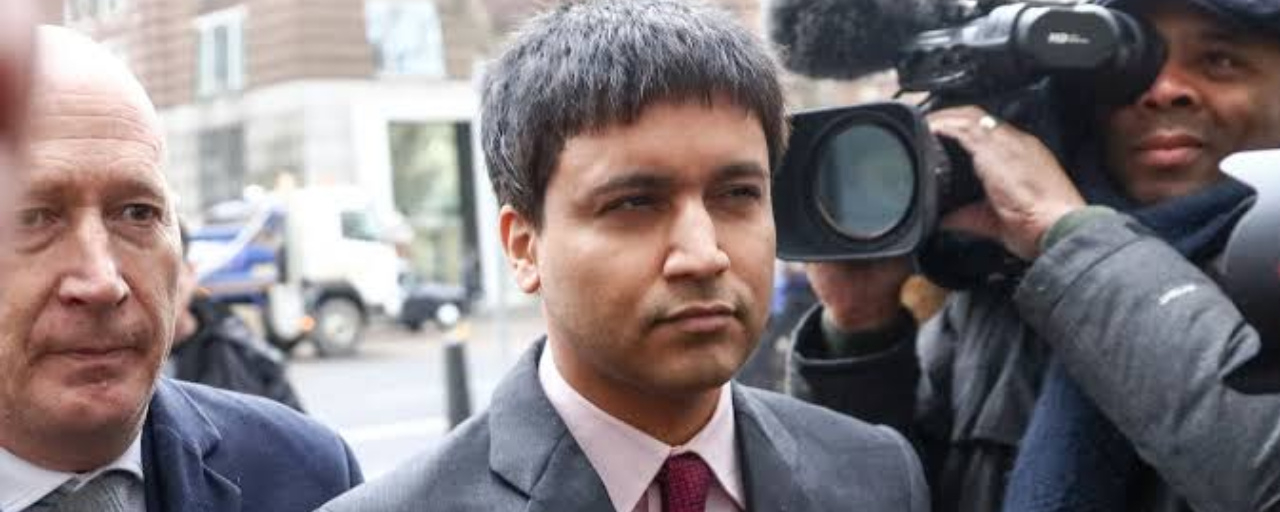

On May 6, 2010, the U.S. stock market evaporated nearly $1 trillion in market capitalization in under 36 minutes—an event remembered as the "Flash Crash". Five years later, federal agents arrested a 36-year-old day trader named Navinder Singh Sarao in his parents' modest home in Hounslow, West London.
U.S. authorities alleged that operating from a suburban bedroom in tracksuits, Sarao used custom trading software to single-handedly trigger the crash using a market manipulation tactic known as "spoofing".
To the mainstream financial press, he was the "Hound of Hounslow". But a deeper look into the microstructure of the markets, quantitative research, and regulatory history reveals a far more complex narrative: the tragic story of an autistic savant who beat high-frequency algorithms at their own game, was turned into a convenient political scapegoat, and left behind a blueprint of both inspiration and warning for retail traders worldwide.
1. Proof That the Machine Can Be Beaten
Modern financial markets are dominated by institutional High-Frequency Trading (HFT) firms armed with microsecond fiber-optic cables, co-located server racks, and multi-million-dollar algorithmic infrastructure designed to extract profit from order flow.
Sarao proved something radical: algorithms are not omnipotent—they are reactionary.
Decoding the Algorithmic Mind: Sarao realized that HFT market-making algorithms operated on rigid risk parameters. By engineering custom software that submitted massive phantom sell orders deep outside the bid-ask spread, he tricked algorithms into sensing an incoming institutional sell-off. The algorithms backed off, lowering their bids.
Exploiting the Reaction: Once the predatory algorithms overreacted and drove prices down, Sarao stepped in to buy the artificial bottom, canceled his spoofed sell orders, and captured multi-million-dollar spreads in minutes when prices snapped back.
The Ultimate Asymmetry: Armed only with basic trading terminals and acute pattern recognition, a lone retail trader turned Wall Street's own speed and automation against itself.
2. Was He Innocent? The Case for the Scapegoat
While federal prosecutors threatened Sarao with 22 criminal counts and over 300 years in jail, quantitative researchers and academic economists quickly challenged the government's narrative.
The Math Didn't Add Up: Academic studies—including prominent market research into microstructural mechanics—revealed that Sarao’s spoofed orders sat far down the order book where normal HFT algorithms routinely ignore quotes. The actual primary catalyst for the Flash Crash was mutual fund giant Waddell & Reed dumping 75,000 E-mini futures contracts ($4.1 billion) without price limits in under 20 minutes, completely overwhelming market liquidity.
Regulatory Cover-Up: For five years, regulatory agencies failed to explain how modern electronic markets could shatter in minutes. Blaming a lone "rogue trader" in suburban London gave prosecutors a human face to pin a $1 trillion structural system failure on.
Changing Rules Post-Facto: When Sarao began spoofing, the practice was legal gray-area standard practice among HFT firms probing market depth. Spoofing was only explicitly criminalized under the Dodd-Frank Act after the 2010 Flash Crash took place. Sarao didn't invent quote manipulation; he simply out-traded institutional firms at a game they created.
3. The Tragedy: The Asymmetry of Power and Capital
Despite generating over $40 million in profits, Sarao lived a surprisingly modest lifestyle—wearing old clothes, driving a cheap car, and staying in his childhood bedroom. Tragically, he lost nearly his entire fortune to offshore Ponzi schemes and fraudulent investment managers, leaving him almost penniless at the time of his arrest.
When major institutional firms crash market liquidity, they are routinely met with civil fines—a simple cost of doing business. When a solo bedroom trader exposes institutional vulnerabilities, the entire machinery of federal law enforcement is mobilized for extradition.
Eventually, after pleading guilty and providing extraordinary assistance to U.S. enforcement agencies to help catch algorithmic fraudsters, a federal judge sentenced Sarao to time served and home confinement, recognizing both his severe autism and his lack of malice.
Key Takeaways for the Modern Trader
Market Mechanics: Algorithms run on code, logic, and rigid rules. A trader with deep microstructural awareness can find and exploit structural inefficiencies. However, regulatory definitions change rapidly, and what works today as a trading edge can be retroactively categorized as illegal manipulation tomorrow.
Position Sizing: Scaling size on high-probability structural edges builds massive wealth quickly. Yet, moving too much size on the order book changes the market state itself, inviting exchange compliance, regulatory prosecution, and liquidity destruction.
Wealth Preservation: Making millions in active trading is only half the battle. Protecting capital requires equal discipline, as offshore scams can erase a $40 million fortune faster than trading ever built it.
The Legacy
Navinder Sarao remains a modern folk hero of financial markets—an autistic genius who saw through the complex facade of modern market structure.
His story serves as a dual reminder: the retail trader is never inherently doomed to be institutional liquidity, but when you step into the institutional ring and win too big, the house will not just fight back—it will rewrite the rules, shut down the arena, and call the marshals.