$UNI: Why Profit Refusal Happens Even When Prices Slip
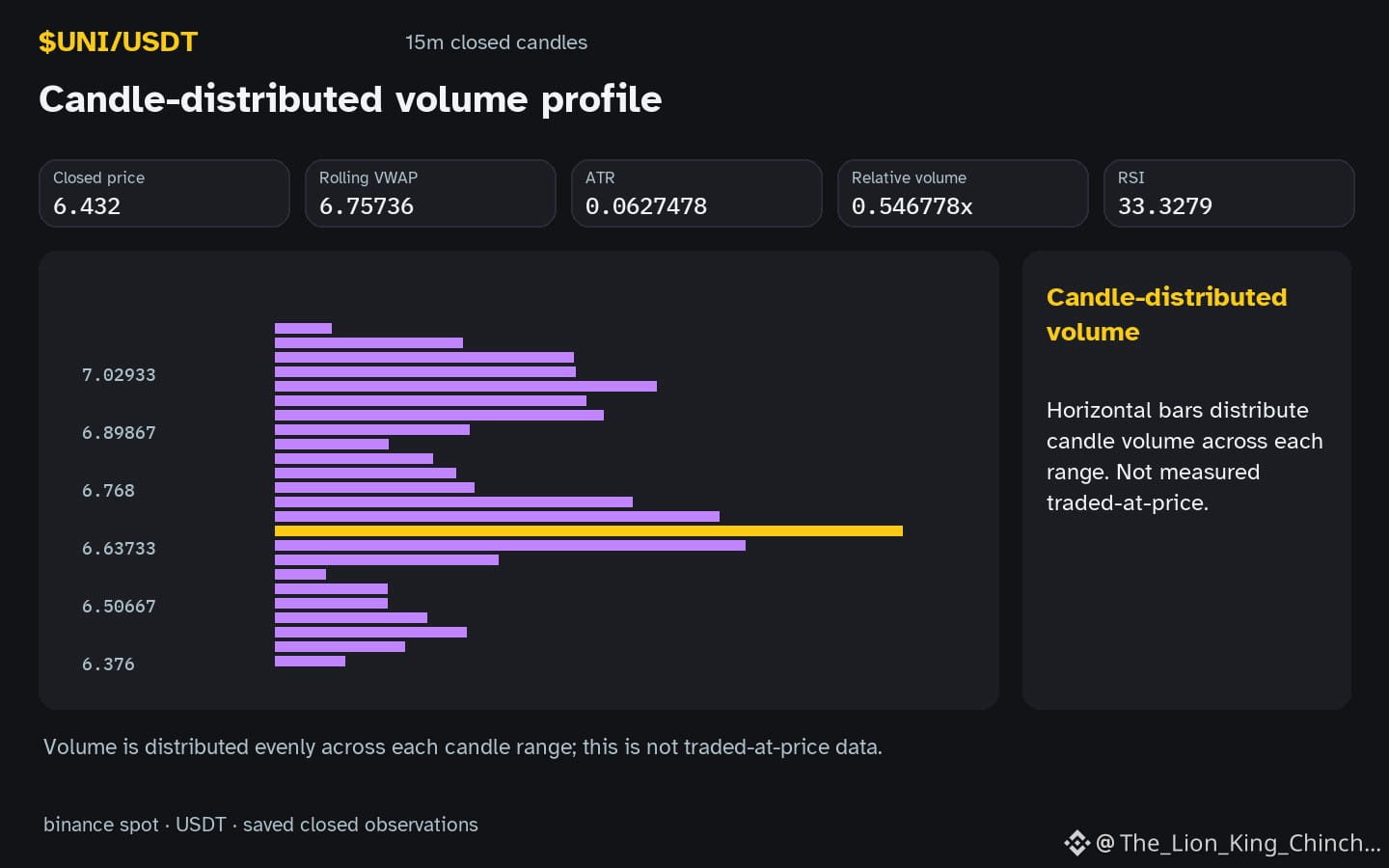
The price of $UNI currently sits below its recent support, prompting a question about why traders may refuse to take profit. This observation of a down hourly direction combined with volume not above baseline creates a tension between the visual cue of a loss and the mental pull to stay invested.
**The tempting shortcut**
When a trader sees 6.432 near a familiar level, the anchoring bias can make that level feel like a safe anchor for future gains. Even as the market moves lower, the anchor remains vivid, leading to a rationalization: "I will wait for the price to bounce back because I believe the support will hold."
**A more careful interpretation**
A counterexample is a trader who treats the same level as a loss reference and decides to lock in the current gain, using the relative strength index 33.3279 as a neutral check. This shows that the same data can trigger opposite decisions depending on which mental frame is dominant.
**A useful next observation**
A practical self‑check asks: "Am I holding because the price still looks good, or because I am avoiding the regret of admitting a mistake?" Write down the original entry price and compare it to the current 6.432. If the gap is small, the fear of missing out may be overstated.
Remember, the market data alone does not dictate action; awareness of anchoring and loss aversion helps avoid a hidden bias in profit‑taking decisions.
Probabilistic market research, not a recommendation or guaranteed return.
Process or outcome: which are you judging?
#UNI #TradingPsychology #CryptoLearning