
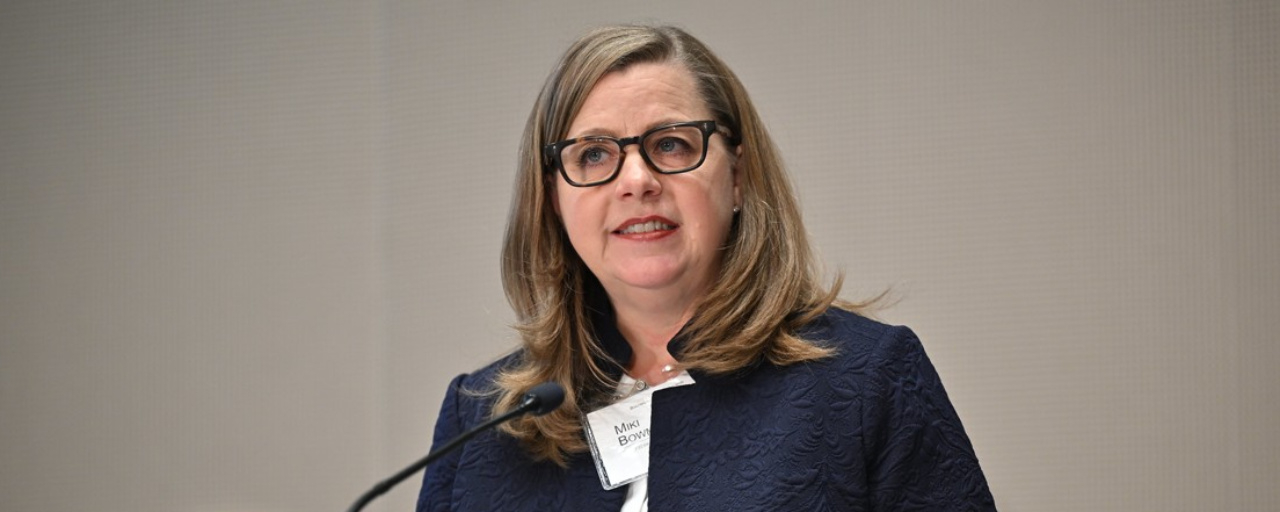
Michelle W. Bowman, Vice Chair for Supervision of the Federal Reserve Board of Governors and a voting member of the Federal Open Market Committee (FOMC) in 2026 through a permanent Board of Governors seat, shifted her focus to inflation in a speech and a follow-up conversation at the Council on Foreign Relations.
In her speech on the outlook for the US economy, she said core PCE likely rose 3.3% in October on energy prices and AI-related demand, and that persistent inflation and firming labor conditions leave the Fed with work to do.
In the conversation that followed, she said inflation is no longer trending lower, which should give the Fed pause. She would need to see AI and Middle East risks abate before she could be confident inflation will come down next year. Longer-term inflation expectations remain very well anchored, she added, yet she treats them as an important data point that does not necessarily control her thinking.
On policy, she called bringing inflation down a continuing priority but flagged that financial conditions have tightened and the Fed must weigh the costs of additional policy tightening. On pace, she pointed to last year, when the Fed cut rates gradually, paused and then resumed, and said the Fed may address inflation in the coming months in the same way.
The labor market is not the source of the pressure. It has improved, is not tight, and is not adding to inflation, and she said growth gained momentum this year.
On AI, she said she is focused on financial stability risks if AI returns fall short, warned of a stock correction if AI bets don’t pan out, and said the Fed is trying to gather data on AI debt counterparties. Yet she struck an upbeat note on jobs.
She doesn’t think AI will cost the US economy jobs overall, because it will make workers more productive, create new jobs and eliminate less necessary ones. Rounding out her remarks, she turned to bank supervision.
She hopes and expects to finalise the G-SIB surcharge and Basel III rules in coming weeks, and said supervisory focus has shifted to rules and oversight for smaller banks.
Key Quotes:
Inflation
Shifting my focus to inflation
Persistent inflation, firming labor conditions suggest still work to do
Core PCE likely rose 3.3% in October on energy prices, AI-related demand
As shocks unwind, forecast core PCE to move closer to 2% next year
CPI data suggests inflation pressures may persist
Inflation is no longer trending lower, which should give us pause, need to consider the pace and timing of the response
I would need to see AI and Middle East risks abate before I could be confident inflation will come down next year
Inflation Expectations
Longer-term inflation expectations are very well anchored
Inflation expectations are an important data point, but they are not necessarily controlling how I think about things
Monetary Policy
Bringing inflation down remains a priority
The Fed cut rates gradually last year and then paused before resuming, in the same way that we may work to address inflation in the coming months
Financial Conditions
Financial conditions have tightened, the Fed must weigh the costs of additional policy tightening
Labor Market
Labor market has improved, not tight, not adding to inflation
Growth & Economy
Economic growth gained momentum this year
AI & Financial Stability
Focused on financial stability risks if AI returns fall short
AI development increasingly backed by external funding
Warns of stock correction if AI bets don’t pan out
The Fed is trying to gather data on AI debt counterparties
AI & Productivity
I don’t think AI will cost the US economy jobs overall
AI will make workers more productive, create new jobs, and eliminate less-necessary jobs
Bank Supervision & Regulation
Hope and expect to finalise G-SIB surcharge and Basel III rules in coming weeks
Supervisory focus has shifted to rules and oversight for smaller banks
The Fed does ongoing cybersecurity examinations of banks, and has seen a great deal of focus on identifying and patching vulnerabilities
Treasury Communication
Open lines of communication with the Treasury are critically important