
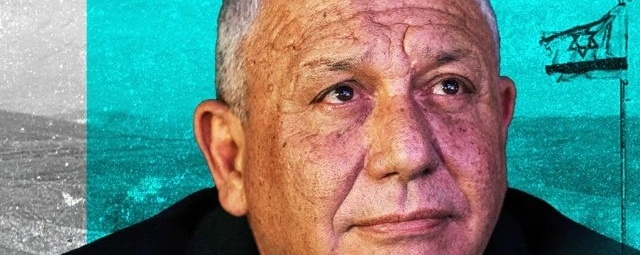

Many people ask me what will happen if Netanyahu falls and Gadi Eisenkot succeeds in forming an Israeli government?
In my view, the region will see major political shifts that serve the Zionist project more than many expect. Here is a list of my predictions:
1. A peace agreement with Syria: I think Eisenkot, unlike Netanyahu, will succeed in reaching a peace agreement with Ahmed al-Sharaa under which the latter cedes the occupied Syrian Golan to Israel.
I am almost certain that signing the agreement and opening embassies and consulates between the two countries will be virtually inevitable if Eisenkot comes to power, without Syria regaining the Golan.
2. Saudi Arabia and Kuwait: All the Saudis asked of Netanyahu was a declaration that Israel was willing to enter negotiations that could lead to a resolution of the Palestinian issue. Netanyahu refused even to make that simple statement, whereas I believe Eisenkot will make it readily and quickly, paving the way for a peace agreement with Saudi Arabia, and perhaps Kuwait as well. This is a possibility I consider logical and highly likely.
3. Qatar: I do not expect it to sign a peace agreement with Israel, not because relations between them are absent—on the contrary, their relations are strong—but because Qatar serves a different regional function. I have said repeatedly that Qatar is the “farm of the Middle East,” which the Americans use to manage negotiations and crises, draw Islamist movements to it, and confine their activities there. It serves this role for Qatar to keep its relations with Israel outside the framework of formal peace, so I do not expect its status to change.
4. Gaza and southern Lebanon: I expect Eisenkot to carry out limited tactical military withdrawals, not a full withdrawal. In Gaza specifically, he will give residents more room to rebuild parts of the Strip, improve conditions for displaced people, and ease their movement. Netanyahu faced enormous American and Arab pressure to do this, but his alliance with Ben Gvir and Smotrich constrained his ability to respond. Eisenkot, without them, and especially if his arrival coincides with Arab peace agreements, will be better able to deliver these improvements.
I am not talking about turning life for Gazans into paradise, but about providing tents that do not flood at the first rainfall, and better shelter for those living under the threat of thirst and displacement. He may also release some funds to the Palestinian Authority, and many arrangements that existed before October 7 may return.
5. Iran: I do not expect any substantive Israeli concession. Hostility toward Iran and the view of it as an enemy with whom there is no room for understanding or de-escalation are not Netanyahu’s policy alone, but a position adopted by almost all Israeli political and military leaders. Even Bennett, when he took over as prime minister, worked to draw up and develop air-strike plans against Iran, and allocated permanent military budgets for that purpose. Governments before Netanyahu also wanted to strike Iran.
Therefore, for Iranians to bet on Netanyahu’s fall to ease the war and Israeli pressure on them would be a strategic blunder, and would reflect a failure to understand the nature of Israel and its institutions.
6. Israel’s image and external influence: Eisenkot will be able to improve Israel’s international image, and perhaps regain a large share of its influence within the United States. Peace agreements with Arab states will give him important diplomatic victories and ease international pressure on Israel.
But this does not mean that Israel’s genocide against the people of Gaza and the Palestinians will stop, or that the project of Israeli domination over the Levant and large parts of the Middle East will end. On the contrary, I believe these policies will continue with greater efficiency under Eisenkot, and at a lower political and diplomatic cost than Israel bears under Netanyahu.
7. Lebanon: Eisenkot may use the implementation of limited Israeli withdrawals from the south to push the Lebanese political leadership toward signing a peace agreement with Israel. Given Lebanon’s divisions, an attempt to conclude this agreement could lead to a broad internal confrontation, and perhaps to a new civil war. Therefore, Eisenkot’s rise to power could bring Lebanon far greater risks than some imagine.
These are my predictions if Eisenkot manages to form a stable government with the political capacity to make and implement these decisions, rather than a mere fragile coalition incapable of acting. I doubt his ability to achieve that in the first place, especially since the Israeli right will be seething with anger, and Netanyahu will not stop inciting against him.
But if he succeeds, his rise to power will be a major victory for the Zionist project, not a defeat for it. Israel will be able to expand the Arab peace agreements, ease its international isolation, regain its external influence, and continue its military and regional policies with greater efficiency and less pressure.
Netanyahu’s fall does not necessarily mean a weakening of Israel; it may be exactly what the Zionist project needs to emerge from its current crisis and regain its ability to expand and dominate.


