$SNXXB : Pre‑session Intention: Is Your Entry Plan Built on Observation or Excitement?
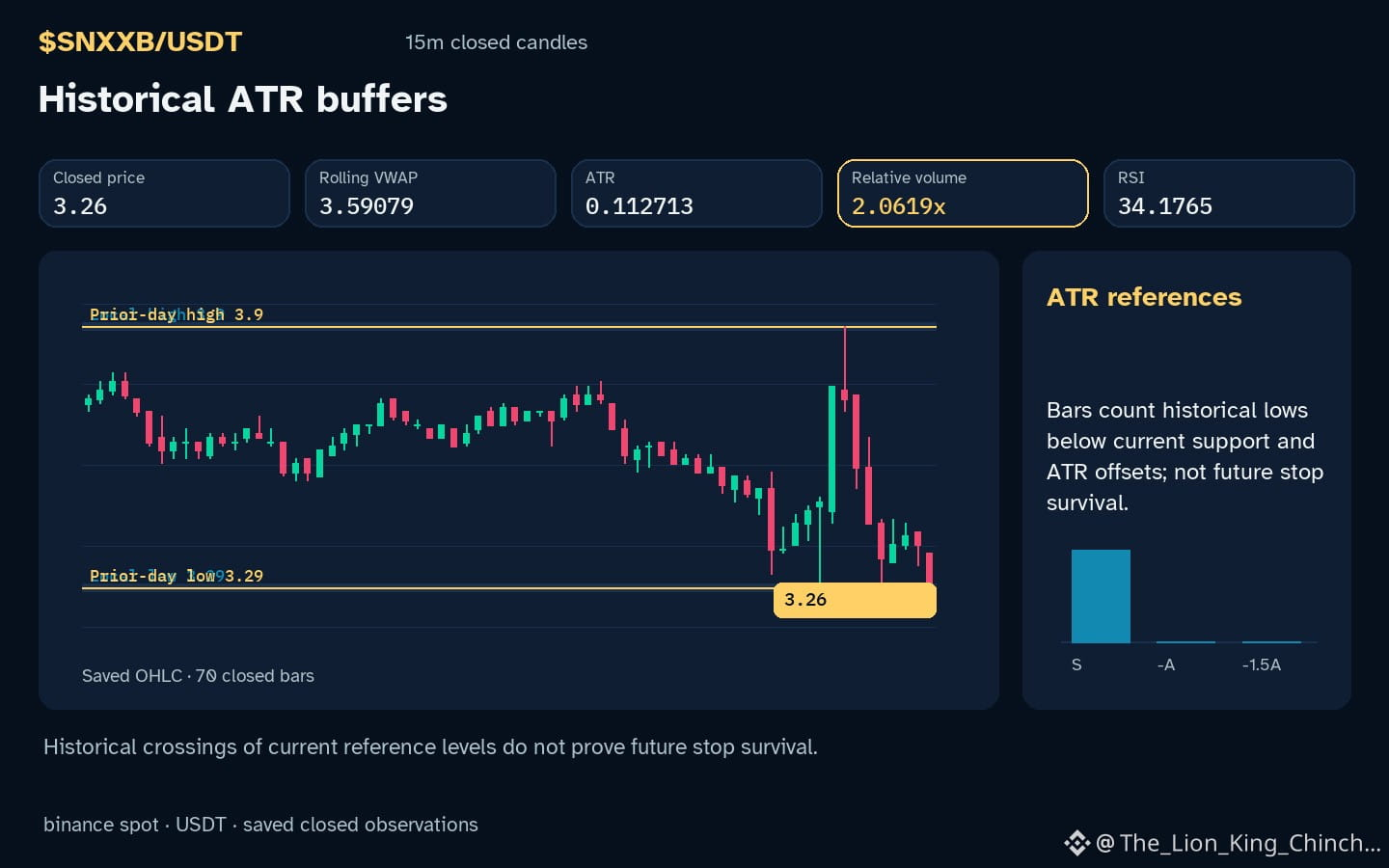
When you open the $SNXXB chart, what question guides your first look? The observation shows a down hourly direction while volume sits above baseline and price sits below the local support level. A thought experiment can help clarify the trade‑off between chasing a move and waiting for a cleaner entry.
Imagine you decide to enter as soon as price breaks the recent support. The entry quality is high because the break confirms the down bias, yet you risk chasing a false bounce if the market quickly reverses. Alternatively, you could wait for a retest of the broken level, gaining confirmation but potentially missing the optimal price. The trade‑off pivots on how far you place a stop: a tight stop protects capital but may be hit by normal volatility, while a wider stop respects the observed 0.112713 but reduces the risk‑reward ratio.
A counterexample shows that waiting does not always improve outcomes; if the price continues lower without retesting, the delayed entry may face a larger loss than the immediate one. To self‑check, you could note the current 2.0619 and compare it to the previous hour. If volume remains elevated, the momentum behind the break is stronger, suggesting a tighter stop may be justified. Conversely, if volume eases, widening the stop and allowing more time for price to settle could be wiser.
The mechanism highlights that intention setting before the session forces you to define the acceptable balance between entry quality and the risk of chasing, rather than reacting to excitement alone.
Probabilistic market research, not a recommendation or guaranteed return.
For a wider view: $ETH has hourly direction down and volume not above its baseline; $INIT has hourly direction down and volume not above its baseline. This alone does not establish correlation.
Recheck the evidence or keep the first interpretation?
#SNXXB #ETH #INIT #RiskManagement