
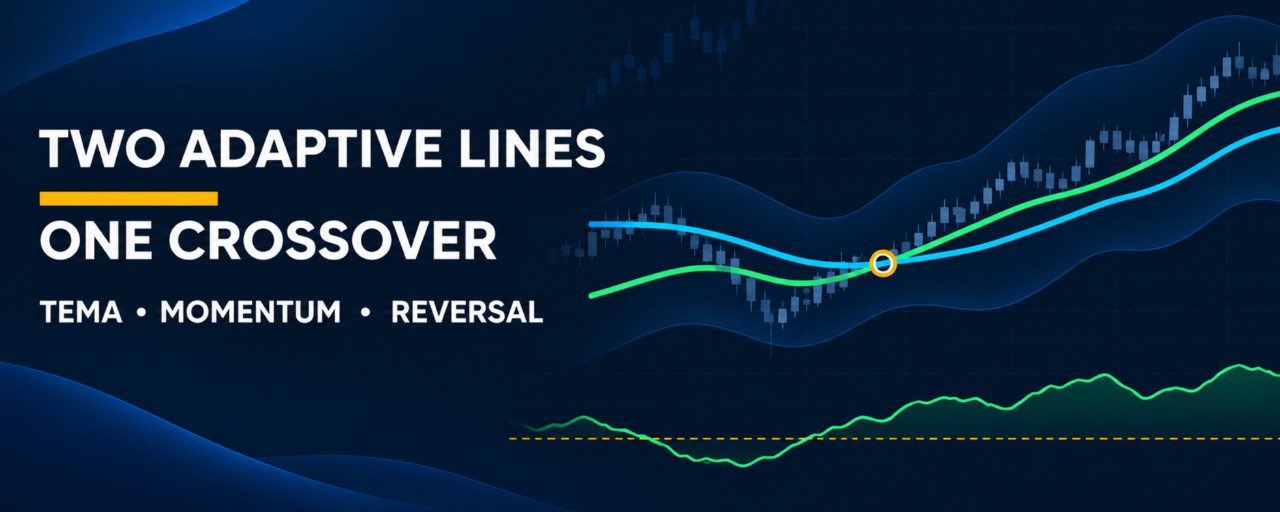

A “momentum breakout” strategy might be expected to use a momentum threshold and a price or channel breakout. This implementation does neither as a separate rule.
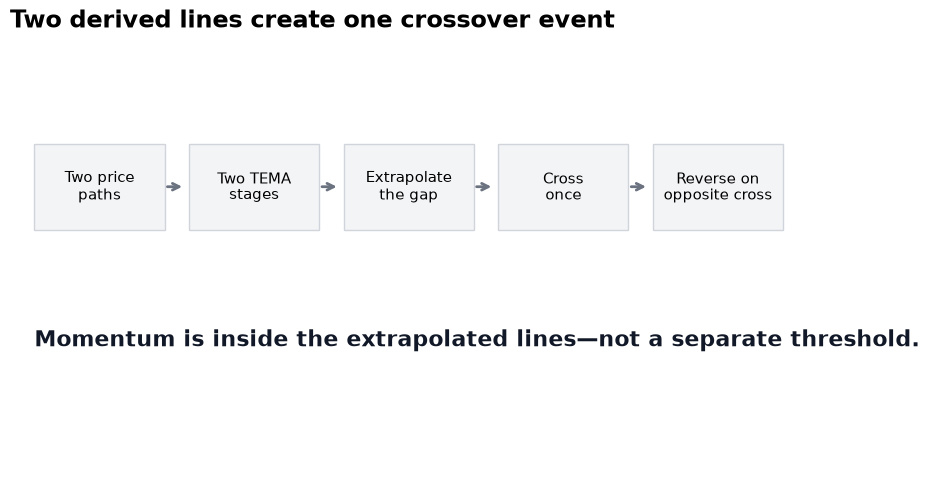
It builds two price paths. One starts with a recursive, Heikin-Ashi-like value; the other starts with HLC3. Each passes through two TEMA stages, then becomes:
final line = 2 × TEMA stage one − TEMA stage two
The gap between those stages is projected back into the line. That appears to be the “momentum” component.
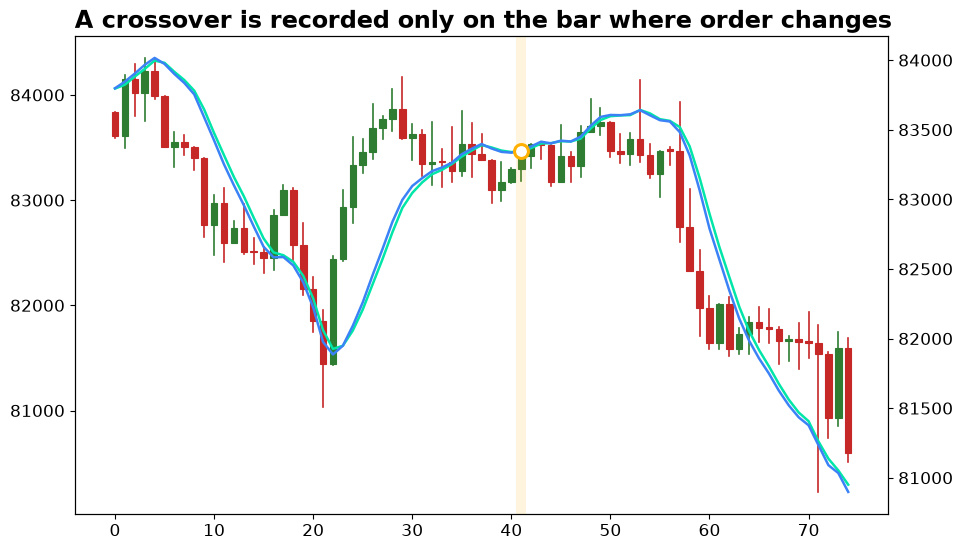
The trading event is a crossover between the two derived lines. A long event requires line B to be above line A now and at or below it on the previous bar. A short event reverses the inequalities.
That previous-bar check matters. “B is above A” can remain true for many bars; “B has just crossed A” exists for only one bar.
The real-candlestick example uses BTCUSDT one-hour public archive data from October 2026. The marker is the middle crossover in the fixed window and is an offline rule reconstruction, not a recorded exchange fill.
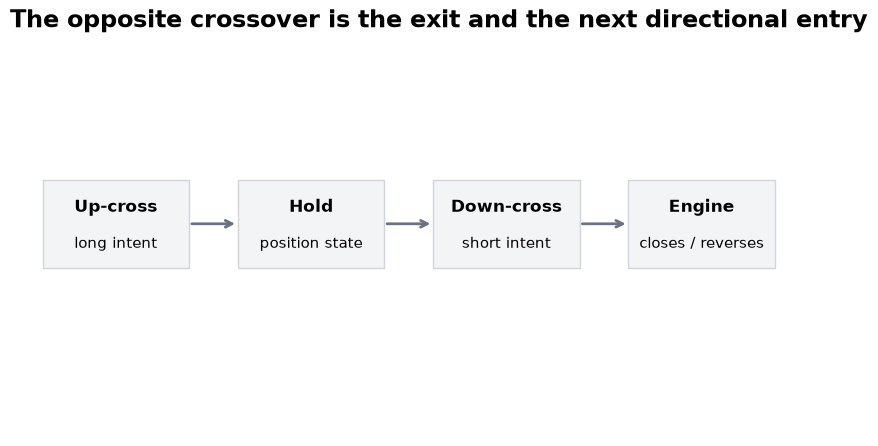
The reviewed logic enters long or short on those events. It has no separate flat-state exit, stop, or target. In a netted implementation, the opposite event normally reverses the position, although exact close-and-reopen behavior depends on the engine.
A shared EMA length controls every smoothing layer. Shortening it makes each nested EMA respond more strongly to new bars; lengthening it slows both paths and increases warm-up requirements. It does not simply move one threshold.
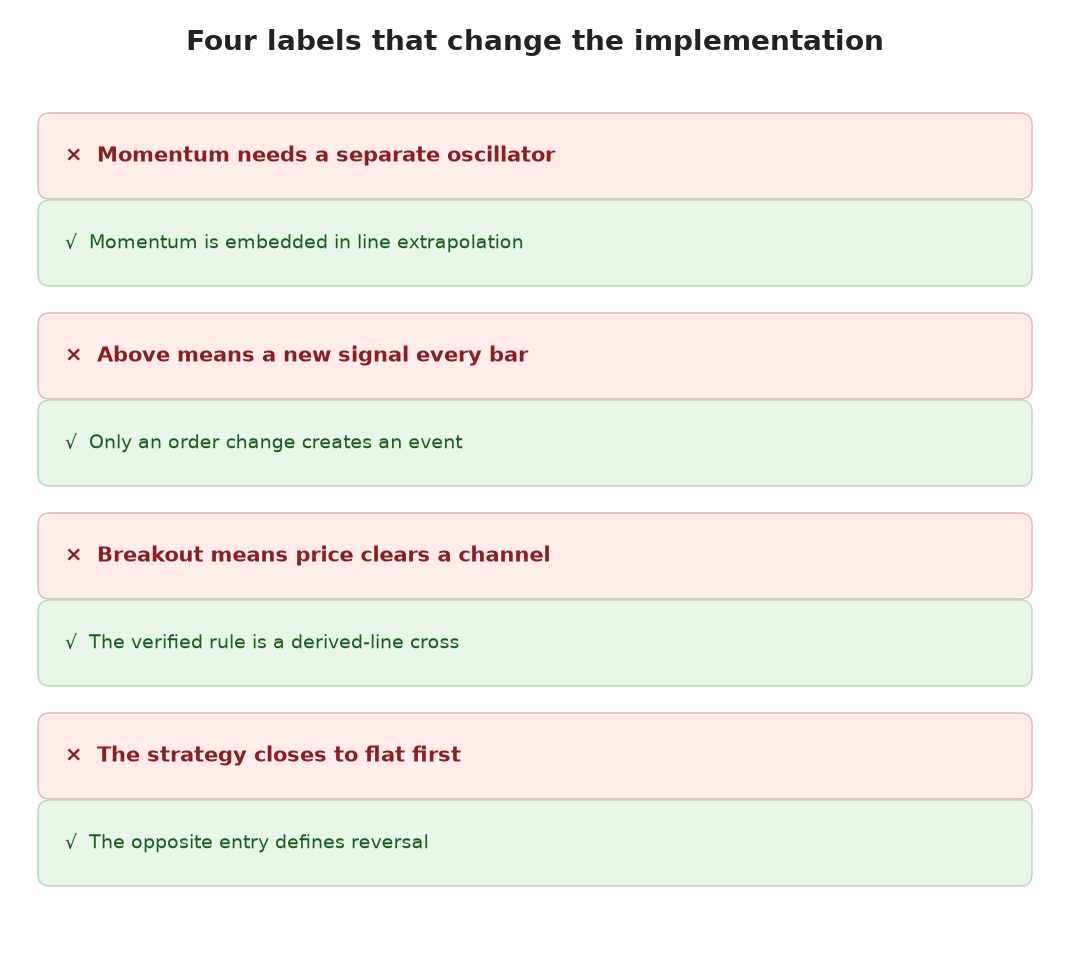
This leaves a naming question. The strategy clearly uses extrapolated smoothing and a crossover, but it does not test price against a breakout level.
Would “two-line extrapolated crossover” describe the mechanism more accurately? What additional rule would be necessary before calling it a genuine breakout system?
Want to verify these claims? Open ChatGPT or Claude, install AlgoRover (algorover.ai), and ask it to compare EMA lengths 34, 55, and 89; inspect whether both current and previous ordering are tested; or apply the same rule to another market and list each order change. Research mode does not require an exchange account.
Prepared by AlgoRover from the strategy logic and example configuration. This explains mechanism and learning method, not individualized trading advice.