
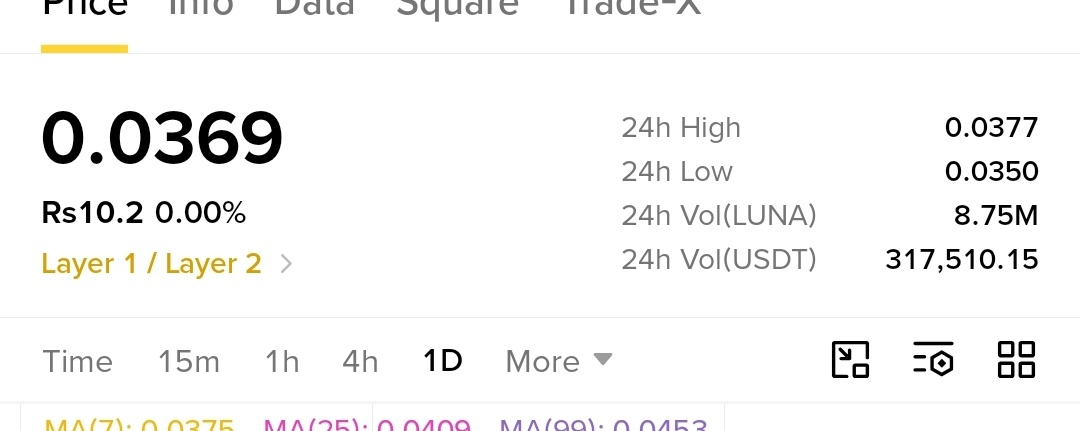

Terra (LUNA) in the Futures Market: Mechanics, Speculation, and Risk Dynamics
In derivative markets, "Luna" represents one of the most volatile asset classes in decentralized finance. Following the structural collapse of the algorithmic stablecoin UST in May 2022, the ecosystem split into two distinct assets: Terra Classic (LUNC), the original hyper-inflated chain, and Terra 2.0 (LUNA), a genesis chain launched without an algorithmic stablecoin.
Both assets maintain active perpetual futures listings across major derivatives exchanges (e.g., Binance, Bybit, OKX), frequently serving as high-beta instruments for speculative leverage trading.
1. Market Separation: LUNA vs. LUNC in Perpetual Contracts
Traders trading "Luna" in derivatives must differentiate between two distinct contracts:
Contract Type
Underlying Asset
Circulating Supply Profile
Futures Market Nature
LUNAUSDT (Perp)
Terra 2.0 ($LUNA)
Fixed / Normal issuance (~billion scale)
Lower volatility relative to Classic; behaves like an altcoin Layer-1 beta play.
LUNCUSDT / 1000LUNC (Perp)
Terra Classic ($LUNC)
Hyper-inflated supply (>5.5 trillion)
Quoted often in multiples (e.g., 1,000x or 10,000x index multiplier) to normalize micro-cent pricing; driven by token burns and meme volatility.
2. Core Drivers of Luna Futures Price Action
Trading volume and volatility in LUNA/LUNC derivatives do not follow traditional Layer-1 adoption metrics (such as Total Value Locked or dApp fee revenue). Instead, futures open interest is driven by four structural catalysts:
Token Burn Dynamics & Tax Rate Proposals: In Terra Classic (LUNC), on-chain governance proposals that adjust transaction burn taxes or institutional validator burns (e.g., periodic burn batches executed by exchanges) trigger rapid spikes in open interest (OI) and aggressive short-squeezes.
Funding Rate Asymmetry: Because sentiment on both LUNA and LUNC frequently leans heavily bearish or excessively speculative, perpetual funding rates swing into extreme negative or positive territory. A deeply negative funding rate often sets off cascading short liquidations when spot prices experience even minor upward momentum.
Legal and Regulatory Resolutions: High-profile legal proceedings surrounding Terraform Labs and its executives historically injected unexpected headline volatility directly into order books.
Low Liquidity Cascades: With diminished institutional market-making compared to top-tier crypto assets like BTC or ETH, depth on LUNA/LUNC perpetual order books can be thin, causing slippage and liquidation wicks during broader market drawdowns.
3. Key Risk Factors for Futures Traders
Derivatives trading on distressed or restructured crypto assets carries specific market microstructure risks:
High Spread & Slippage on Margin Stops: During high-volatility events, order books can gap significantly, executing stop-losses far below expected trigger prices.
Dynamic Margin Tiers: Exchanges frequently lower maximum leverage (e.g., capping leverage at 10x–20x) or widen maintenance margin requirements on LUNA/LUNC contracts during sudden network news or extreme volatility.
De-pegging / Long-Term Value Dilution: Without robust organic network utility or sustainable protocol revenue, rallies in these assets are typically liquidity-driven rather than fundamentally backed, leading to sharp retracements once speculative momentum fades.
4. Technical and Strategic Outlook
For futures participants, LUNA and LUNC contracts remain primarily momentum and mean-reversion instruments:
Mean-Reversion & Funding Arbitrage: Traders monitor funding rate extremes combined with open-interest surges to spot over-leveraged crowded trades (either longing when negative funding rates force a short squeeze or fading parabolic breakouts when funding rates reach unsustainable highs).
Key Technical Thresholds: Price action generally respects horizontal consolidation ranges and multi-month volume profiles rather than traditional fundamental valuations.
Futures trading involves substantial leverage risk. Position sizing, isolated margin mode, and disciplined stop-loss placement are essential when navigating high-beta assets like LUNA and LUNC.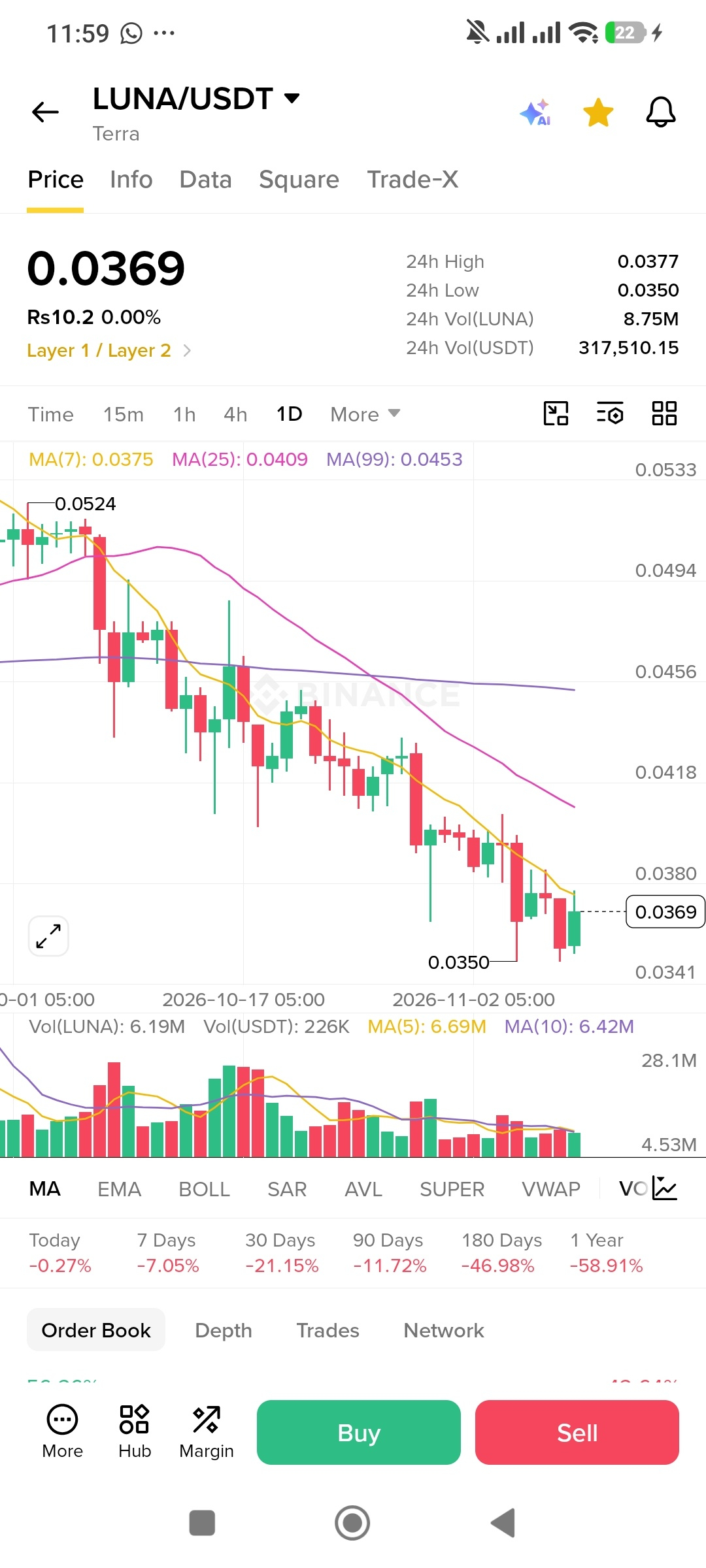
Lunc#LUNCDream