
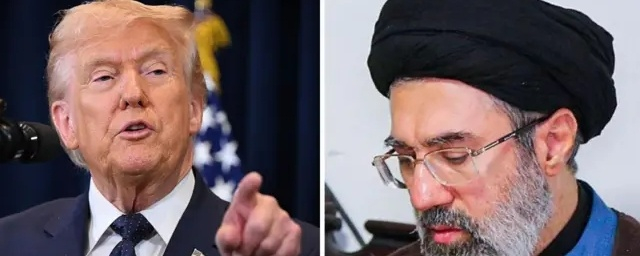

President Donald Trump stated that renewed military strikes on Iran are "highly unlikely" if diplomatic negotiations progress, signaling a shift toward intense mediation following heavy Republican losses in the U.S. midterm elections. However, both nations remain locked in a tense standoff, exchanging sporadic strikes and enforcing strict blockades. [1, 2, 3, 4, 5, 6]
The latest updates on the conflict include:
1. The Diplomatic Push & "Highly Unlikely" Strikes
Diplomacy Ramps Up: Qatari Prime Minister Sheikh Mohammed bin Abdulrahman Al-Thani is meeting with President Trump and Vice President JD Vance in Washington, D.C., to mediate terms. [1, 2]
Trump's Conditions: Trump told CNN and 60 Minutes that he is "not looking" to escalate the war. He noted that renewed air strikes are unlikely if Tehran makes significant concessions regarding its nuclear program and the reopening of the Strait of Hormuz. [1, 2, 3]
Iran’s Position: Tehran has proposed a two-day truce plan. However, Iranian Foreign Minister Abbas Araghchi warned that peace is impossible unless the U.S. fully lifts its naval blockade, removes sanctions, and releases frozen assets. Araghchi threatened to "rain down hell" if U.S. strikes resume. [1, 2]
2. The Midterm Fallout & Political Backlash
Vance vs. Trump Consensus: The conflict, which began eight months ago with joint U.S.-Israeli strikes, has deeply divided Washington following the midterms. Vice President JD Vance publicly blamed the GOP's election losses on the unpopular war. [1, 2, 3, 4]
Trump Defends the War: While Trump acknowledged that voters "didn't like the war" due to spiked gas and food prices, he strongly defended his original choice. He asserted that preventing Iran from gaining a nuclear weapon will historically prove to be "a very good decision." [1, 2, 3, 4]
3. Military Standstill & "Task Force Iron Gate"
The Blockade Expands: Trump announced that a new military initiative, Task Force Iron Gate, is now in "full force and effect." U.S. Central Command stated the group aims to expand the current naval blockade onto overland routes and the Caspian Sea to completely choke off Iran's trade and military tech pipelines.
Ongoing Hostilities: Despite peace talks, the U.S. reportedly struck Iran's Qeshm Island overnight. Meanwhile, Iran continues targeting commercial tankers in the Persian Gulf, and its allied Houthi rebels recently claimed a strike against a Saudi Aramco building in Riyadh. [1, 2]
Oil markets have taken tentative hope from Trump's softer rhetoric, with Brent crude dipping slightly to $96.38 a barrel, though prices remain roughly 50% higher than they were before the war began in February.