
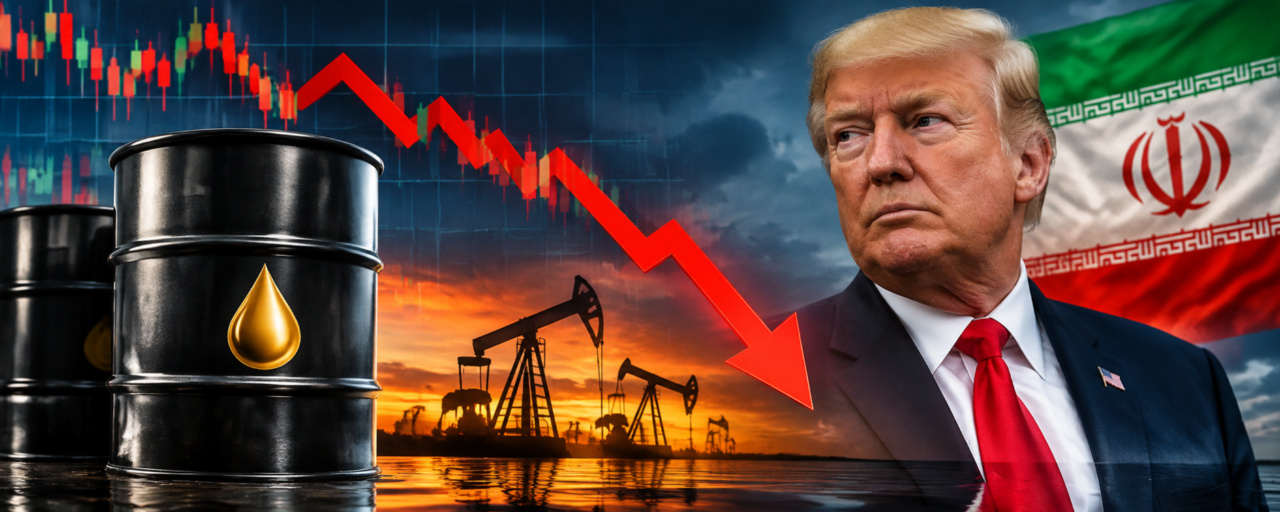

Oil is cheaper on Monday because the US president sounded less keen on resuming military action against Iran. Traders needed little more than that.
President Donald Trump told CNN in a phone interview on Sunday that fresh attacks on Iran are unlikely for as long as talks to end the conflict keep moving. It comes down to whether Tehran signs what he described as a very strong agreement. If it does, he said, the answer on further force is "highly unlikely it's going to be necessary."
The weekend handed him plenty of reasons to say otherwise. Both Washington and Tehran reported ships hit in or near the Strait of Hormuz, yet the market gave the interview more weight than the incidents.
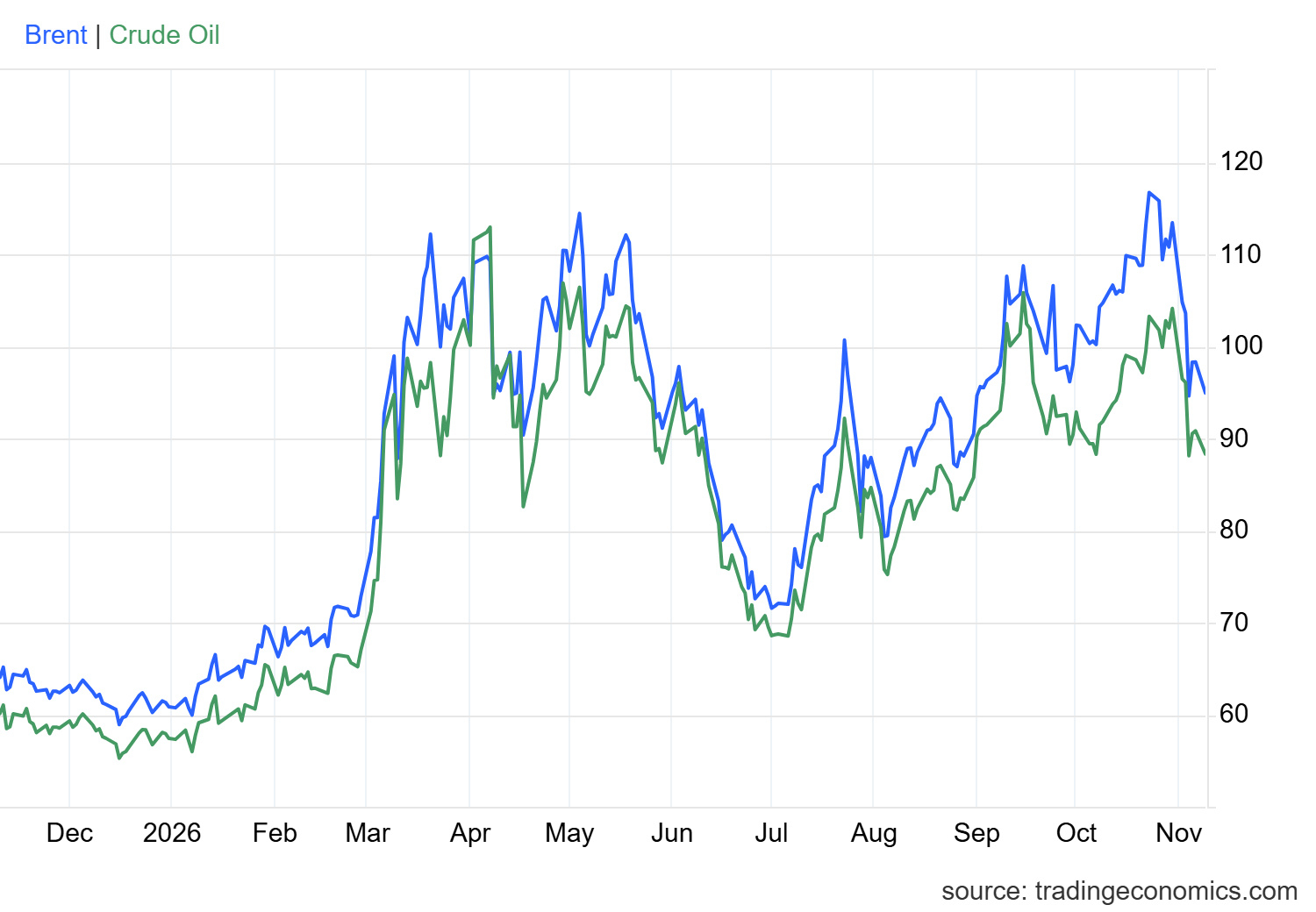
Crude has extended its slide. West Texas Intermediate is down 2.59 percent at $88.48 a barrel, and Brent has fallen 3.08 percent to $95.29. Expectations about diplomacy, and about a possible return to military action, keep shifting, and prices are following them around.
The softer message came with a firmer one attached. Trump announced that Task Force Iron Gate is in "full force and effect" against Iran, a unit set up by U.S. Central Command on Saturday to choke off the movement of advanced weapons and sanctioned materials across the country's land borders and the Caspian Sea.
He also said Washington has picked out infrastructure targets in case military action resumes. Among them are 38 bridges that, by his telling, could be put out of use inside an hour.
Secretary of State Marco Rubio offered no comfort on the diplomatic front. He ruled out a breakthrough anytime soon and described Iran's demands as unacceptable and, in some cases, "outrageous and ridiculous."
Mediators insist diplomacy is alive. Qatar, which has been brokering contact between the two sides, denied on Saturday that Washington and Tehran had failed to reach a deal. Its prime minister, the statement said, had affirmed that both parties are still working toward an agreement.
Iran has also put a nuclear proposal in front of Washington through Qatar, a senior Iranian official told Reuters on Thursday. The U.S. is reviewing it, but the official said discussions depend on Washington first meeting Tehran's seven demands. Sanctions relief, access to frozen assets and war reparations are on that list. The American position runs the other way: nuclear issues belong in the first round.
Out on the water, each side says vessels are being hit. Iran has reported incidents involving mines, along with explosions near Qeshm Island. The United States says its air force disabled a ship in the Gulf of Oman. Tehran, for its part, has warned that renewed American military action would bring retaliation against American and Israeli targets.
The U.S. account came first. Late Saturday, the American military said an aircraft had targeted the stern of a commercial vessel in the Gulf of Oman, leaving it disabled as it tried to get through the blockade.
Iran's version followed. The Revolutionary Guards Navy said two oil tankers caught fire after hitting mines while trying to cross by an "unauthorized route" in the Strait of Hormuz. Fars, the semi-official news agency, later reported that a third tanker had suffered an explosion and caught fire too.
The UK Maritime Trade Operations, which logs shipping incidents in the region, reported one more. A bulk carrier and military forces were involved in an incident roughly 18 nautical miles east of Khor Fakkan, a city in the United Arab Emirates. Damage was unknown. Whether it had anything to do with the American action remained unclear.
What Trump voters said would bring them back
Polling points in one direction. Voters appear to be penalizing Trump over the Iran war, a reading Vance himself laid out in a social media post on Wednesday.
He cited a pollster's survey of 2024 Trump voters who switched sides this time, asking what it would take to win them back. Four answers dominated. Ending the war came first. Cost of living and inflation followed, then putting America First, then a changed relationship with Israel.
All four boil down to the same message, which is that the United States should pull out of the war. Trump's choice of Stephen Miller as his new chief of staff could be a further hint about where he is leaning. The New York Times reported that Miller's pitch for the job included winding the war down.
Crude trades the tweet
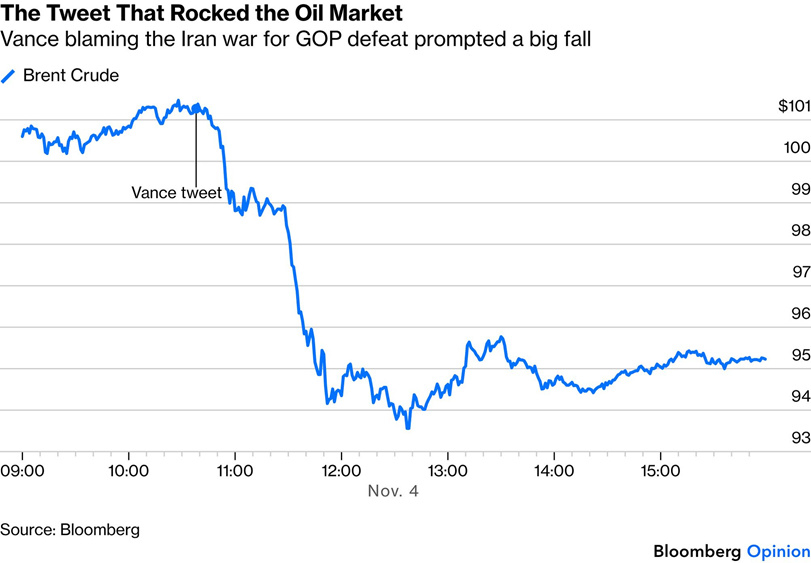
Investors, as usual, tried to get ahead of any military move. Crude suffered two heavy selloffs last week, on Monday and again on Wednesday.
Vance's post was read at once as a foreign policy signal. Robin Brooks of the Brookings Institution took it to mean the war had effectively ended. The broader oil market appeared to agree.
Aramco's Riyadh offices take a hit from the Houthi front
A second front has been widening in the background. Fighting between the Iran-aligned Houthis in Yemen and Saudi Arabia has intensified this month, pulling the wider Middle East war further out. On Sunday, Saudi Arabia's energy ministry said an administrative building owned by state oil company Saudi Aramco in Riyadh had been damaged by falling debris after an attempted attack. No one was hurt.
The Houthis were behind that attempt, and the city was fending off a fresh barrage of ballistic and cruise missiles at the time. The renewed assaults have set back plans for a return to normal roughly a month after attacks on the airport.
Oil, for now, is pricing an interview. The interceptors keep working regardless, and how long the market can ignore them depends on whether anyone signs something before the next incident forces the question.