$ONE : ONE: How Missing a Down Move Highlights Loss Aversion
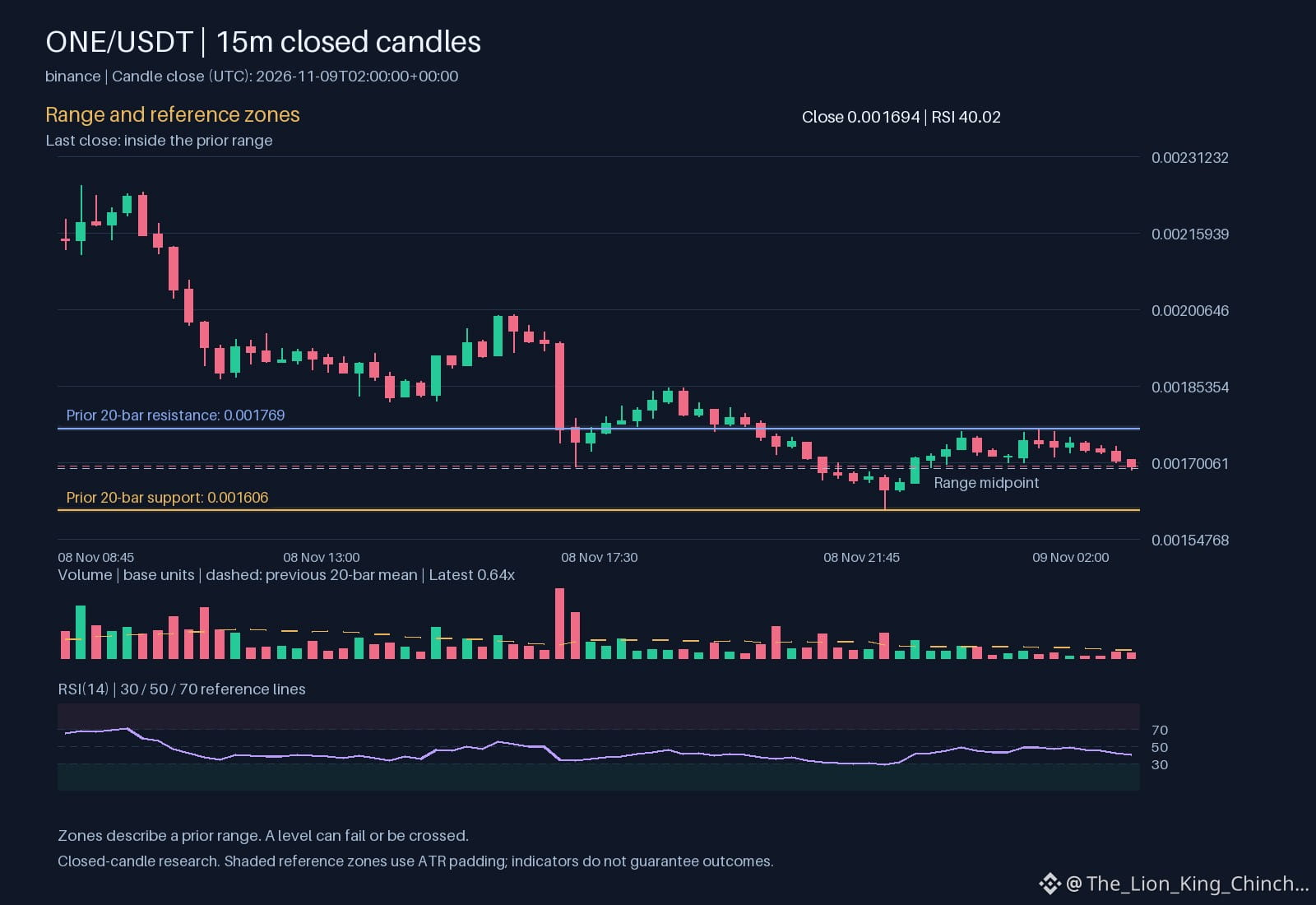
The recent hourly direction for $ONE is down while volume sits not above baseline. This combination creates a classic case of loss aversion, the tendency to feel the pain of a loss more strongly than the pleasure of a gain.
When a trader watches a price slip lower and then sees the move stall, the immediate reaction may be to cling to a pre‑set rule – for example, waiting for a bounce above 0.0017253 before re‑entering. The bias can make the trader overestimate the likelihood of a rebound, because admitting the loss feels threatening.
In research decisions, loss aversion can shift focus from objective signals such as the current 0.644192 level or the support at 0.001606 to a narrative of “missing out” on a recovery. This can lead to premature re‑entry or ignoring a clear downtrend.
A practical self‑check: pause and write down the exact observation – hourly direction down, volume not above baseline, price near 0.00178075 – then ask yourself whether the next step is based on data or on the discomfort of a loss. If the answer leans toward the latter, consider adjusting the rule or setting a predefined stop loss to reduce emotional pressure.
By separating the factual market picture from the feeling of a missed move, you can keep decisions grounded in evidence rather than in the fear of losing more.
Probabilistic market research, not a recommendation or guaranteed return.
Would you keep the same rule after missing a move?
#ONE #TradingPsychology #CryptoLearning