
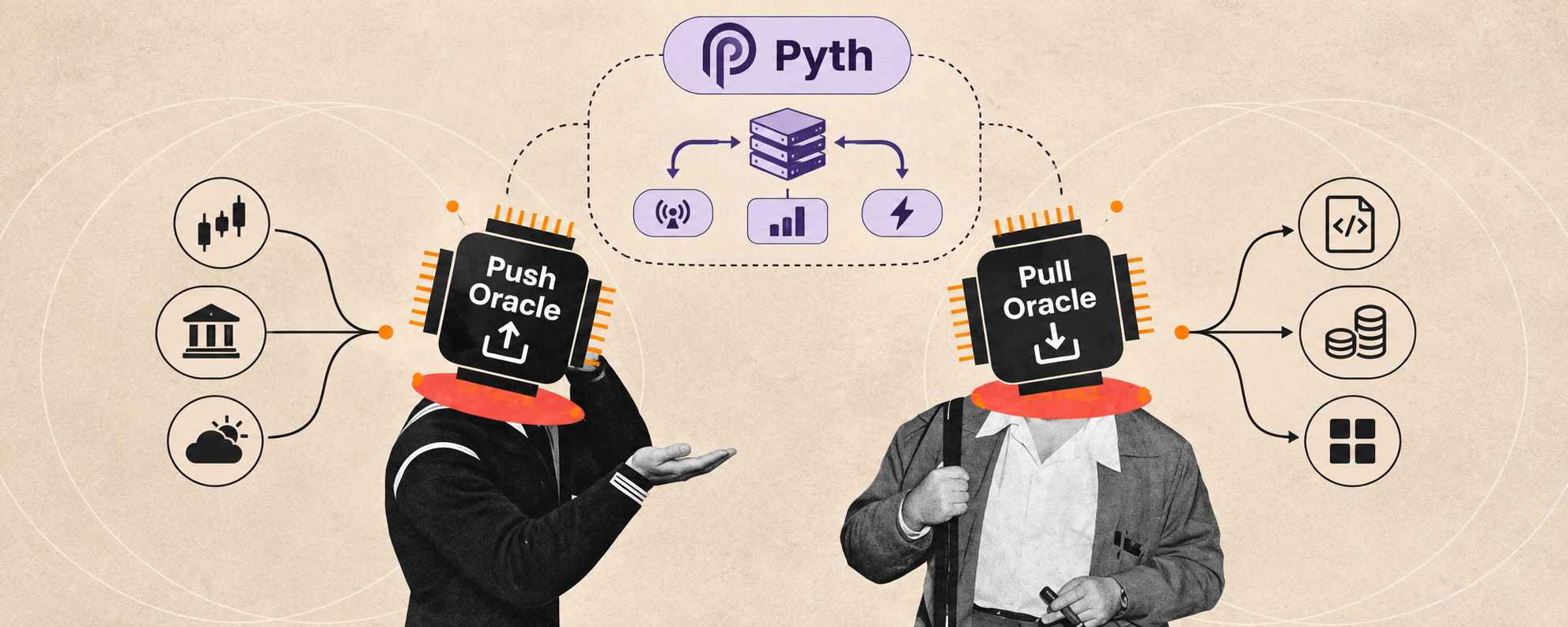


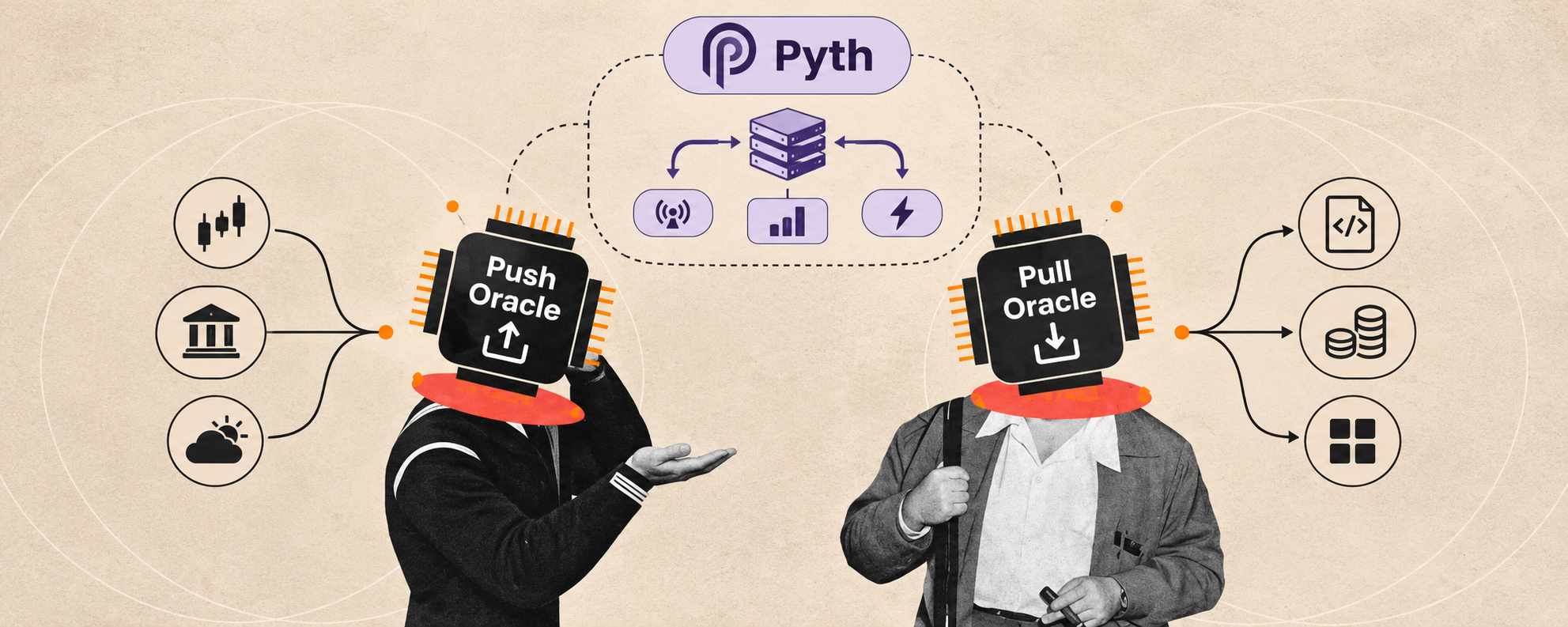
Blockchains are inherently blind. A smart contract on Ethereum knows absolutely nothing about the outside world. To price a derivative, it requires an oracle to fetch external data and write it directly onto the distributed ledger.
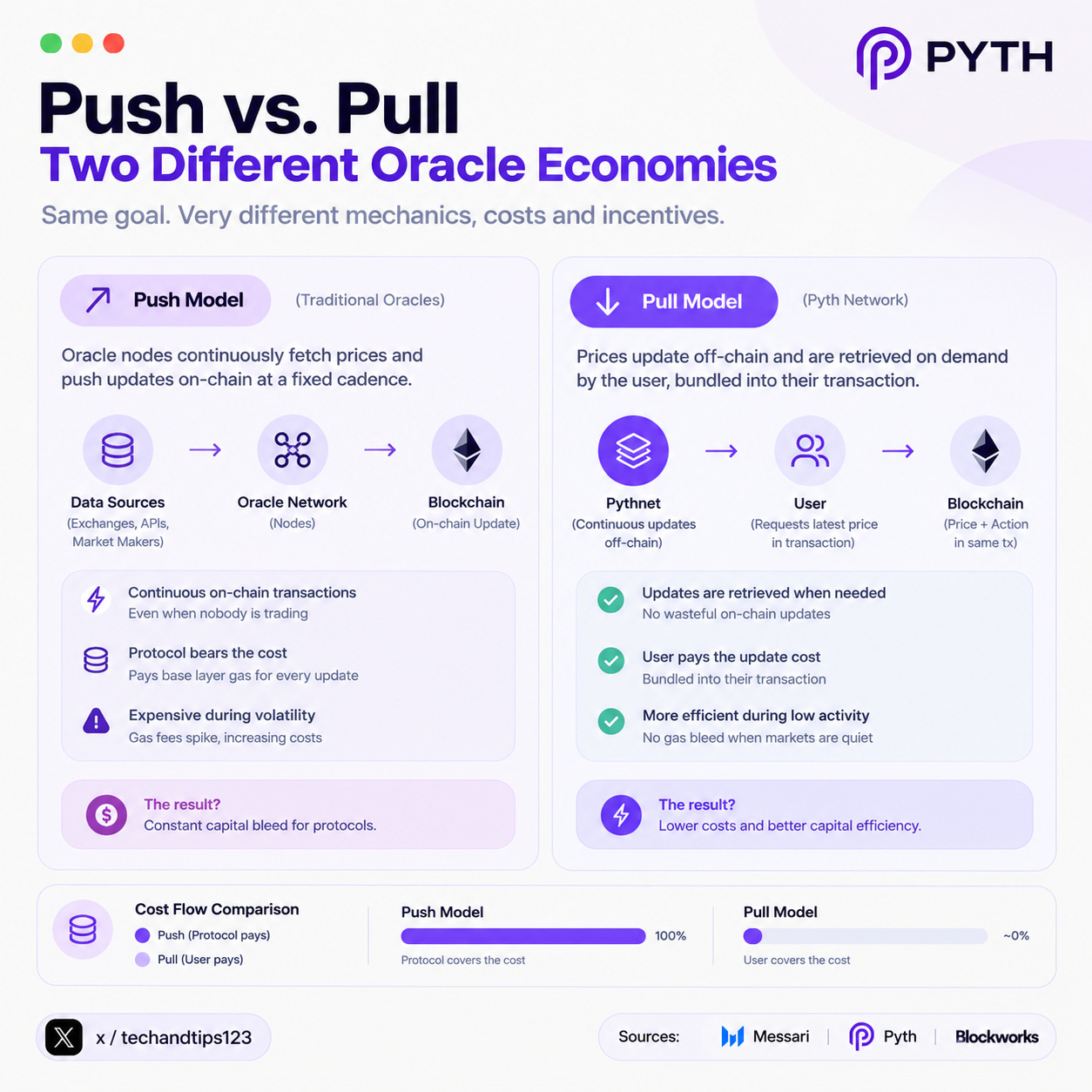
For years, the decentralized finance industry relied on the push model. A decentralized network of nodes constantly looks at off-chain prices and pushes them on-chain at a predefined cadence. Pyth Network abandoned this standard. They built a pull mechanism where data waits off-chain until a specific user pays to bring it across the bridge.
But how does the math actually hold up when millions of dollars are on the line? Let's find out.
❍ The Base Layer Gas Bleed
To understand why the pull architecture exists, you must understand the financial drain of traditional broadcast oracles.
In a push model, the oracle network pays base layer gas fees to process price updates continuously. This happens even when absolutely nobody is actively trading the asset on the decentralized exchange. If a protocol supports fifty different trading pairs, it is constantly bleeding capital to update prices on empty blocks.
When market volatility spikes, the oracle must push updates rapidly to prevent algorithmic bots from front-running stale prices. During these periods, network congestion spikes and gas costs skyrocket. The protocol hemorrhages money just to keep the smart contracts accurate.
Pyth shifts this economic burden entirely. Prices update continuously on a segregated Solana-based application chain called Pythnet. The data stays there. When a user wants to execute a trade on Ethereum, the frontend application they are using silently pulls the latest price from Pythnet and bundles it into the transaction payload. The user pays the gas cost to update the oracle, not the protocol.
❍ The Confidence-Weighted Aggregation Math
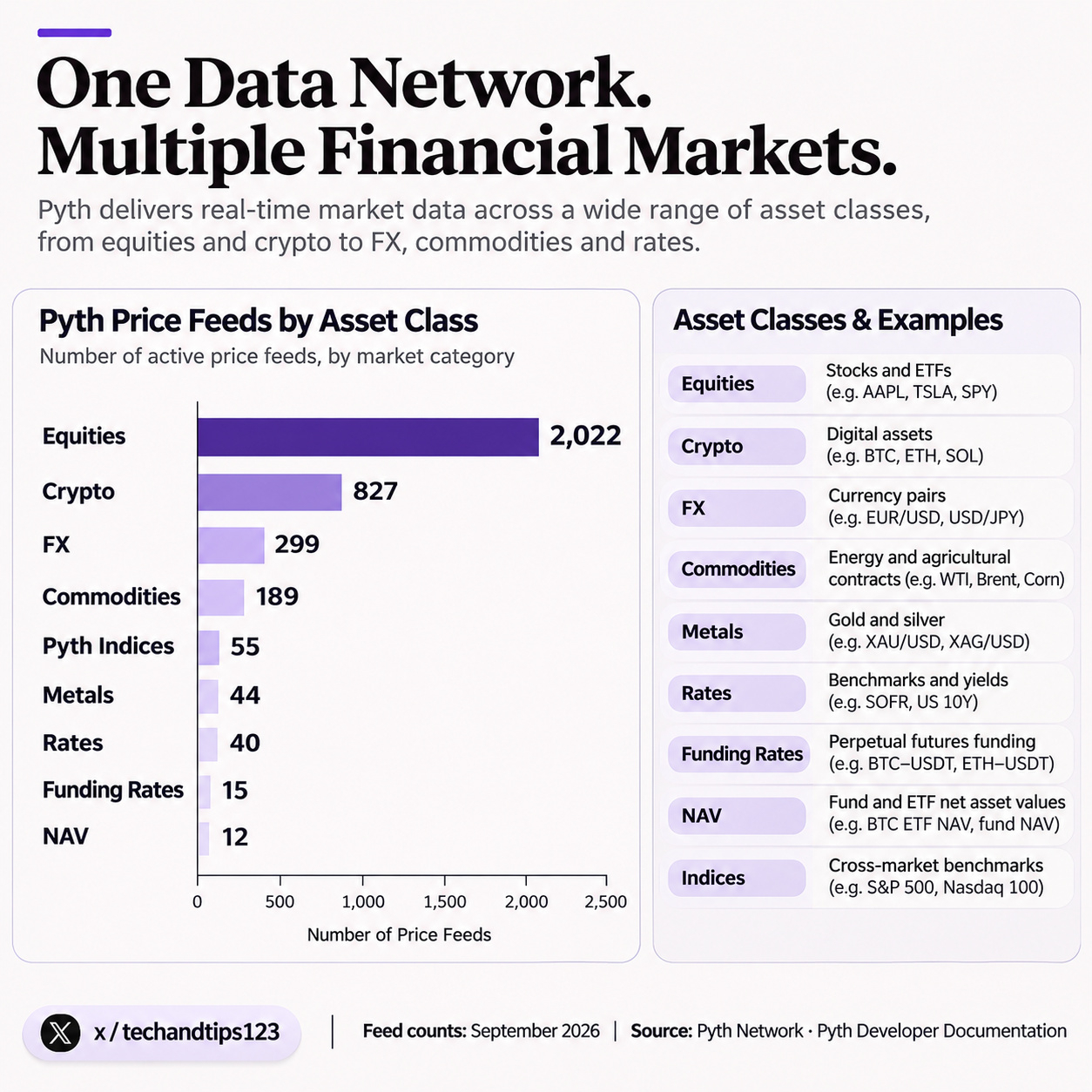
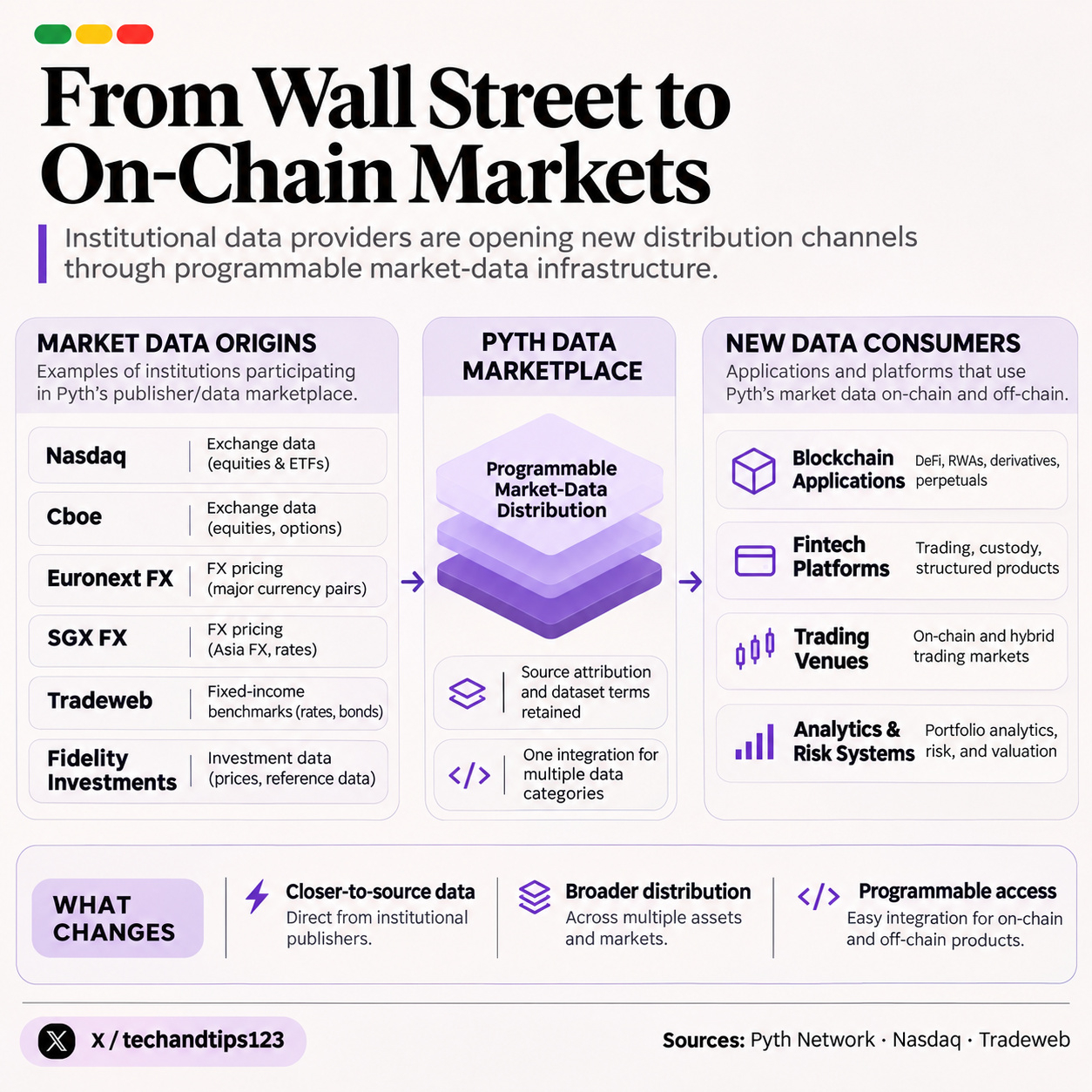
Traditional oracles scrape public APIs like CoinGecko. Pyth does not. It is a first-party oracle. Major trading firms like Jane Street and Binance publish their internal order book data directly to Pythnet.
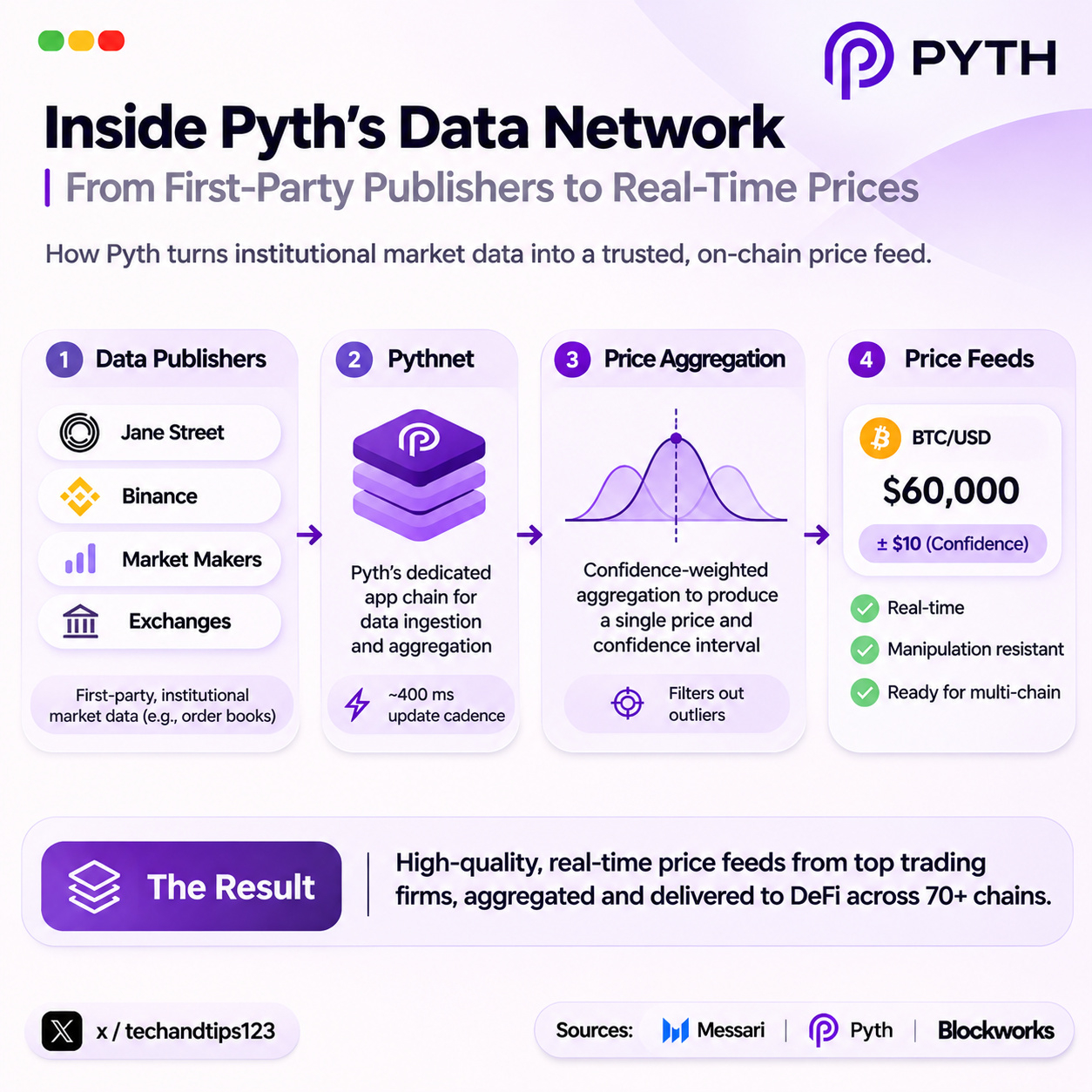
However, taking direct data from massive trading firms introduces a severe manipulation risk. If one publisher wants to liquidate a specific user on a decentralized exchange, they could theoretically submit a fraudulent, massive price spike.
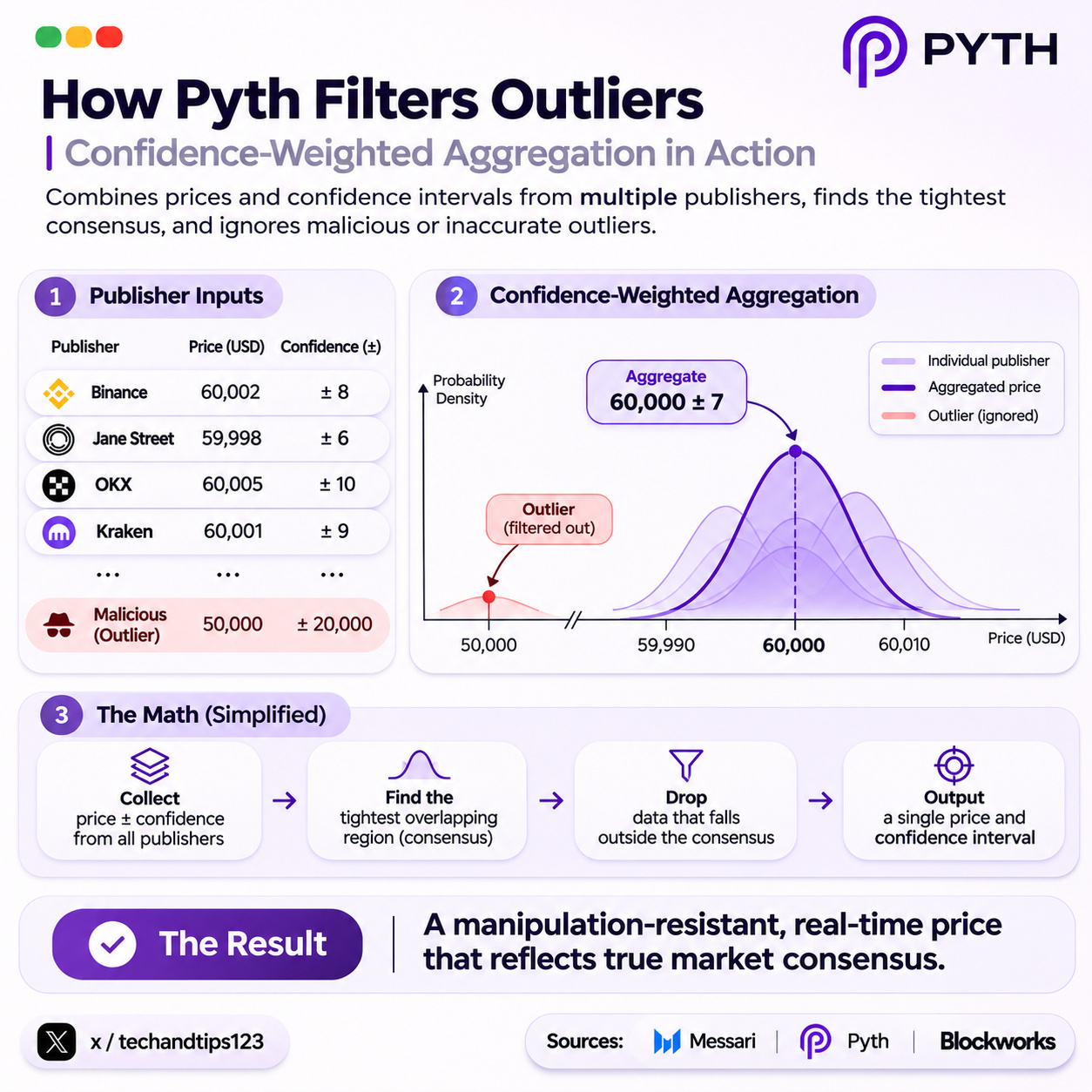
To prevent this, Pyth does not use a simple median average. It uses a confidence-weighted aggregation algorithm.
When a publisher submits a price, they must also submit a confidence interval. They are not just saying Bitcoin is sixty thousand dollars. They are saying Bitcoin is sixty thousand dollars, plus or minus ten dollars.
The algorithm plots the probability distribution of every single publisher. It looks for the tightest overlapping region where the majority of the publishers agree. If Jane Street maliciously submits a price of fifty thousand dollars while thirty other firms submit sixty thousand dollars, the algorithm does not let Jane Street pull the average down. It mathematically isolates the malicious feed as an outlier and drops it from the aggregate price entirely. The protocol calculates this complex overlapping math every four hundred milliseconds.
❍ The Wormhole VAA Payload
Moving the aggregated price from Pythnet to a smart contract on Ethereum requires a massive cryptographic bridge. This is where the actual plumbing gets heavy.
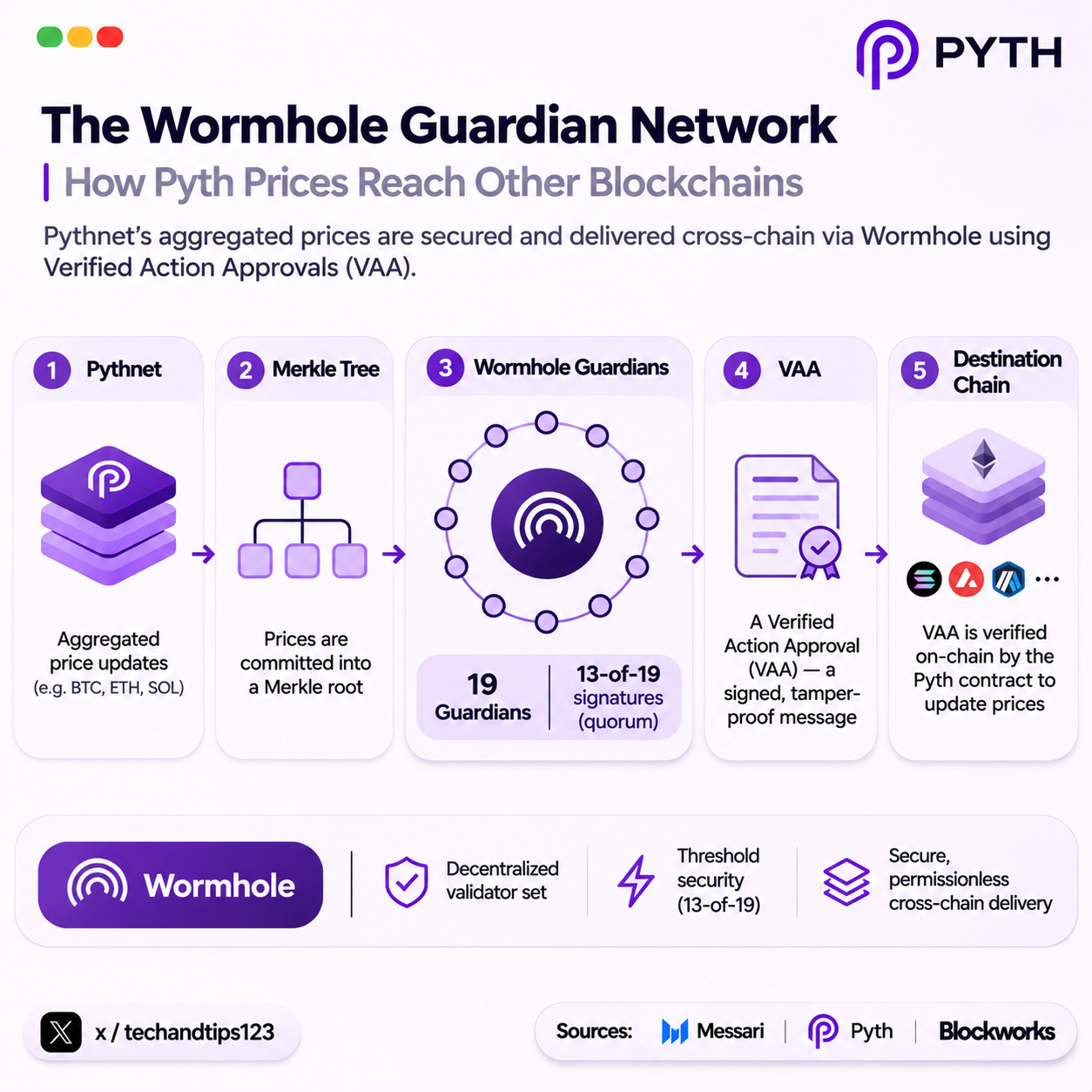
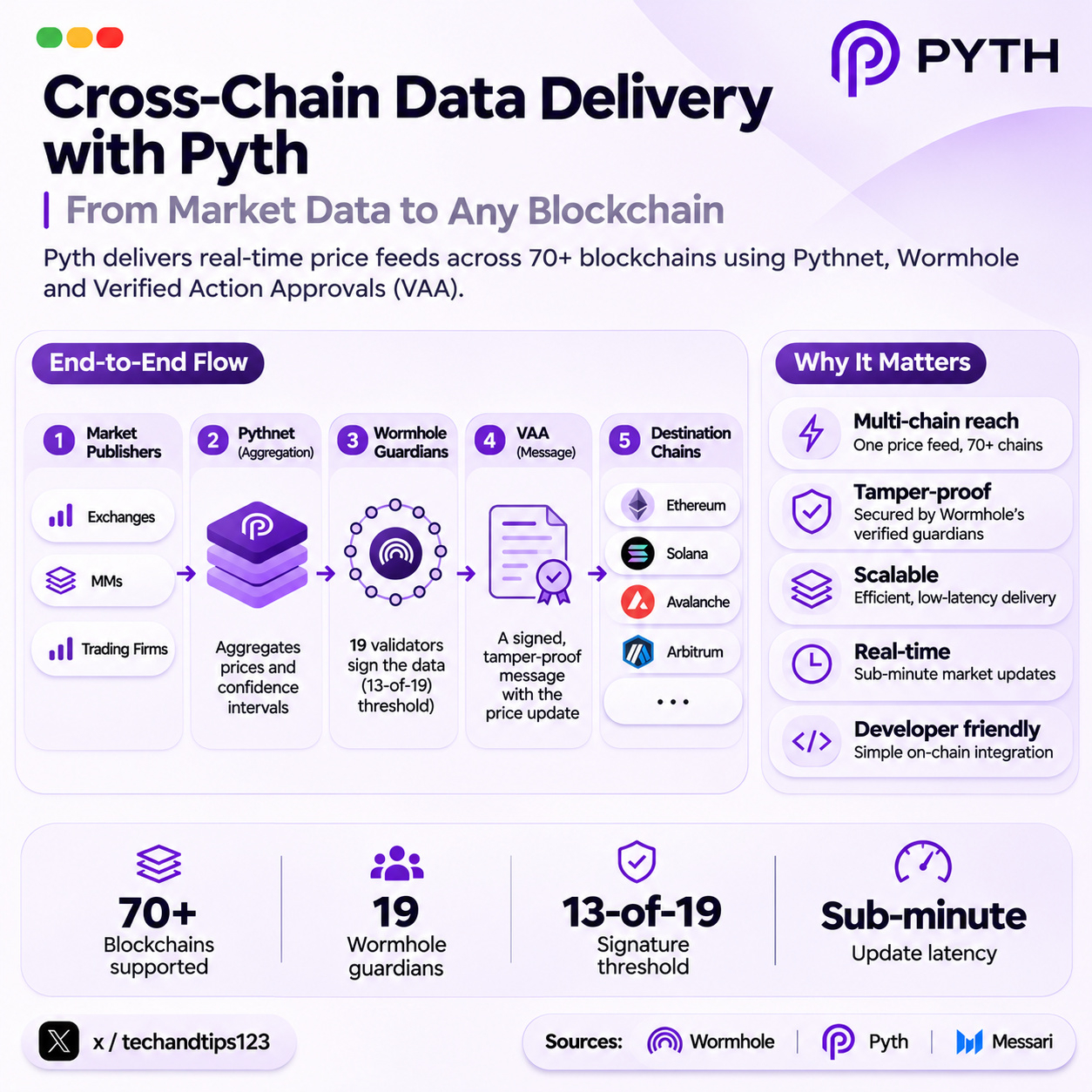
Pythnet aggregates the prices into a cryptographic structure called a Merkle tree. Pyth relies entirely on a cross-chain interoperability protocol called Wormhole to move this data. Wormhole is governed by nineteen highly secure validator nodes known as Guardians.
These nineteen Guardians constantly monitor Pythnet. When a new Merkle tree is generated, the Guardians independently verify it. If at least thirteen of the nineteen Guardians agree that the data is valid, they cryptographically sign the root of the Merkle tree.
They package this signed data into a payload called a Verified Action Approval. The VAA is the actual cryptographic proof that the data is legitimate. This VAA is stored on an off-chain data availability network, completely accessible to the public.
❍ The EVM Execution Path
When you open a leveraged position on a decentralized exchange, your front-end application silently fetches the latest VAA from the off-chain server. It bundles this payload into your Ethereum transaction.
Your transaction hits the Ethereum mempool. When a block builder executes it, the smart contract performs a highly specific sequence of events.
First, the Pyth smart contract unpacks the VAA. It runs an operation called ecrecover to mathematically verify the digital signatures of the Wormhole Guardians. It checks the code to ensure that at least thirteen valid Guardians signed the payload. This step is computationally expensive and costs a significant amount of gas, which you are paying for.
Second, the contract unpacks your specific Merkle proof to ensure the price of the exact asset you are trading matches the verified Merkle root.
Third, the contract extracts a small protocol fee. Pyth charges a tiny amount of native gas tokens for every pull request. The contract pulls this fee directly from your wallet.
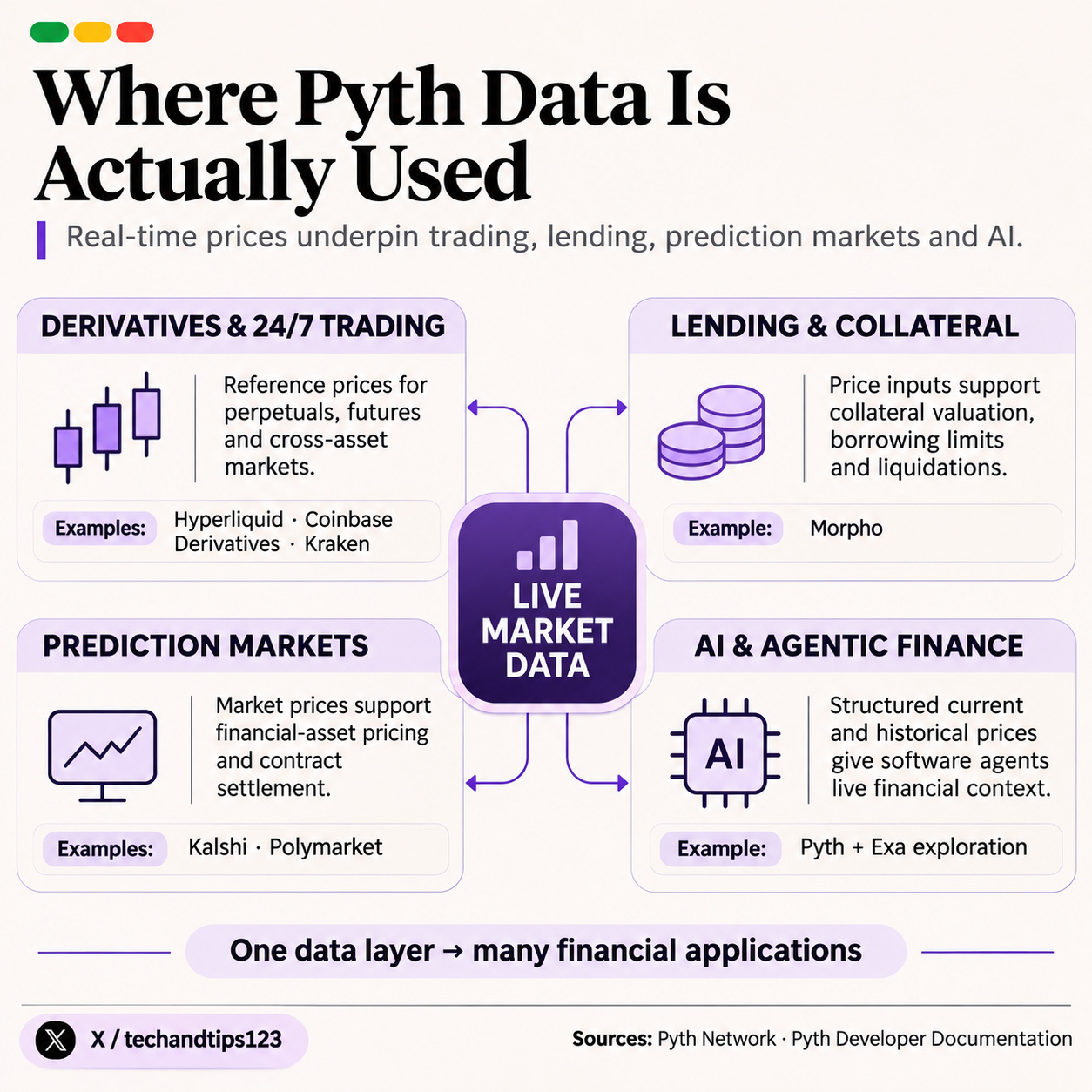
Only after the signatures are verified, the proof is matched, and the fee is paid, does the smart contract update the local price of the asset. In the exact same fraction of a second, the decentralized exchange executes your trade using that fresh data. The entire process is strictly atomic. It either succeeds entirely or reverts completely.
❍ Staleness and the Toxic Flow Vector
The pull model solves the base layer gas bleed, but it introduces a severe attack vector regarding transaction latency.
When you submit your transaction to the Ethereum mempool, it takes roughly twelve seconds to be included in a block. During those twelve seconds, the real-world price of the asset continues to move.
If the price of Bitcoin drops massively while your transaction is sitting in the waiting room, algorithmic bots called MEV searchers will see your pending trade. They know exactly what price you are attempting to pull on-chain. If your pulled price is heavily outdated compared to the live market, the bots will execute toxic trades against the decentralized exchange right before your transaction clears, draining the liquidity pool.
To prevent this, the destination smart contracts must implement strict staleness tolerance. The code must specify the maximum acceptable age of a Pyth price payload. If the smart contract is configured to reject any price older than ten seconds, and the Ethereum network experiences severe congestion that delays your transaction for fifteen seconds, the trade will forcefully revert. You will lose the gas fee, and your position will not open.
FIN
Pyth is marketed heavily as a victory for Solana architecture and high-frequency data. The analytical reality is much different.
When a decentralized application on Ethereum or Arbitrum integrates Pyth, they are not actually betting on the speed of Solana. They are placing a massive, existential bet on the multisig security of the Wormhole Guardian network.
If seven of those nineteen Guardian nodes are compromised, go offline, or collude maliciously, the cryptographic signatures required to build the VAA will fail. The destination smart contracts will instantly reject all incoming price updates. Every single protocol relying on Pyth across every single blockchain will be flying completely blind until the Guardian network is restored. The pull architecture achieves unprecedented capital efficiency, but it centralizes the entire risk profile of global decentralized finance into nineteen specific servers.