
📕 INTELLIGENCE VS FOMO: EVEN ISAAC NEWTON MADE THIS MISTAKE
“I can calculate the motion of heavenly bodies, but not the madness of people.”
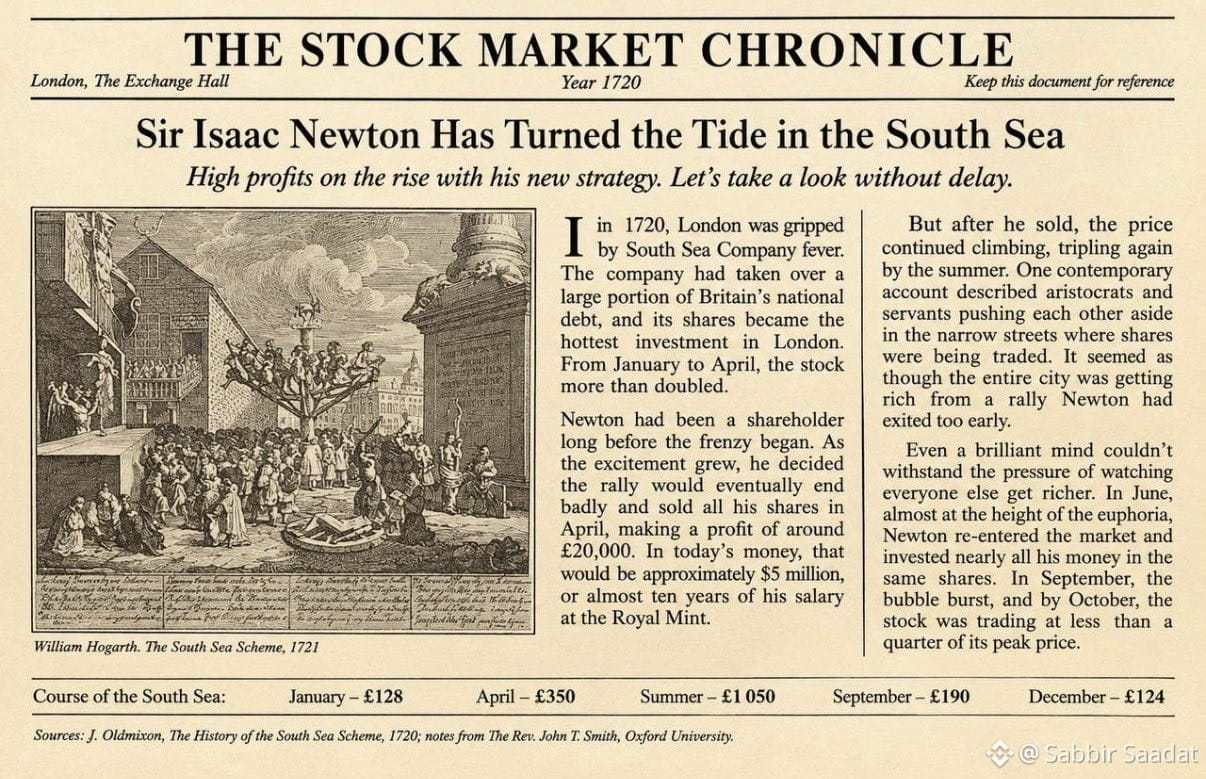
In 1720, London was gripped by South Sea Company fever. The company had taken over a large portion of Britain’s national debt, and its shares became the hottest investment in London. From January to April, the stock more than doubled.
Newton had been a shareholder long before the frenzy began. As the excitement grew, he decided the rally would eventually end badly and sold all his shares in April, making a profit of around £20,000. In today’s money, that would be approximately $5 million, or almost ten years of his salary at the Royal Mint.
But after he sold, the price continued climbing, tripling again by the summer. One contemporary account described aristocrats and servants pushing each other aside in the narrow streets where shares were being traded. It seemed as though the entire city was getting rich from a rally Newton had exited too early.
Even a brilliant mind couldn’t withstand the pressure of watching everyone else get richer. In June, almost at the height of the euphoria, Newton re-entered the market and invested nearly all his money in the same shares. In September, the bubble burst, and by October, the stock was trading at less than a quarter of its peak price.
The most successful trade that April wasn’t made by a genius, but by a bookseller. Thomas Guy sold his shares on the same days as Newton and never bought back in. He used the profits to establish a hospital that still operates today.