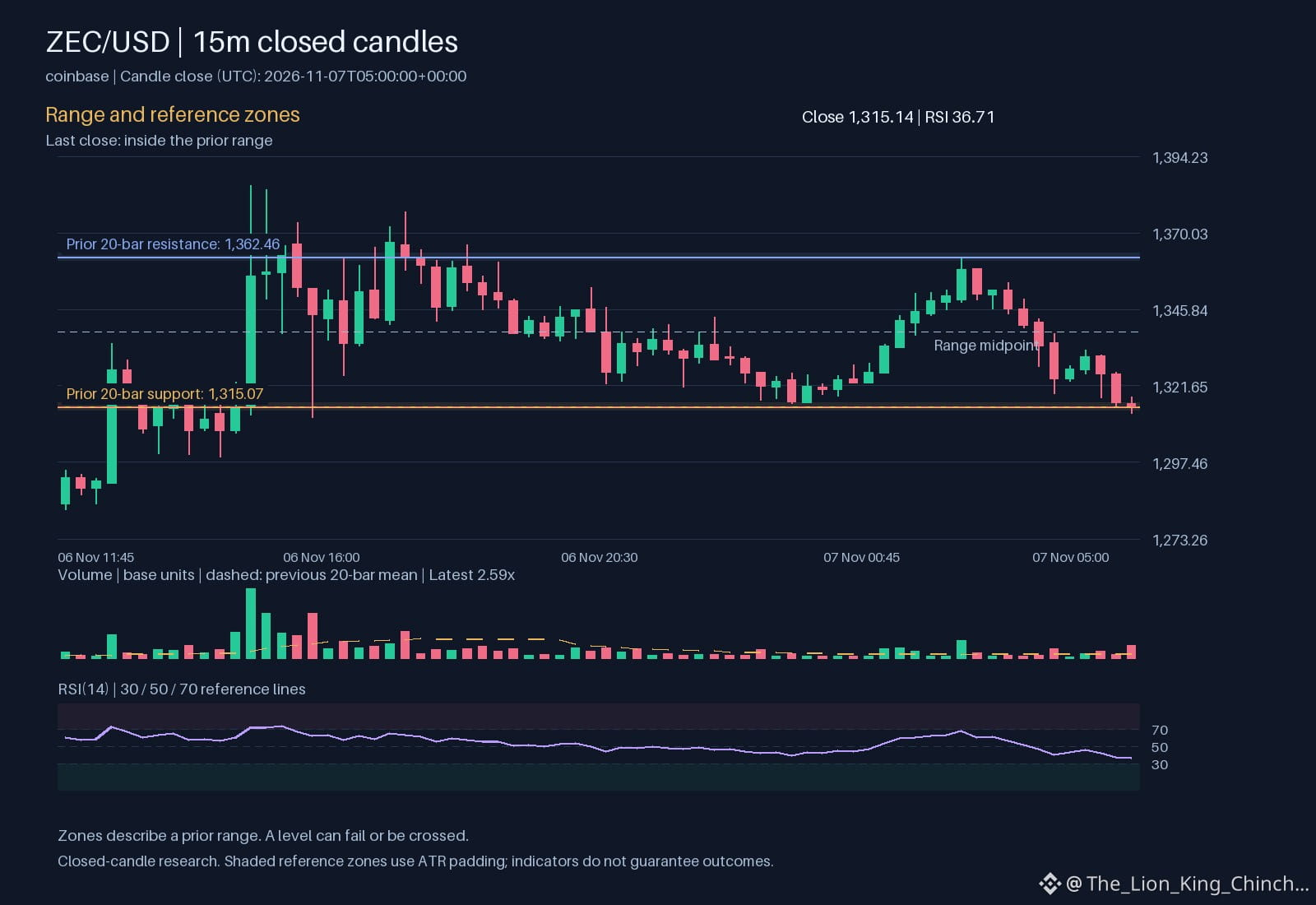
$ZEC: When Volume Sparks Loss Aversion
The latest observation shows $ZEC moving down on the hourly chart while volume sits above baseline. This combination often triggers loss aversion, a bias where traders feel the pain of a potential loss more intensely than the pleasure of a gain.
**The decision bias**
Loss aversion can make a researcher over‑react to a recent drop, tightening rules or abandoning a strategy after a single adverse move. The heightened volume signals strong participation, which may amplify the emotional response and create a false sense of urgency.
**How it changes a research decision**
Instead of treating the hourly dip as a decisive signal, a loss‑averse mind might prematurely close a position or skip further analysis, fearing that the next tick will deepen the loss. This reaction can obscure the broader context, such as the 2.58878 indicating that many market participants are active, which often precedes a short‑term rebound.
**A practical self‑check**
Before adjusting your rule, pause and ask: "Am I reacting to the actual data or to the fear of losing something I already own?" Write down the current metrics – 2.58878 and the direction – and compare them to the longer‑term trend without adding emotional weight. If the note reads as a neutral observation, you are less likely to let loss aversion dictate the next step.
Probabilistic market research, not a recommendation or guaranteed return.
Would you keep the same rule after missing a move?
#ZEC #TradingPsychology #CryptoLearning