

 Project: Which Crypto Exchange Is the Safest and Most Reliable for International Users?
Choosing a crypto exchange is not just about finding a place to buy Bitcoin or trade altcoins. It is about deciding which company you are comfortable trusting with your money. And honestly, that decision deserves more attention than most people give it.
The crypto industry has seen some painful failures. FTX was once one of the biggest names in the market, yet its collapse showed investors how quickly things can go wrong when an exchange fails to protect customer funds. Thousands of people learned that seeing their balance on a screen does not necessarily mean they have full control over their money.
That is why I believe security should come before low trading fees, attractive bonuses, or a long list of available coins.
For international users, the decision is even more complicated. An exchange might offer strong protection in one country but operate under different rules in another. Payment methods, withdrawal options, account restrictions, and legal protections can all depend on where the customer lives.
Kraken is one platform that deserves serious attention. It has been operating since 2011 and has built much of its reputation around security and transparency. One feature that makes it interesting is its Proof of Reserves program, which allows eligible customers to verify whether their account balances were included in a reserve assessment.
This is useful because investors should not have to rely entirely on an exchange's promises. They should be able to examine the evidence themselves. However, Proof of Reserves is not a complete financial audit. It does not automatically reveal every liability or prove that a company is financially healthy in every respect.
Coinbase is another strong name, particularly for people who value financial transparency. As a publicly listed company in the United States, it publishes financial reports and provides information about its business operations. This gives investors another way to understand the company behind the trading platform.
Coinbase also states that customer assets are held on a 1:1 basis and are not lent or used without permission. Still, customers should read the terms of the specific legal entity serving their country rather than assuming that every international account receives identical protection.
Then there is Binance, which remains a major choice for active crypto traders. Its wide selection of cryptocurrencies, deep liquidity across many markets, and advanced trading features make it attractive to people who trade regularly.
Binance also has a Proof of Reserves system and its SAFU emergency fund. These are meaningful parts of its customer protection approach, but they should not be mistaken for a guarantee against every possible loss. Its services and regulatory arrangements also vary depending on the country.
OKX deserves consideration as well. It offers an extensive trading environment and publishes recurring Proof of Reserves information. For users who want access to different digital assets and advanced trading tools, it can be worth comparing with the larger platforms.
But there is something I would never ignore when choosing any of these exchanges: the ability to withdraw money.
Imagine buying Bitcoin when the market is moving quickly. A few hours later, you decide to move your holdings into a personal wallet. You expect the transaction to be straightforward, but withdrawals are temporarily restricted. Suddenly, the exchange's reliability matters much more than its trading interface or promotional offers.
Temporary delays can happen for legitimate reasons, including security investigations and blockchain congestion. What matters is whether the exchange communicates clearly and handles the situation responsibly.
I would also pay close attention to how an exchange protects individual accounts. Strong two-factor authentication, passkeys, hardware security keys, withdrawal address whitelisting, and suspicious login alerts are features worth looking for. A secure platform should make it difficult for someone else to access your account, even if they somehow obtain your password.
International users should take one additional step before depositing money: identify the actual legal company operating their account. Do not simply assume that a global brand name means the same regulatory protection everywhere.
For example, someone living in Germany and someone living in Pakistan may use the same exchange brand but be served by different legal entities. Their available services and legal rights may not be identical.
For users in Pakistan, checking current local requirements, supported payment methods, account eligibility, and withdrawal arrangements is especially important before moving money to an overseas platform.
Another mistake is keeping every coin on an exchange simply because trading there is convenient. A centralized platform controls the private keys associated with assets held in its custody. That means customers depend on the company to provide access to their holdings.
For long-term investments, a properly secured personal hardware wallet may offer greater direct control. Of course, self-custody brings responsibility. Losing a recovery phrase or exposing it to someone else can result in permanent losses.
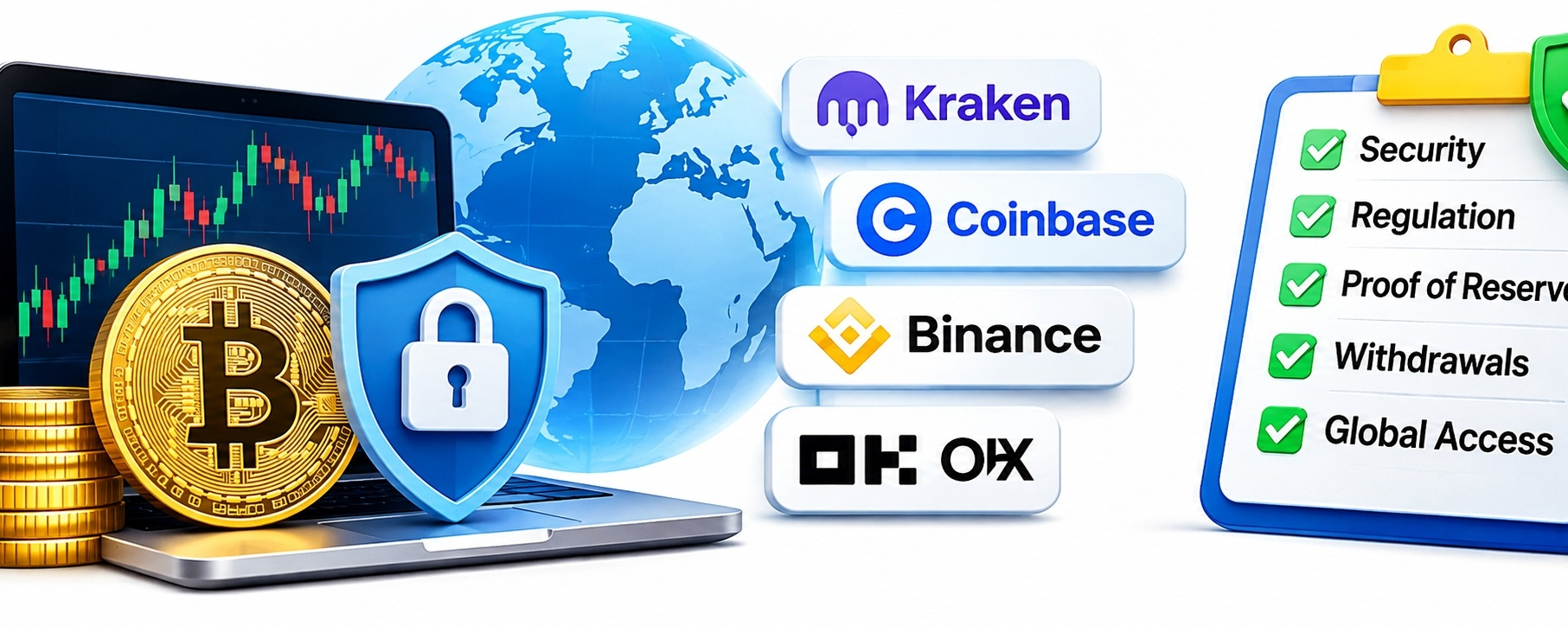
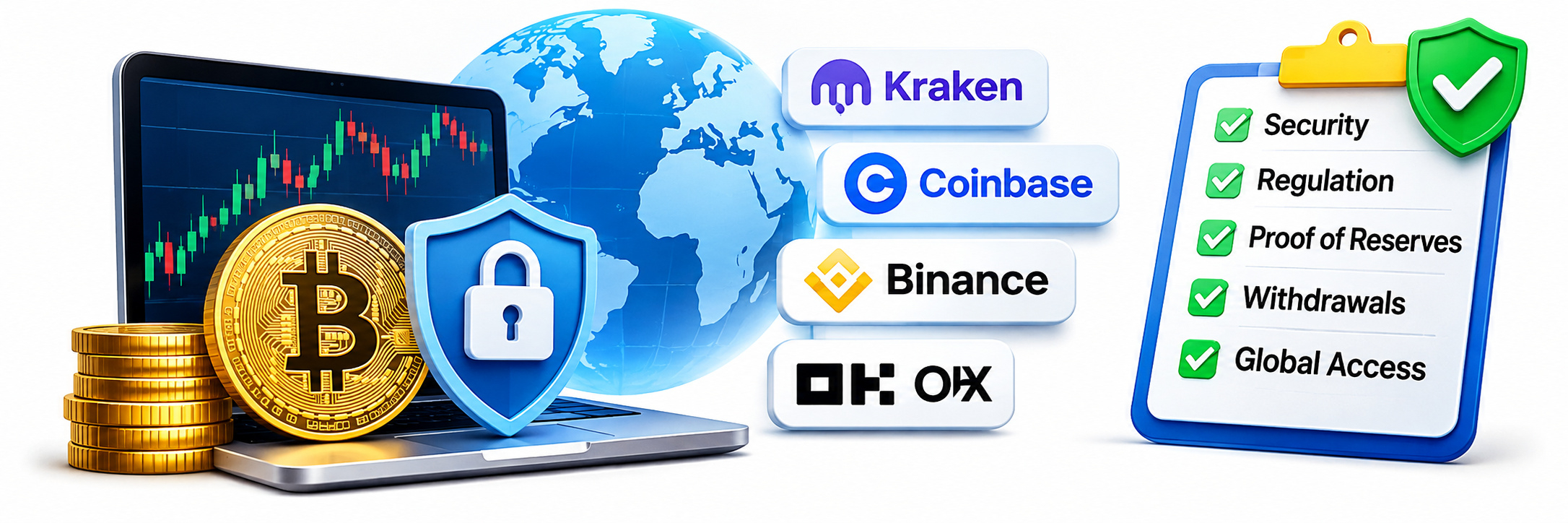
If I were comparing exchanges, my shortlist would include Kraken and Coinbase for their security-focused approach and transparency, Binance for its extensive trading markets and liquidity, and OKX as another established option with reserve reporting and advanced features.
There is no honest way to promise that any of them is completely safe. Every centralized exchange carries some degree of operational, financial, regulatory, and cybersecurity risk.
Before making a decision, I would check the exchange's regulatory status, read its custody policies, review its latest reserve disclosures, enable strong account security, and complete a small test withdrawal.
The most important lesson is that a popular exchange is not automatically a trustworthy one. A large trading volume does not prove that customer funds are protected, and an attractive bonus does not tell you what happens when something goes wrong.
In crypto, protecting your money starts long before you place your first trade. The exchange you choose can make a real difference, but the responsibility to understand where your assets are held should never disappear.
A good exchange makes trading easier. A reliable exchange gives you solid reasons to trust that your money will remain accessible when the market gets difficult.
#BinanceReopensWithdrawalsForMoreAssets #AnthropicIPOValuationDoubts #USStocksSlipandCryptoMarketUnderBroadPressure #ADPUSPrivateEmployersAdd86000JobsInOctober