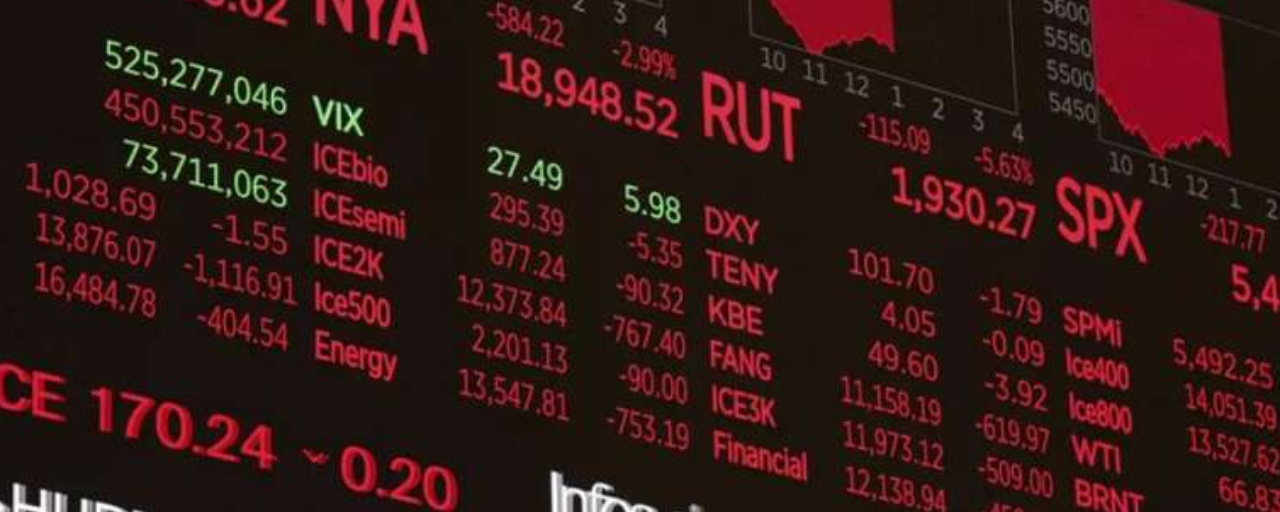

Wednesday's post-election rally lasted a single session. By Thursday's close, US stocks had handed all of it back, with AI and chip shares doing most of the damage and the rest of the market pulled down alongside them.
Investors hadn't finished working out what Tuesday's Democratic sweep means for markets and the economy when Nvidia began to slide, and the slide dragged the Nasdaq into its worst day in 19 months. The fear was easy to state. The midterm results, which included wins in states where opposition to new data centers has mounted, might slow the AI buildout that has carried stocks to this year's highs.
A $1 Trillion Hole, Two Days After the Vote
The Magnificent Seven lost more than $1 trillion in market value in one session, two days after voters handed Democrats control of Congress. The index closes tell the rest of it.
The Dow Jones Industrial Average finished at 51,523.06 after dropping 1,833 points, or 3.4%, which more than erased Wednesday's 1,569-point jump. The S&P 500 did worse, falling 4.4% in its steepest slide since the tariff turmoil of April 2025. For the Nasdaq composite, a 5.5% decline to 24,315.00 left it more than 10% under its Oct. 6 record close. Officially, a correction.
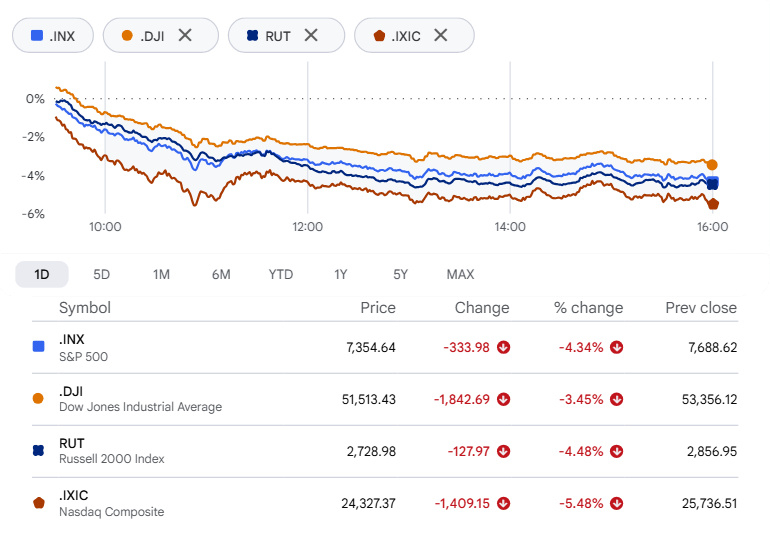
Worst of all was the Nasdaq-100, down 6.4%, with $2.3 trillion in market value gone in a day. Small caps were no safer. The Russell 2000 fell 4.5% and joined the correction.
Chips Went First, and Furthest
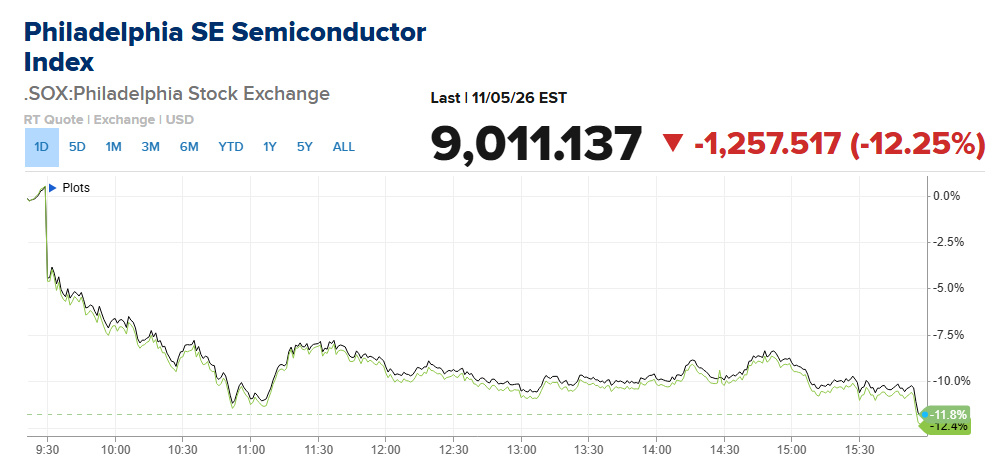
Semiconductors took the heaviest blow. The Philadelphia Semiconductor index plunged about 12%, and the iShares Semiconductor ETF (SOXX) lost more than 12%, each its worst day since the pandemic crash of March 2020. Large-cap tech had its worst session since that same sell-off.
Counting the Damage, Name by Name
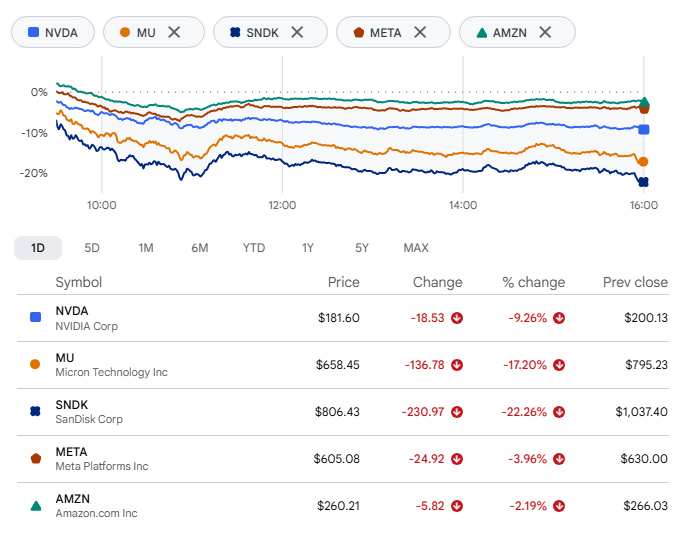
This year's AI winners got dumped without much sorting. Nvidia, down more than 9%, slipped into negative territory for 2026. Micron shed 17%, and SanDisk more than 22%.
Put in dollars, it looks worse. With an hour left to trade, CNBC's running count had the Magnificent Seven down close to $900 billion from Wednesday's close. The last hour made it worse.
Nvidia alone was about $374 billion lower by then. Tesla had shed $161 billion and Microsoft $117 billion, while Apple, Meta and Amazon clustered between $55 billion and $59 billion each. Alphabet, at a bit more than $42 billion, ran up the smallest bill of the seven. By the bell, Nvidia's share of the total had grown past $440 billion.
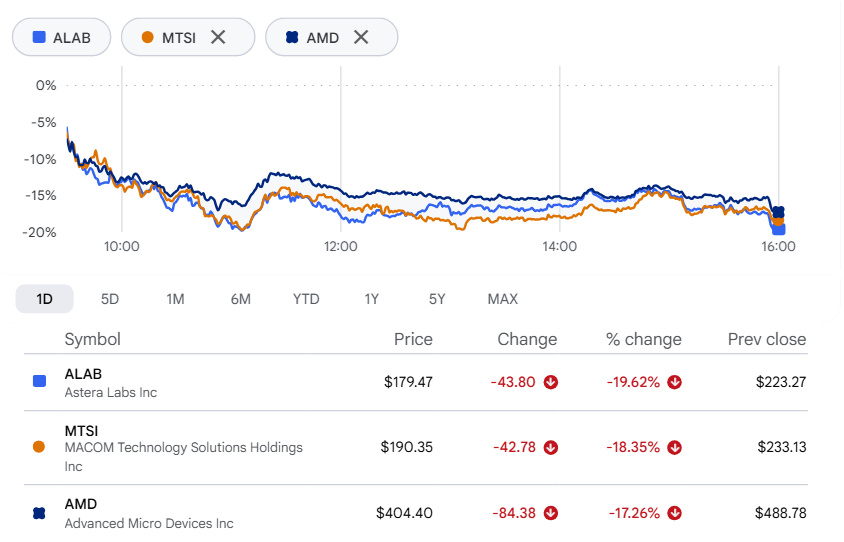
Smaller chip names fared no better. Astera Labs fell nearly 20%, MACOM Technology Solutions about 18% and AMD 17%. Arm, down roughly 17%, was the relative bright spot, if that's the word for it. Through Thursday, SOXX is down about 15% for the week and on pace for its worst in more than 18 months.
Qualcomm Brings Bad News of Its Own
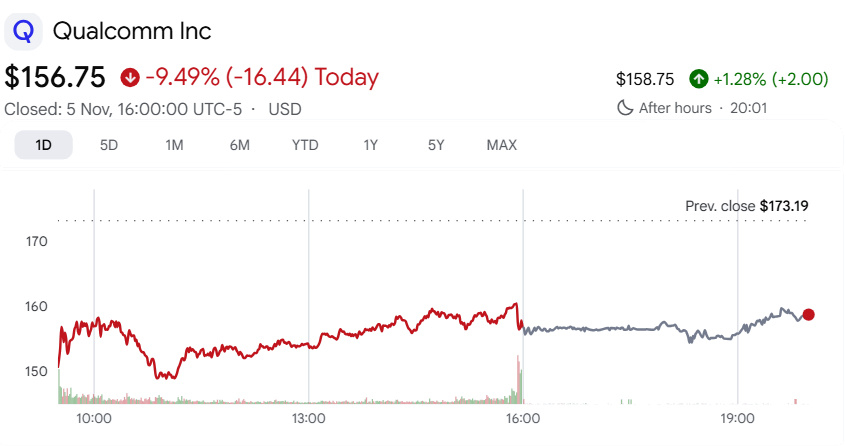
Qualcomm didn't help. Its fiscal fourth-quarter report, which came after Wednesday's close, beat analysts' estimates, but handset chip revenue was down 26% from a year earlier and the forecast for the current quarter looked light: adjusted earnings of $2.15 to $2.35 a share against a Wall Street estimate of $2.27. The stock dropped more than 9%.
Data centers are the story Qualcomm wants investors to hear, and the unit is still small. The company told analysts it expects more than $650 million of data center revenue this quarter as custom silicon begins shipping to two hyperscale customers. Total revenue guidance is $10.4 billion to $11.2 billion. CEO Cristiano Amon and his team held to a $5 billion data center target for fiscal 2027.
The Neoclouds Fear a Backlash
From the companies that make the chips, the pain passed to those that rent them out. Neoclouds, which sell access to AI computing power, fell for a second straight day.
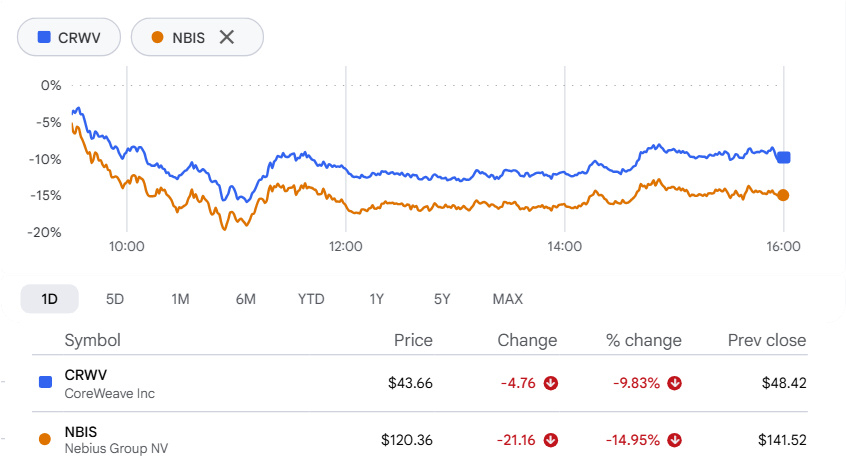
CoreWeave lost almost 10%. Nebius lost about 15%, and Iren, the hardest hit of the three, nearly 17%. The thread running through it was worry about a backlash against the industry after election results in several states.
Musk's Paper Fortune Shrinks Again
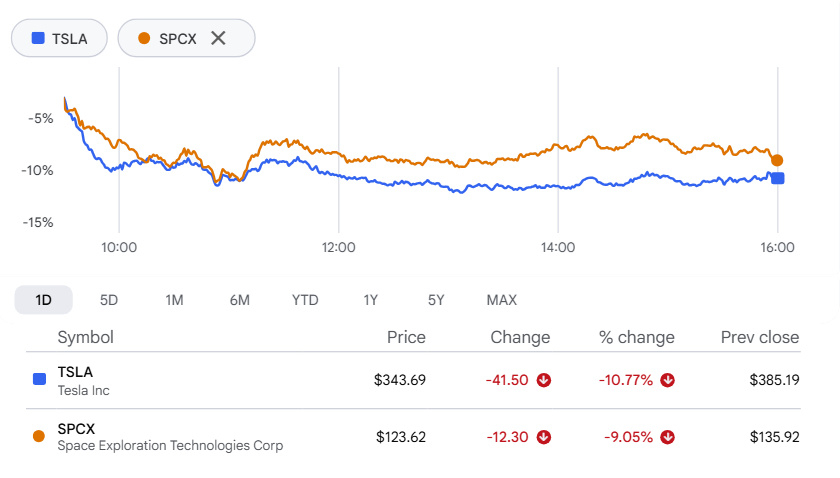
Elon Musk's companies were in the thick of it. Tesla fell about 11% after Wednesday's 3.3% drop. SpaceX, public only since June, tumbled as much as 11% a day after losing 3.8%. By noon in New York, Musk, a major Republican donor, was down nearly $74 billion in net worth, according to the Bloomberg Billionaires Index.
Sector Analysis
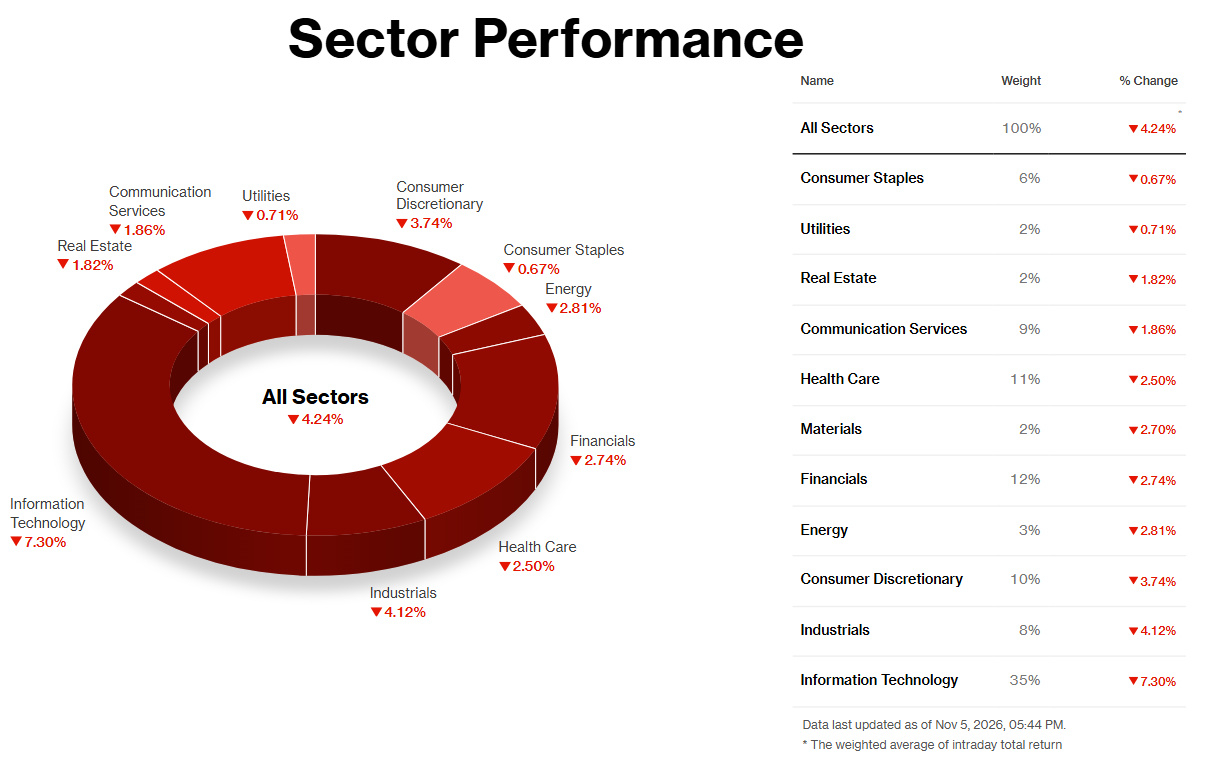
All 11 S&P 500 sectors closed lower, as nothing escaped Thursday’s selloff. Energy gave up 2.81% and Consumer Discretionary 3.74%, the mildest losses among the four sectors in your data.
Energy’s story began a day earlier. Brent crude fell 8.7% on Wednesday as traders bet a Democratic Congress would push the White House to end the Iran war. Crude bounced about 4% toward $98 on Thursday, yet energy shares still slid with the broader market. The rebound softened the blow without erasing it, and the swings track the war outlook rather than anything in the sector itself.
Consumer Discretionary traded on its two giants. Amazon opened higher on a Prime tie-up with Uber Eats, then reversed as tech selling took over, and it closed down about 2%. Investors were already uneasy about its rising capital spending and negative free cash flow. Any slowdown in data center construction adds fresh risk to AWS. Tesla dropped roughly 11%, and no stock-specific trigger surfaced, which suggests it moved with the tech rout.
Information Technology sank 7.30%, and at roughly 35% of the index, it did most of the damage. Chipmakers took the brunt: the Philadelphia Semiconductor Index fell 12%, leading the Nasdaq Composite into correction territory. The trigger was political. Democratic control of Congress raised fears of local resistance to AI data center development, just as the trade was already wobbling.
Industrials, down 4.12%, was the same trade by another route. Vertiv fell 14% and Quanta 12%, as the AI selloff spread to the industrials that build and power data centers, and Caterpillar lost 6%. Orders hadn’t cracked. Vertiv’s latest quarterly sales jumped 61%, so the selling reflects what investors will pay for future demand, not demand today. Both moves extend a slide already underway: data center builders and equipment makers were down a median 23% since Oct. 6.